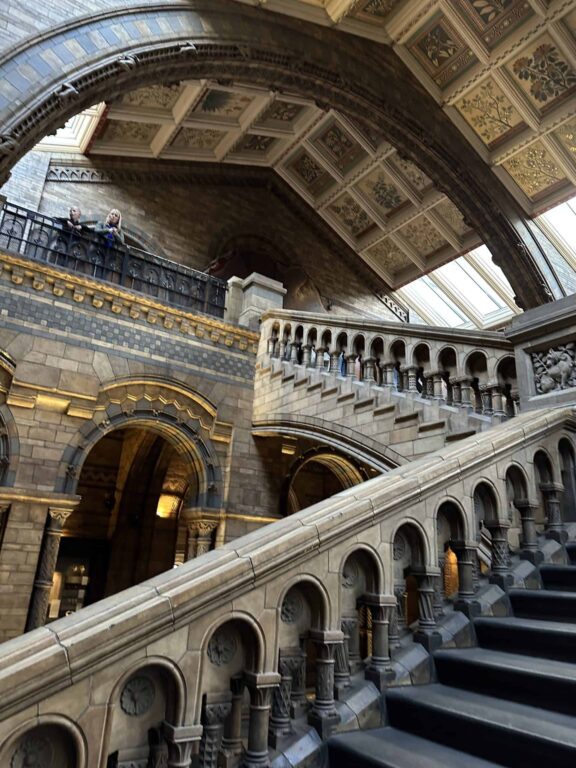
- Sozopol is a small town on Bulgaria's Black Sea coast, about 35 km south of Burgas, founded by Greek colonists in the 7th century BC as Apollonia.
- Velena grew up in Burgas and knew Sozopol from childhood weekends. We filmed it together in March, out of season, during a month-long trip to our home countries.
- A creator who knows a place films the life of it, not only the postcard: the honey stall in a cobbled lane, the steps to the sea, breakfast as locals eat it.
- Off-season content is a gift to a destination. It shows a quieter, truer side of the town and gives a tourism board or hotel something to post when bookings for next summer are being made.
- For 2026: Bulgaria has used the euro since 1 January 2026, British visitors can stay up to 90 days in any 180 without a visa, and summer flights to Burgas run from Luton, Gatwick and Manchester.
A town Velena has known since childhood
Velena grew up in Burgas, one of the main cities on Bulgaria's Black Sea coast, and Sozopol was one of the places her parents took her for weekend trips when she was young. It is less than an hour's drive away, and to her it has always been one of the most beautiful small towns in the country.
Before Velena first wrote about Sozopol in April 2023, she and Dragos spent a month visiting their home countries, and Sozopol was on the list. Going back with Dragos, and with a camera, Velena saw the town through new eyes. It held up completely. When she wrote about it that April, the article was a local's guide. This version keeps the visit and what we saw, checks every fact again for 2026, and adds what matters to the readers we work for: destinations, tourism boards and hotels that want content which feels like it was made by someone who belongs there.
That last point is the heart of this showcase. Sozopol is where Bulgarian families go for weekends; the people who know the coast best are not the visitors who fly in for a week in August but the families from Burgas, Plovdiv and Sofia who have been coming for years. A creator from that world films the same streets differently. She knows which lane has the honey stall, where the steps go down to the water, and what people actually eat for breakfast.
What makes Sozopol worth filming
Few seaside towns have this much history in so small a space. Greek colonists from Miletus founded the settlement in the 7th century BC, first as Antheia and then as Apollonia, after a temple to Apollo, and undersea exploration near the port has found Bronze Age dwellings, pottery and tools, with ancient anchors in the bay (Sozopol, Wikipedia). The old town, on its rocky peninsula, is known for its Renaissance-era houses, and the town also has sandy beaches.
What Velena loves most, and what the camera picks up, is that the old town is not preserved behind glass. People live in it. On our visits there were cats asleep on doorsteps, washing hung between windows, and older women sitting outside in the evenings. The houses are wooden and bay-windowed, hanging over narrow cobbled lanes. History here is part of ordinary life, which is exactly what makes it feel real on screen.
The town also has a cultural calendar. The Apollonia Arts Festival has been held every September since 1984, in early September, with music, theatre and dance. For a destination, a recurring event like that is a ready-made content moment: something to tease, to film and to look back on each year.
What we filmed in March
We did not plan a shoot. We walked the town as Velena had as a child and filmed what stopped us. Looking back, each frame is a type of content a destination can plan for on purpose.
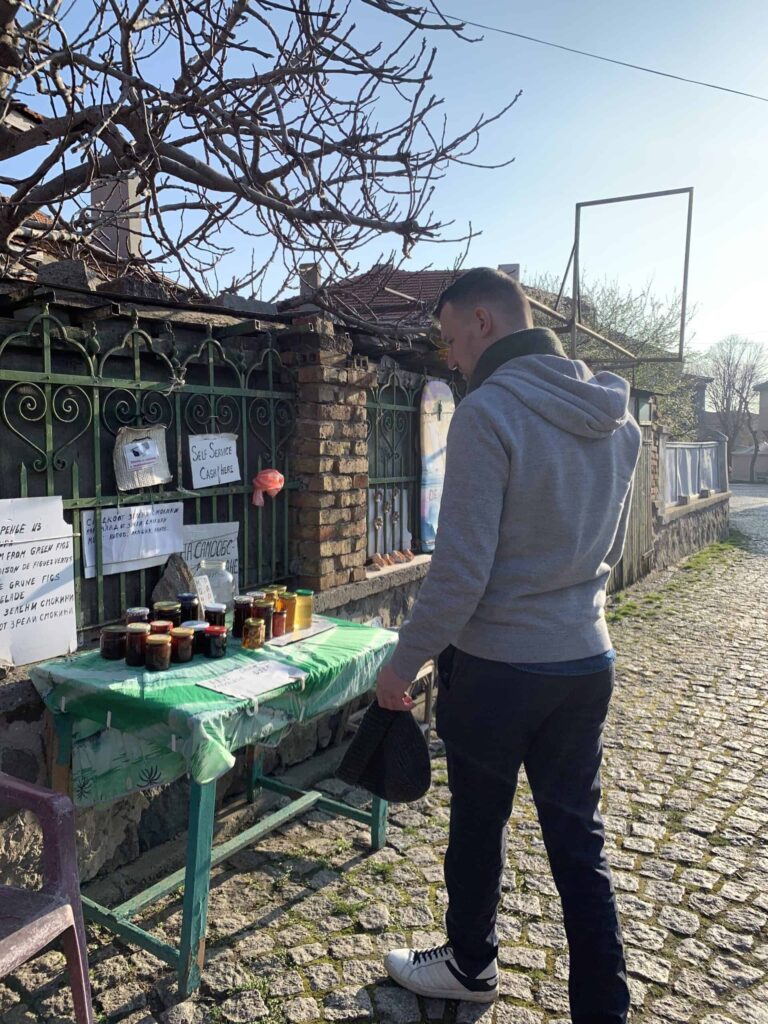
- A stall in a cobbled laneDragos at a honey stall in one of the old town's lanes. Local produce sold in the street is the kind of detail visitors remember and share, and it says more about a town than any panorama. It is also a natural partner story for local producers.
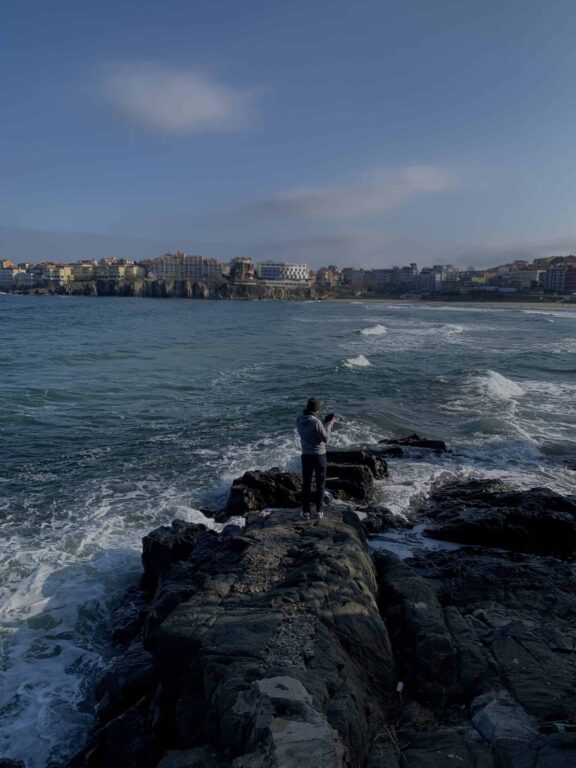
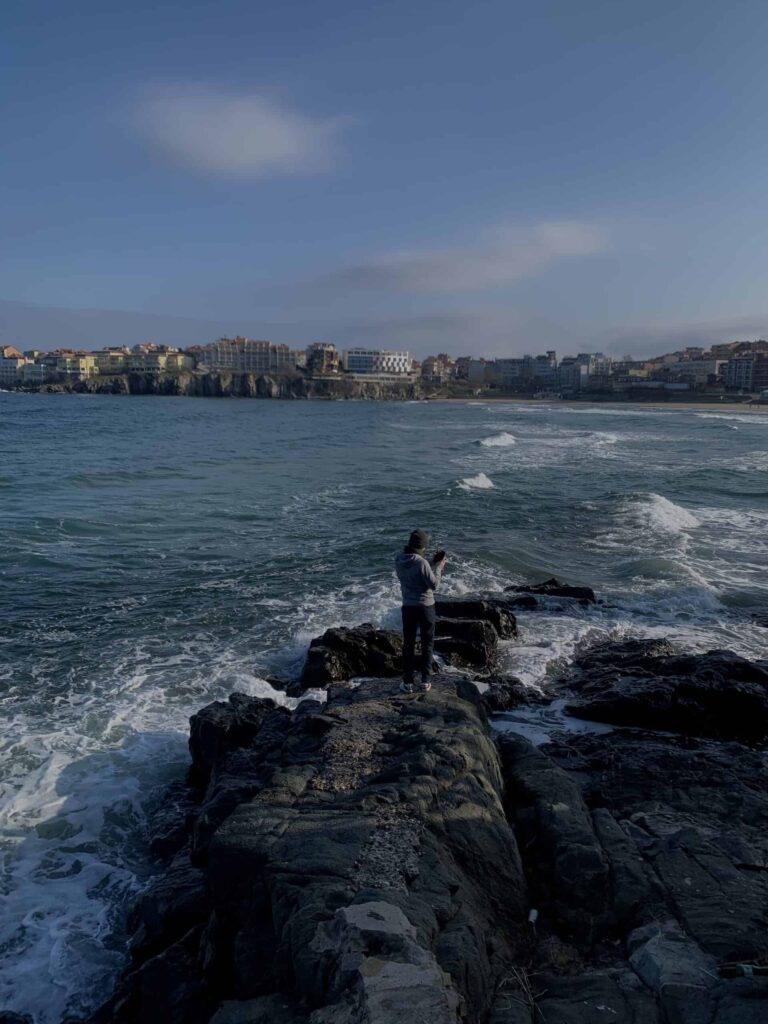
- Waves on the headlandThe sea breaking on the rocks below the old town. Moving water is the easiest few seconds of video a coastal destination has, and in March, with nobody on the rocks, it looks wild rather than busy.
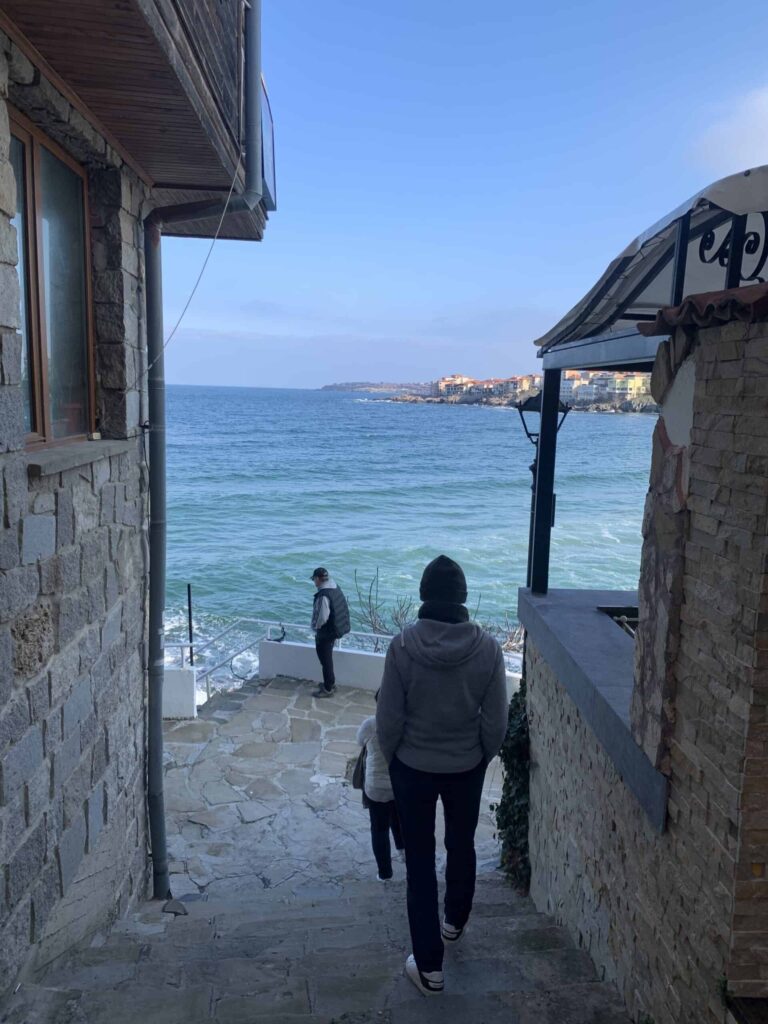
- Steps to the seaDragos walking down stone steps to the water, filmed from behind. A shot from behind lets the viewer step into the frame themselves; it is one of the most useful angles in travel content.
- Breakfast as locals eat itCoffee and sugared doughnuts on a lace cloth. A breakfast table says "this is how life tastes here" in a way no menu can, and it suits Stories, where people expect the everyday.
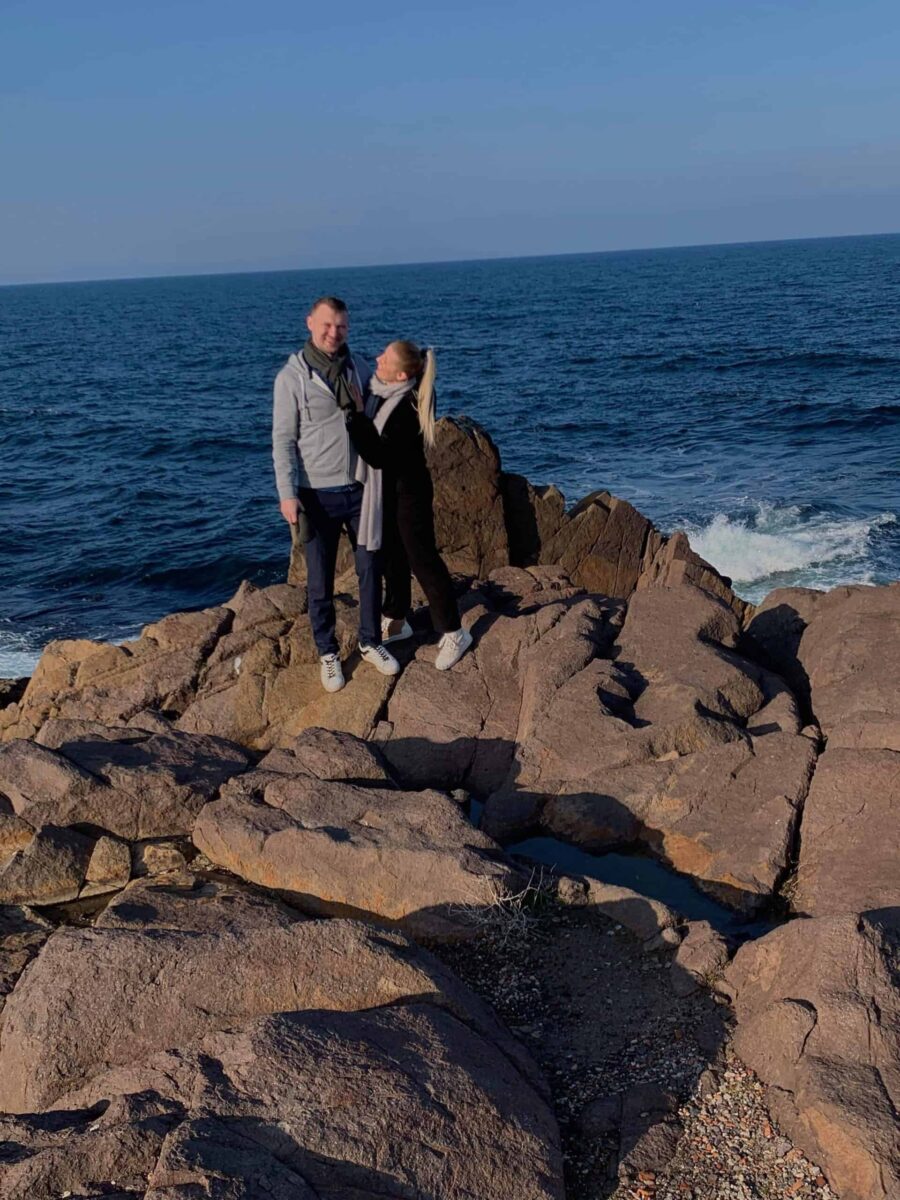
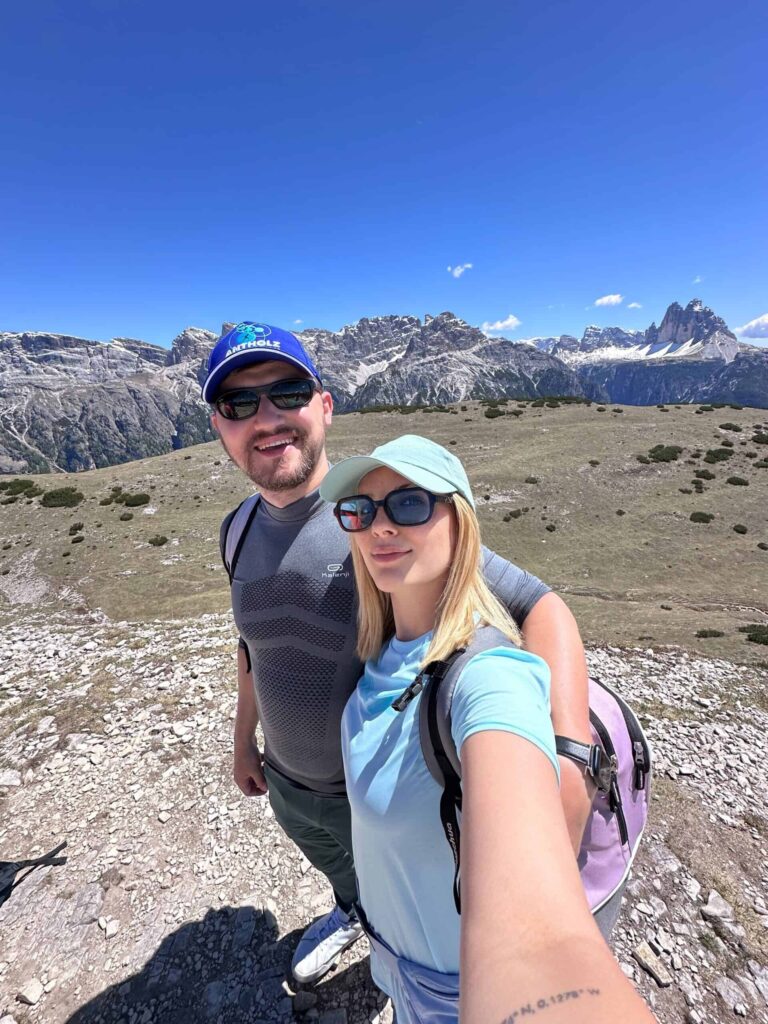
- People in the landscapeVelena and Dragos on the rocks by the sea. A destination needs people in at least some of its frames, so the viewer can picture the scale and imagine being there.
The case for the off season
Most content about the Bulgarian coast is shot in July and August, the peak of summer, when the beaches are full and every restaurant is open. Summer, from June to September, is the full experience: warm water, open restaurants and hotels, water sports, and the arts festival in September. June and early September give almost all of it with fewer people.
We filmed in March, and the town was peaceful and striking. Many tourist businesses close out of season, so it is not for every visitor, but the old town in the quiet light is beautiful, and it shows the place as the people who live there know it. For a destination or a hotel, that has three uses.
The same applies to any seasonal property. Our article on what a hotel should post through the year explains how to plan a content calendar around the seasons, and our seasonal campaign package is built for exactly that.
Food on camera, the local way
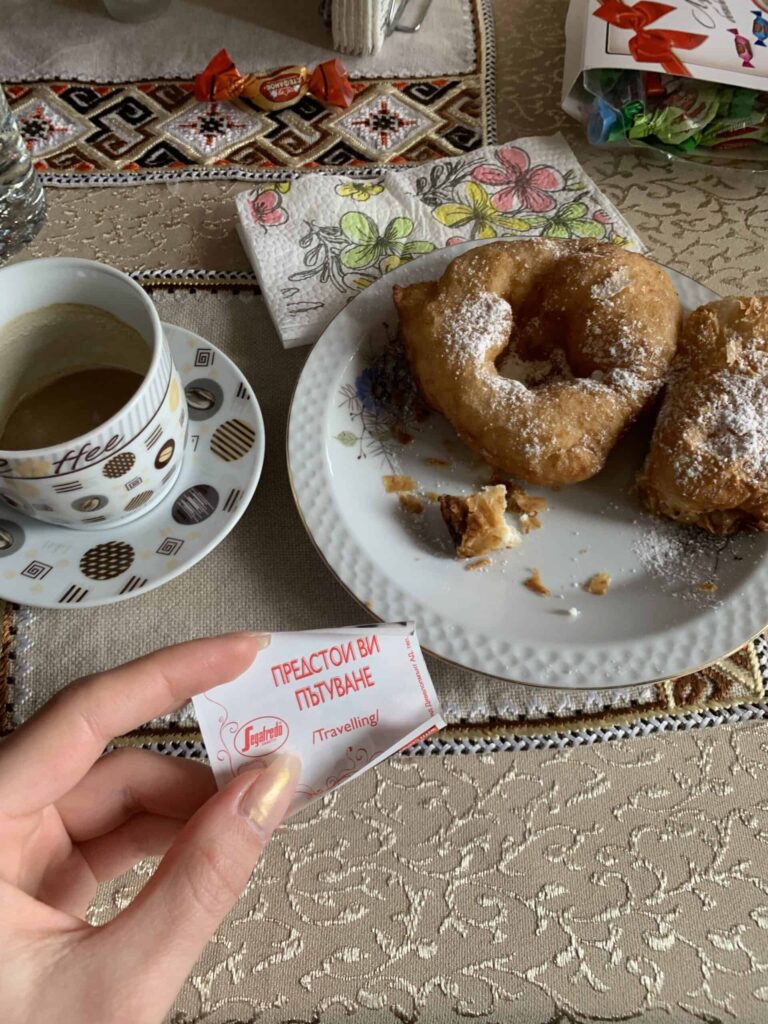
Food is where a local creator makes the biggest difference, because she knows what to order and what to skip. On the coast, the dish to ask for is fresh Black Sea fish, grilled simply. Velena's advice is to ask what came in that morning, wherever you sit down.
For breakfast, look for banitsa, the traditional Bulgarian pastry. The traditional filling is crushed white cheese, yoghurt and eggs, and it is served for breakfast with plain yoghurt, ayran or boza, hot or cold (Banitsa, Wikipedia). Our first article described it as a cheese and spinach pastry; the traditional filling is cheese, and we have corrected it.
With dinner, try a Bulgarian red. Mavrud is a red grape grown mainly in the Thrace region, with vineyards mainly around Asenovgrad and Perushtitsa, and it can make tannic, spicy wines (Mavrud, Wikipedia). Our first article placed it just inland from Burgas; Thrace is further west, and we have corrected that too.
For a restaurant or hotel on the coast, the lesson is to film food the way people eat it: on the table, with hands in the frame, in the light of the room. Our guide to filming food and drink on video goes through how dishes are shot so they sell.
Lessons for destinations and hotels on the coast
Whether you are a tourism board, a seaside hotel or a restaurant in an old town, a visit like ours points to the same handful of lessons.
How to brief a creator for a destination
Filming a whole town is different from filming a single venue. A good brief settles these points before anyone travels.
Why it is worth the care: in a Phocuswright study of US travellers who used social media to plan a trip, 65 per cent made a purchase or visit decision based on content they saw there. Hype alone rarely decides a trip, though: a 2026 YouGov survey for Omio found that 68 per cent of US travellers put their personal interests first. Content that answers a traveller's real interests, honestly, is what does the work. Our guide to hiring a travel content creator for destination Reels covers the shoot in more detail.
Packages for destinations and seaside hotels
For a town, a region or a tourism board, our travel packages fit best. For a hotel on the coast, the hotel packages do. Every price comes straight from our shop, and nothing is filmed until the brief is agreed.


If you run a hotel and want the posting handled as well as the filming, our social media plans for venues cover both, and the hotel packages page compares every hotel option side by side.
See the travel content we make
Tap a video to play it. There is more on our travel and experiences work page.

Travel facts for 2026
Much has changed since our first article, so here are the facts a visitor from the UK needs today.
Getting there. The nearest airport is Burgas, and Sozopol is about 35 km south of the city. For summer 2026, Burgas Airport listed Ryanair and Wizz Air from London Luton, Jet2.com and easyJet from London Gatwick, and easyJet from Manchester, with the charter season expected to start in the first half of May (Fraport Bulgaria, Burgas Airport summer 2026). Flights are seasonal, so check what runs on your dates. From Burgas you can reach Sozopol by bus, taxi or hire car, and the old town is best explored on foot.
Money. Bulgaria's currency has been the euro since 1 January 2026. The lev was accepted until 31 January 2026 and could be exchanged free of charge at Bulgarian banks until 30 June 2026, according to GOV.UK's travel advice for Bulgaria.
Entry. British citizens can visit the Schengen area, which Bulgaria is part of, without a visa for up to 90 days in any 180-day period. Your passport must have been issued less than 10 years before you arrive and must be valid for at least 3 months after the day you plan to leave. Under the EU's Entry/Exit System you may need to register your fingerprints and a photo at the border, which is free but can mean longer queues. Rules change, so check the GOV.UK page before you travel.
When to go. For beaches and open restaurants, mid-June to mid-September; July and August are the busiest. For a quiet old town and photographs, spring, as we found in March, with the warning that many tourist businesses close out of season.
Where to stay. If you can, stay inside the old town. Waking up on the peninsula and walking out onto the cobbles before anyone else is up is what makes Sozopol different from a standard beach resort. There are studios and apartments in the old town on the usual booking sites, from simple to sea-view with terraces. Book early for July and August.
Sozopol and destination content: questions
Where is Sozopol?
On Bulgaria's Black Sea coast, about 35 km south of Burgas, in the south east of the country. The old town sits on a rocky peninsula, with the newer town and beaches around it.
What is Sozopol known for?
Its old town of Renaissance-era houses, its history as the Greek colony of Apollonia, founded in the 7th century BC, its sandy beaches, and the Apollonia Arts Festival, held every September since 1984.
How do I get to Sozopol from the UK?
Fly to Burgas. In summer 2026, flights ran from London Luton, London Gatwick and Manchester. From Burgas, Sozopol is about 35 km by bus, taxi or hire car.
What currency does Bulgaria use?
The euro, since 1 January 2026. The lev is no longer accepted in shops, and the period for free exchange at Bulgarian banks ended on 30 June 2026.
Is Sozopol worth visiting out of season?
For a quiet old town and photographs, yes: we filmed it in March and found it peaceful and striking. Many tourist businesses close out of season, so it suits a short visit more than a beach holiday.
Was this visit paid for by anyone?
No. It was our own trip, during a month visiting our home countries. Sozopol is not a client of ours; we use the visit to show what we film at a destination.
Do you make content for destinations and hotels abroad?
Yes. Our travel packages cover destinations and tourism boards, and our hotel packages cover single properties, each with edited Reels, stills and agreed rights.
- Wikipedia, Sozopol
- Wikipedia, Banitsa
- Wikipedia, Mavrud
- Fraport Bulgaria, Burgas Airport summer 2026
- GOV.UK, Bulgaria travel advice: entry requirements
- Travolution, reporting Phocuswright on social media in travel
- PAX News, reporting the YouGov survey for Omio
- ASA, Influencers' guide to making clear that ads are ads
A question this article did not answer? Ask our team, and a person will reply.