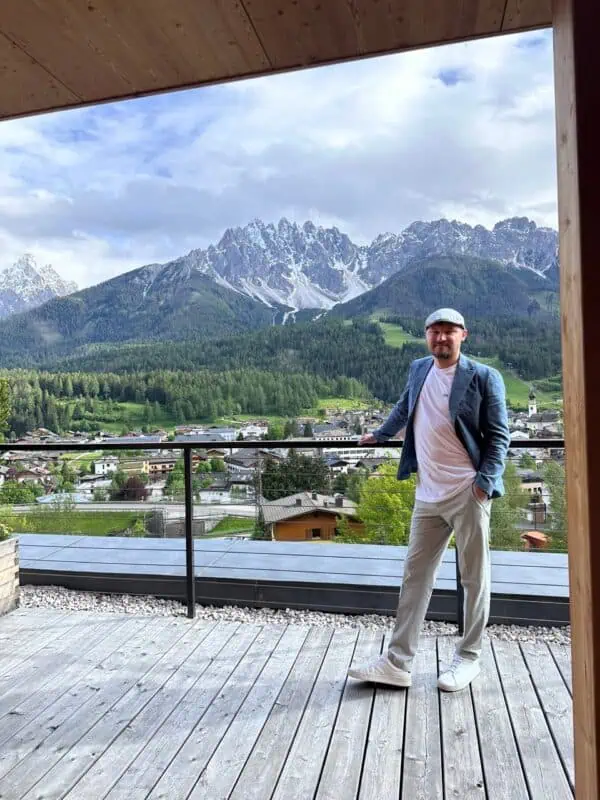

- One full day in Copenhagen can hold coffee and a pastry, Nyhavn, lunch at Torvehallerne, a bike ride, shopping on Strøget, a stjerneskud for dinner and a walk by the water.
- Tivoli Gardens, open since 1843, runs in seasons. It was closed when we visited out of season, so check its dates before you book. Its Halloween season in 2026 runs from 2 October to 1 November.
- The airport is about 8 km from the centre, around 15 minutes by metro or train, and the metro runs 24 hours a day.
- For a city or a tourism board, a day filmed in order, with food and people in it, is more useful on social media than a reel of landmarks.
- Out of season is not a reason to skip a shoot: winter light, coats and empty streets tell a story of their own, and they fill the months other content leaves empty.
Our weekend in Copenhagen
If you are always on the lookout for a new city, Copenhagen deserves to be near the top of the list. Velena and Dragos spent a weekend there at the end of February 2024 and fell for it almost at once. From the moment we landed it was clear this was a place to explore properly. The streets are beautiful, the food is excellent, the people are relaxed, and the city has a quality of life you feel within hours of arriving.
We are a content and social media agency, so we filmed one full day of that weekend as a 24 hour film for our YouTube channel. This article follows the same day: what we did, what we ate, what we wished we had more time for, and the facts you need to plan it yourself. Every fact has been checked again for October 2026, and the sources are listed at the end.
It also does a second job. Cities, hotels and restaurants often ask us what a creator actually does with a place in a day, and why it works on social media. A real day in Copenhagen is a good way to show it, so the second half of this article is written for them.
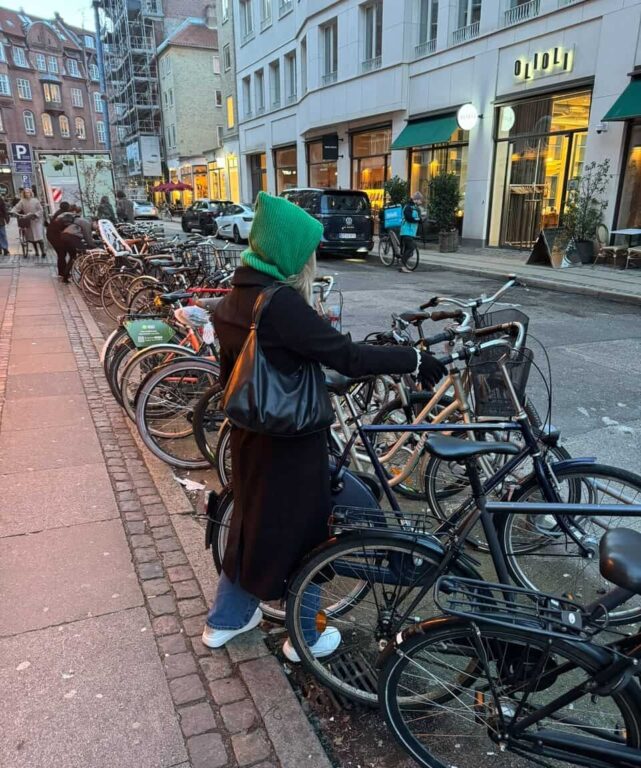
We went out of season. It was cold, we wore coats and hats, and some of the city's best known sights were closed for the winter. That turned out to be part of the story rather than a problem with it. The city was calmer, the light was low and soft, and we had the waterfront almost to ourselves after dark.
The day in order, from coffee to midnight
This is the day we filmed, in the order we lived it. It is a full day, but an easy one, because the centre of Copenhagen is compact and you can walk or cycle between all of it.
- Morning: coffee first, everything else secondCopenhagen takes coffee seriously. Find a coffee shop near where you are staying, order a pastry with it, and give yourself ten minutes before you start. You will need the fuel.
- Mid morning: NyhavnWith coffee on board, head to Nyhavn, the old harbour with its row of coloured houses. Walk the waterfront, take your photographs, and soak up the atmosphere. Canal tours leave from here if you have the time.
- Lunch: TorvehallerneThe covered food market near Nørreport. Order smørrebrød, the Danish open sandwich on rye bread, and a glass of snaps if you want to eat like a local.
- Afternoon: a bike towards TivoliRent a bike and ride through the centre towards Tivoli Gardens. When we visited it was closed for the season, which is the main reason we want to go back.
- Late afternoon: StrøgetThe long pedestrian shopping street through the old town, with familiar brands and Danish design shops. We spent longer there than we planned.
- Dinner: stjerneskudThe dish we would tell anyone to order: fried plaice on rye bread with shrimp, lettuce and caviar, with a cold beer and a shot of snaps.
- Evening: cocktails and the waterfrontA rooftop bar for a cocktail, then a slow walk back along the water with the lights of the city on it.
If you only have one day, that is the day we would repeat. If you have a weekend, add a canal tour, a museum, and Tivoli if it is open, and slow everything else down.
Nyhavn: the postcard comes to life
Nyhavn is the picture of Copenhagen most people carry in their heads before they arrive: the row of brightly painted houses along the canal, the wooden boats moored on the water, people sitting outside with drinks. VisitCopenhagen describes the houses as 17th century buildings and the old harbour as a once busy port, full of sailors from all over the world visiting its pubs and alehouses.
What surprised us was how well it holds up in person. It is not a tourist trap dressed up for photographs. It is a lived-in harbour with good restaurants, good bars and a waterfront energy of its own. It also has a literary history: according to the same VisitCopenhagen page, Hans Christian Andersen lived in three of its houses, at numbers 20, 67 and 18, and wrote some of his best known tales there, including The Tinderbox and The Princess and the Pea.
For a creator, Nyhavn is the opposite problem to an unknown place. Everyone has seen it, so the wide postcard adds little. What adds something is a person in the frame, a detail close up, a moment that could only have happened on that day. That is why our Nyhavn shot is a person in a winter coat in front of the houses, not the houses alone.
Coffee and wienerbrød

Start every day in Copenhagen with a coffee. This is not optional advice; it is the right way to approach the city. There are coffee shops on almost every street in the centre, and the pastries next to them are excellent. There is no single one we would send you to. Walk until you find one you like the look of, sit down for ten minutes, and then go and explore.
Order a wienerbrød with it. The pastry known abroad as a "Danish" is called wienerbrød in Denmark, which means Vienna bread. VisitDenmark explains that these pastries are not really Danish at all: they were first made in Denmark in the 1840s by Austrian bakers. Whatever their origin, they taste better in Copenhagen than anywhere else we have had them.
For a café or a bakery, this is the easiest content in the world to get right and the easiest to get wrong. The right version is the cup and the pastry in a real hand, in the light of the street outside, as part of someone's morning. The wrong version is the same pastry on a white plate under a ring light. People watch the first and scroll past the second, because the first is an invitation and the second is a menu.
Torvehallerne and smørrebrød
Torvehallerne is Copenhagen's covered food market and one of the best food experiences in the city. It stands on Israels Plads, close to Nørreport station, in two glass halls of stalls selling fresh produce, cheese, meat, fish, pastries, coffee and prepared food. According to the Danish Architecture Centre, it opened in 2011, fourteen years after the idea was first put forward, and up to 1,000 guests can sit outside in the evening under the trees and sailcloth.


The thing to eat here is smørrebrød, the open sandwich on dark rye bread. VisitDenmark describes it as a slice of rye bread with toppings such as pickled herring or roast beef, and dates it to the 19th century. It is completely unpretentious, and it is one of the best lunches in the city. Order two or three different ones, and if you want the full experience, a glass of snaps alongside.
An earlier version of this article labelled two of our food pictures as Torvehallerne and stjerneskud. Looking again, we could not be sure where each was taken, so the captions now say only what the pictures show. It is a small thing, but on a page that helps people plan, the details should be right.
Stjerneskud: the dish to order
For dinner, order stjerneskud. The name means "shooting star", and it is a proper Danish classic. VisitDenmark describes it as a slice of rye bread with fried plaice fillet, topped with shrimp, lettuce and caviar, served with a cold beer and a shot of snaps. It was one of the best things we ate on the whole trip, and it deserves to be far better known outside Denmark than it is.
Snaps, if you have not had it, is a strong spirit based on aquavit and flavoured in many ways. VisitDenmark suggests dill or honey for newcomers and says it goes particularly well with pickled herring. Drink it slowly, or in one go with a toast, as the table around you does.

For a restaurant, the lesson from a dish like stjerneskud is that a signature dish is a story waiting to be filmed. It has a name with a meaning, an order in which it is built, a drink that goes with it, and a way of eating it. A short video that shows all four does more for a restaurant than a dozen photographs of plates. Our page on how dishes are filmed so they sell goes into how we do it.
Bikes and Strøget
Rent a bike. Copenhagen is built for cycling, and riding through the streets is one of the best ways to see it. According to VisitCopenhagen, more than half of the city's population rides a bike every day, and in central Copenhagen bikes now outnumber cars. Follow the locals: keep right, signal your turns, and stop when the cyclists in front of you stop.
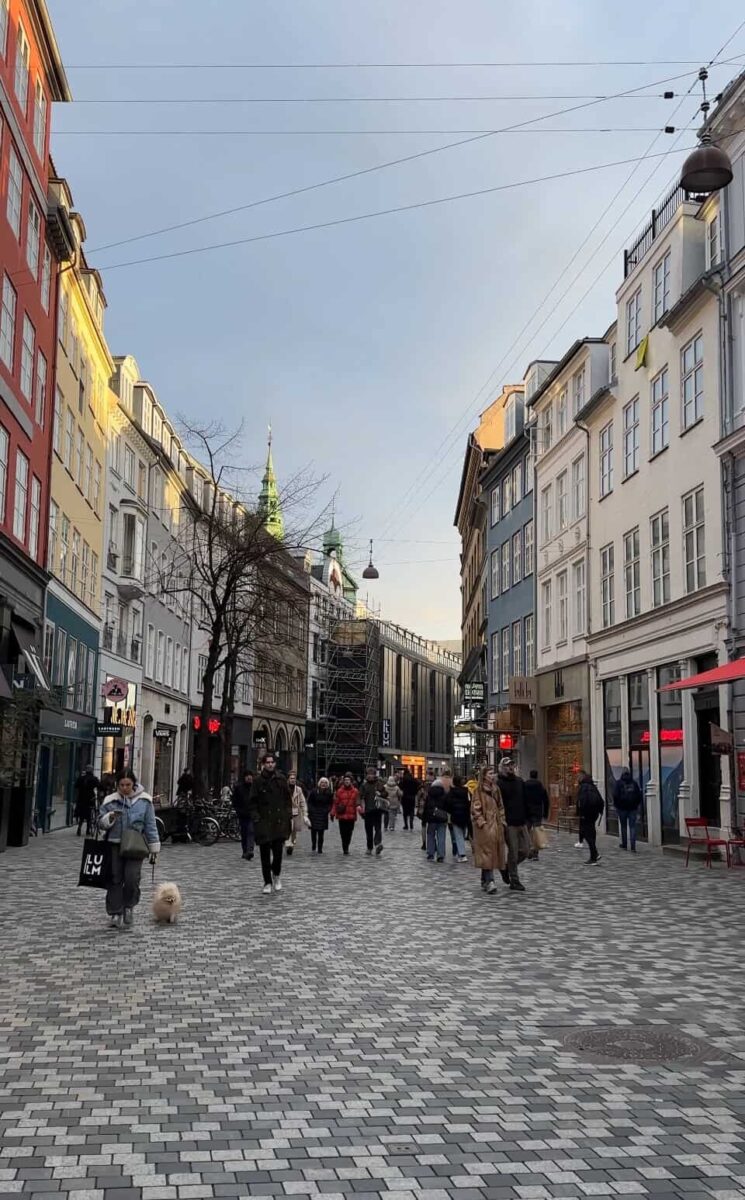
Strøget is the pedestrian shopping street that runs through the old town, about 1.1 km from City Hall Square to Kongens Nytorv. The earlier version of this article called it one of Europe's longest pedestrian streets. That is the city's legend, but it needs a small correction: Wikipedia's article on Strøget explains that when it was closed to cars in 1962 it was the longest pedestrian street in the world, and that several streets in other cities are longer today.
What has not changed is that it is a very good shopping street. It mixes familiar international brands with Danish design and independent shops, and the side streets off it have some of the most interesting of all. We spent more time there than we planned, which is a reliable sign. If you want to bring something home, buy it on and around Strøget rather than from the souvenir shops by the harbour, and leave room in your suitcase.
Tivoli Gardens: the one we missed
Tivoli Gardens was closed for the winter when we visited. It is one of the oldest amusement parks in the world, right in the heart of the city, and by every account it is magical in season, with the evening lights the thing people talk about most. Tivoli's own site says it has welcomed guests since 1843.
The earlier version of this article gave general dates for Tivoli's seasons. For 2026, Tivoli's site lists its Halloween season as running from 2 October to 1 November. It also runs a summer season and a Christmas season, with dates that change from year to year, so check the opening times on Tivoli's own site before you book your trip. Missing it is not a disaster, as our weekend proved, but it would make a very good city even better.
There is a lesson in that for any place that closes for part of the year. A visitor who arrives in the closed season still makes content, and still shares it. A city or an attraction that shows what the off season offers, and says clearly when the main draw reopens, turns a disappointment into a reason to come back. We are going back, for example, and Tivoli is the reason.
Getting to and around Copenhagen
Copenhagen is one of the easiest cities in Europe to arrive in. VisitCopenhagen puts the airport about 8 km from the city centre, with both the metro and the train taking around 15 minutes; the metro runs every 4 to 6 minutes during the day and evening, with longer gaps at night.
Once you are in the city, the metro runs all day and all night. VisitCopenhagen's page on the metro says its four lines run 24 hours a day, seven days a week, though trains are less frequent late at night and some overnight maintenance can lengthen journeys. The centre itself is compact, so for most of a day you will walk or cycle.

Our long films from cities and stays
Tap a video to play it. The third is our 24 hours in Copenhagen. There is more on our travel work pages.



What a city can learn from our 24 hours
A city is a product people look up before they choose it. In the UK, according to DataReportal's Digital 2026 report, there are around 55.5 million social media user identities, and almost half (49.3 percent) of adult internet users say they use social media to look up information about products. For a city break, that search often starts with a short video of someone else's day.
That is why a 24 hour film works. It answers the questions a visitor actually has, in the order they have them: where do I get coffee, what do I see first, where do I eat, how do I get around, what do I do at night. A reel of landmarks answers none of those. A day does all of them, and it does it with a person the viewer can picture themselves as.
Our page on what eight destination Reels are for shows how one shoot is shaped into a season of posts, and our guide to what a destination content package delivers explains how to judge one.
The shot list for a city in a day
We plan before we arrive, even for a weekend of our own. For a client, nothing is filmed until the brief is agreed. This is the list we work from in a city, and it is close to the list we used in Copenhagen.
- The arrivalThe airport, the train, the first street. Every city film starts with the moment you get there.
- The morning ritualCoffee and a pastry in a real hand, in the light of the street. It sets the pace of the whole film.
- The landmark, with a personNyhavn with someone in front of it, close enough to see a face. The landmark alone is a postcard; with a person it is a visit.
- Lunch, from above and at the tableThe spread from above to show it all, then a hand reaching in, then a face. Three shots tell the meal.
- How you get aroundA bike, a metro platform, a walk. These are the shots that make a film useful to someone planning a trip.
- The shopping streetMovement, shop windows, the light coming on at dusk. A change of pace between food scenes.
- The signature dishBuilt, served, explained, eaten, with the drink that goes with it.
- The city at nightA rooftop, the water, the lights. The scene that closes the day and makes people want to be there for it.

From a list like this, one day gives a long film, a set of short vertical cuts, and enough stills for a website and a season of posts. That is the shape of our travel packages, and of the travel films in our portfolio.
How to brief a creator for a city, a hotel or a restaurant
If you run a tourism office, a city hotel or a restaurant, a clear brief is the difference between content you can use and content you cannot. This is what we would want to know before a city shoot.
With our team, the people who plan the content are the people who film it, and you have one point of contact from the first brief to the last hand off. Our guide to the UK advertising rules on social media covers labelling in more detail, and our page on hiring a creator for a venue walks through a shoot day.
Our travel and restaurant packages
If you want a day like ours made for your city, your hotel or your restaurant, these are the packages that do it. Every price comes from our shop, and each product page explains exactly what is delivered.



A day like our Copenhagen film fits Travel Content Package: Destination Reels, one to two days in one place. Travel Content Package: Full Destination Feature adds a long film and a written feature for a wider area, and Travel Content Package: Brand Ambassador Trip follows a trip across a region. For a restaurant, Restaurant Content: Menu Spotlight films your signature dishes in one session, Restaurant Content: Content Day covers a full service, and Restaurant Content: Monthly Retainer brings us back twice a month. The full range is on our restaurant packages and hotel packages pages.
Copenhagen in a day: questions
What are the best things to do in Copenhagen in 24 hours?
Coffee and a pastry, Nyhavn in the morning, lunch at Torvehallerne, a bike ride through the centre, shopping on Strøget, stjerneskud for dinner and a walk by the water at night. Add Tivoli Gardens if it is open.
What Danish food should I try?
Smørrebrød, the open sandwich on rye bread, for lunch; stjerneskud, fried plaice on rye with shrimp, lettuce and caviar, for dinner; and wienerbrød, the pastry known abroad as a Danish, with your morning coffee. A shot of snaps goes with the first two.
When is Tivoli Gardens open?
Tivoli runs in seasons, with dates that change each year. Its 2026 Halloween season runs from 2 October to 1 November. Check the opening times on Tivoli's own site before you book; it was closed when we visited out of season.
How do I get from the airport to the centre?
By metro or train, in around 15 minutes. The airport is about 8 km from the centre, and the metro runs every 4 to 6 minutes during the day.
Does the Copenhagen metro run all night?
Yes. Its four lines run 24 hours a day, seven days a week, with longer gaps between trains late at night.
Is Strøget the longest pedestrian street in Europe?
It was the longest pedestrian street in the world when it was closed to cars in 1962, but several streets in other cities are longer today. It runs about 1.1 km, from City Hall Square to Kongens Nytorv.
Is Copenhagen worth visiting out of season?
We think so. It was cold and Tivoli was closed, but the city was calmer, the light was soft and the food was as good as ever. Two or three nights is a good length for a first visit.
Do you film cities, hotels and restaurants for clients?
Yes. Our travel packages start from £1,800 and our restaurant packages from £650, with the details on the travel and restaurant packages pages.
- VisitCopenhagen, Nyhavn
- VisitDenmark, Traditional Danish food
- Danish Architecture Centre, Torvehallerne
- VisitCopenhagen, 8 reasons you will love biking in Copenhagen
- Wikipedia, Strøget
- Tivoli Gardens, official site
- VisitCopenhagen, Copenhagen Airport to the city centre
- VisitCopenhagen, The metro
- DataReportal, Digital 2026: The United Kingdom
- Business Today, Instagram head announces 3 minute Reels, 21 January 2025
- YouTube Official Blog, Tall updates coming to Shorts, October 2024
- GOV.UK and CMA, Social media endorsements: being transparent with your followers
- ASA and CAP, Influencers' guide to making clear that ads are ads
A question this article did not answer? Ask our team, and a person will reply.