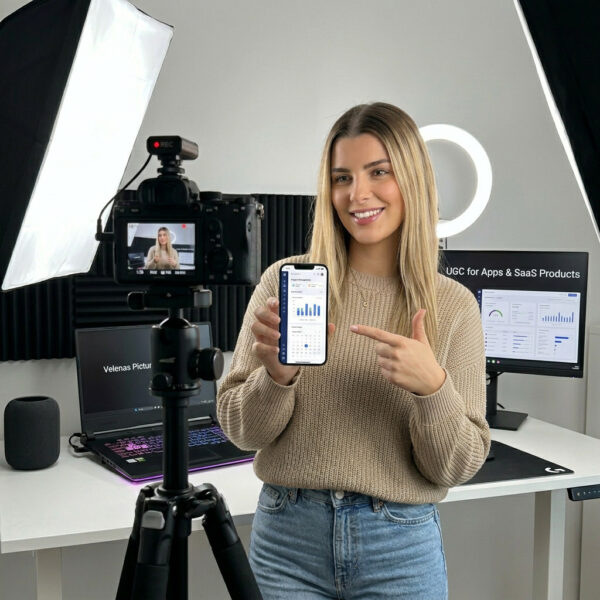

- UGC is video and photo that looks and sounds like a real customer made it. Today it is usually commissioned: made to a brief by a creator and delivered to the brand to publish.
- Its main benefits are reach, because platforms favour original native video; trust, because it borrows the shape of a recommendation; and conversion, because shoppers who see real people using a product buy with more confidence.
- It is cost-effective because it is priced on the work and the rights, not on a creator's follower count, so a brand can test several ideas for the price of one studio advert.
- It does not guarantee results, it needs a clear brief, and in the UK it must follow the rules on labelling adverts and the ban on fake reviews.
What UGC is, and why brands once hesitated
When Velena wrote the first version of this article in April 2023, many people were still confused about what UGC (user generated content) was, and plenty of brands were hesitant to work with UGC creators. Three years on, the confusion has mostly gone. UGC is now a normal part of how brands of every size market themselves, from independent shops to household names.
The term began with content customers made for free: a photo of new trainers, a review of a moisturiser, a video of an unboxing. Brands that were lucky enough to be tagged could ask permission to share it. That kind of UGC still exists and is still valuable, but nobody can plan it. So brands began commissioning content in the same style from creators who make it as a trade, and today "UGC" usually means exactly that: short, vertical, natural video made to a brief and delivered to the brand, which then decides where it runs.
The reason the format spread is simple. People scroll past adverts and stop for people. A UGC video carries the feel of a recommendation, a face, a voice, a real room, while remaining an asset the brand owns the right to use. This article sets out the benefits that follow from that, with a source for every figure, and the limits we think every brand should know before spending a pound. If you want the basics first, our guide to what UGC is covers formats, rights and the UK rules in full.

Seven benefits of UGC for brands
The original version of this article focused on three benefits: reach, authenticity and cost-effectiveness. They still lead the list, and four more have become just as important.
- Reach where your customers already areDataReportal's Digital 2026 report counts around 55.5 million social media user identities in the UK, close to 80 percent of the population, and almost half of UK adult internet users say they use social media to look up products (DataReportal, Digital 2026: The United Kingdom). The platforms also reward original video made for them: Instagram says it shows fewer reels that are low resolution, watermarked or already posted elsewhere, in Instagram ranking explained. Native creator video is exactly what that favours.
- Trust, borrowed from recommendationsIn Nielsen's 2021 Trust in Advertising study, recommendations from people they know were the most trusted channel, at 89 percent, ahead of every form of advertising (Nielsen, Trust in Advertising 2021). A creator on camera is not someone the viewer knows, but the format borrows the shape of a friend's recommendation, which is often enough to earn the first few seconds a polished advert loses.
- More sales from the same trafficShoppers buy with more confidence when they see real people using a product. Bazaarvoice reports that UGC lifts conversion by 144 percent, a figure drawn from its own research on shopper reviews, photos and video (Bazaarvoice, Shopper Experience Index 2022). Reviews show the same pattern: Northwestern University's Spiegel Research Center found the purchase likelihood for a product with five reviews was 270 percent greater than for a product with none (Spiegel Research Center).
- Cost-effectivenessUGC is priced on the work and the rights, not on an audience, so it is usually cheaper and more controllable than paying for reach. Collabstr's 2026 report, based on more than 21,000 collaborations on its platform, found brands paid an average of 197 US dollars per UGC collaboration in 2025 (Collabstr, 2026 influencer marketing report).
- Room to testBecause one video costs a fraction of a studio advert, you can afford several openings for the same product and let the numbers choose. The first three seconds decide whether anyone sees the rest, and nobody can reliably tell in advance which opening will win.
- One video, many placesA single UGC video can run on your Instagram, your TikTok, your product page, your emails and your paid adverts, if the rights allow it. That is far more use from one piece of work than a post that lives on one feed for a day.
- Time and resources savedInstead of planning, filming and editing every piece of content yourself, you brief someone who does it as a trade. Your team spends its hours on the product and the customers, and the content arrives ready to publish.
None of these benefits is automatic. Each one depends on a good brief, a creator who understands the format, and someone publishing and measuring the results. That is the theme of the rest of this article.
What changed between 2023 and 2026
The first version of this article described UGC creators as influencers whose followers trust them, and said brands could "tap into the trust and credibility" of those audiences. That described a mix of two things that have since separated clearly.
Both are useful, and many brands use both: UGC for a steady supply of content and adverts, influencer posts for a burst of reach at a launch. Our guide to UGC vs influencer marketing sets out when each one wins, and our influencer packages cover the second.
The rules have moved on, too. Since 6 April 2025, under the Digital Markets, Competition and Consumers Act 2024, commissioning or posting fake reviews has been banned in the UK, and the Competition and Markets Authority can fine a business up to 10 percent of its global turnover, as CMS explains. A commissioned testimonial is fine as an advert; presenting it as an independent customer review is not. And when a creator posts paid content on their own account, it must be labelled, with "Ad" at the start, under the ASA and CMA influencers' guide. Our guide to the ASA and the CAP Code on social media goes further.
One more change is worth being open about. The first version of this article quoted four figures: an "11 times higher return" for influencer marketing from TapInfluence, 84 percent of consumers trusting friends and family from Collective Bias, influencer marketing costing "40 percent less per engagement" from Linqia, and UGC increasing conversions "by up to 20 percent" from a report it named as The Bersted Institute's. The first three were about influencer marketing rather than UGC, and all four came from studies that were several years old even then. We have replaced them with the current, sourced figures above.
Where UGC works hardest

UGC earns its keep in four places, and the best results come when one session supplies all of them.
Every use above needs the right licence. A video for your own channels is not automatically licensed for paid adverts, and paid use should always be stated in writing: which platforms, which placements and for how long. Buy the rights you need at the start, because upgrading later usually costs more.
See the benefits on screen
These are videos our team made for brands. Tap one to play it; nothing loads from outside the site until you do. There is more on our UGC portfolio, sorted by what you sell.



What UGC costs
Three things set the price of a UGC video: its length, how much is written and directed for you, and the rights that come with it. Our prices are on the page for every range, so you can see how those three move the figure. As an example, here are our four e-commerce packages, each at its starting price:




Across the wider UK market, rates vary a great deal with experience, niche, rights and how much of the work a creator takes on. Benchmark your budget with our free UGC rate calculator, and read our guide to UGC rates in the UK for the figures behind it.
The limits worth knowing
The first version of this article called UGC "easy, quick and 100% effective". We would not say that now, and nobody honest should. These are the limits we tell every brand about before they commission anything.
- It does not guarantee a numberA good video gives you a better chance. The offer, the targeting and the page it sends people to decide the rest. Nobody can promise a return before seeing your product and your audience.
- It depends on the briefA vague brief produces a vague video. The product, the audience, the key message, the claims you have approved and where the video will run all need to be written down before filming.
- It needs publishing and measuringA folder of videos does nothing on its own. Someone has to post them, run the tests, read the numbers and brief the next batch.
- The claims are yoursAs the advertiser, you are responsible for every claim in the video, which matters most in beauty, wellness and food, where a wording can easily read as medical.
None of this makes UGC harder to use. It just means it works best as part of a plan, not as a one-off experiment. That is why our social media management plans use the same kind of content as their engine, so one session can supply organic posts, Reels and paid placements, and the results inform the next brief.
Five tips for your first UGC campaign

The original article ended with five tips for UGC beginners. They were written for creators, and they hold just as true for a brand commissioning its first videos, so here they are from the brand's side.
- Know your audienceWrite down who the video is for: their age, their problem, where they scroll and what would make them stop. A creator can only film for an audience you have described.
- Choose quality over quantityThree well briefed videos with different hooks will teach you more than ten rushed ones. Consistency matters, but not at the cost of every video being forgettable.
- Listen to the commentsWhen the videos run, read what people say. Comments, questions and objections are the best brief you will ever get for the next batch.
- Put it where people will see itPublish on your own channels, put it on the product page, and give the best performers a paid budget. Content that sits in a folder earns nothing.
- Keep it authenticDo not over-script the creator into sounding like an advert. Agree the key points and the claims, then let them say it in their own words. That is the whole reason UGC works.
If you are a creator rather than a brand, the same five points apply to your own work, and our guide to UGC tips and tricks covers how to build a portfolio and find your first paid clients.
How our team makes UGC
Velena was already a social media manager and a working UGC creator when she wrote the first version of this article. She knew from both sides how frustrating it is when a brand does not have the content it needs: the plan stalls and growth slows. That is still the problem we solve.
Today our team at Velena Lifestyle, led by the founders Velena and Dragos, plans, films and edits UGC in house in High Wycombe, Buckinghamshire, for products, venues and apps. You choose who is on camera: Velena, Dragos, both, nobody with a voiceover, or no preference, at the same price. Nothing is filmed until you have approved the brief, and the rights are stated in writing on delivery. The people who plan your content are the people who film it, and you have one point of contact from the first brief to the last hand off.
To see what that looks like over time for a real business, read our case studies, or browse the twelve UGC ranges to find the one that fits what you sell.
UGC benefits: questions brands ask
What are the main benefits of UGC for brands?
Reach, because platforms favour original native video; trust, because the format feels like a recommendation; more sales from the same traffic, because shoppers see real people using the product; and cost, because UGC is priced on the work rather than an audience.
Is UGC better than influencer marketing?
They do different jobs. UGC buys content you own the right to use on your channels and adverts. Influencer marketing buys reach on a creator's account. Many brands use UGC for a steady supply of content and influencer posts for launches.
Does UGC increase conversions?
Often, yes. Bazaarvoice reports that UGC lifts conversion by 144 percent in its own research on shopper reviews, photos and video. Results vary with the product, the offer and the page, so test rather than assume.
Is UGC cheaper than traditional advertising?
Usually, per piece of content. A UGC video costs far less than a studio production, and it is priced on the work and rights, not on followers. That leaves budget to test several ideas and put money behind the winner.
Can I use UGC in paid adverts?
Yes, if your licence includes paid use. Organic and paid use are separate rights, so agree in writing which platforms, which placements and for how long before the video runs as an advert.
Can I present UGC as a customer review?
No. A commissioned testimonial can run as an advert, but presenting it as an independent customer review breaks the UK ban on fake reviews in force since 6 April 2025.
How many UGC videos should I start with?
Three is a sensible start: enough to test different hooks or angles and learn what your audience responds to. A Bundle of three, or a monthly plan if you know you will need a steady supply, is built for that.
- DataReportal, Digital 2026: The United Kingdom
- Instagram, Instagram ranking explained
- Nielsen, Trust in Advertising 2021
- Bazaarvoice, Shopper Experience Index 2022
- Spiegel Research Center, Northwestern University, How Online Reviews Influence Sales
- Collabstr, 2026 influencer marketing report
- CMS, No more faux five-stars: the DMCC Act bans fake reviews, 2025
- ASA and CMA, Influencers' guide to making clear that ads are ads
A question this article did not answer? Ask our team, and a person will reply.