
The Cost of "Easy Content": What Brands Get Wrong About UGC Creators
Every week we hear a version of the same story from a creator who trusted a brand, did the work, and got paid in vague promises instead of money. This is about why that keeps happening, what it actually costs the people on the other end of the camera, and what businesses can do instead.

A camera, a bedroom, and a dream that felt possible
Most UGC creators start the same way. Not with a talent agent or a business plan, but with a phone propped against a stack of books, a ring light bought on a payment plan, and a genuine belief that they could turn a talent for talking to a camera into something real. Some leave a job they hated to do it properly. Some do it around a job they need to keep, filming in the fifteen minutes before a shift or the hour after their kid falls asleep. All of them are betting time, equipment, and self-belief on the idea that brands will meet them halfway.
We work with creators every week at Velena Lifestyle, and we hear what happens when that bet does not pay off. Not from a survey. From direct messages, voice notes, and the kind of tired honesty people only share after the fifth brand in a row has done the same thing to them. What follows are the patterns we see most, in our own words, drawn from what creators actually describe going through.
The lines creators hear, and what they actually mean
None of these are one bad brand having a bad day. They are patterns, repeated often enough that creators have started making memes about them because the alternative is losing their minds quietly instead.

"We will gift you products instead of paying a fee."
What it actually means: your landlord does not accept skincare as rent.
Product gifting has a place, usually for genuine reviews from people who already love a brand. It stops being a fair exchange the moment it replaces payment for professional work: a written brief, a shoot, an edit, and usage rights the brand will use to sell things. A creator's bills are due in currency, not in a sixty pound bundle they did not ask for.
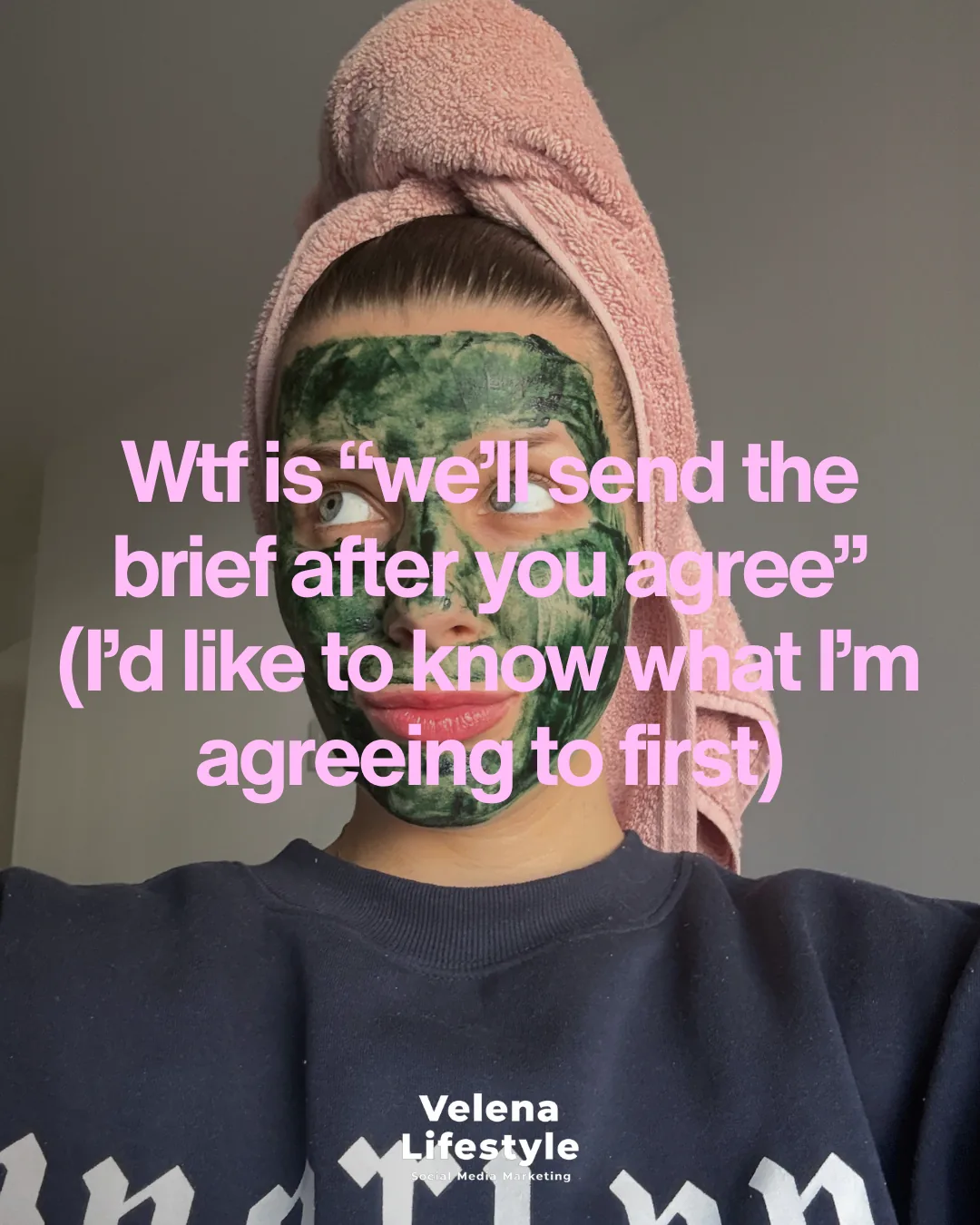
"We will send the brief once you confirm you are in."
What it actually means: agree first, find out what you agreed to later.
Asking someone to commit before they have seen the scope, the deliverables, or the claims they will be expected to say on camera is not efficiency. It removes the one thing that lets a creator protect themselves: informed consent about what the job actually is before they say yes.
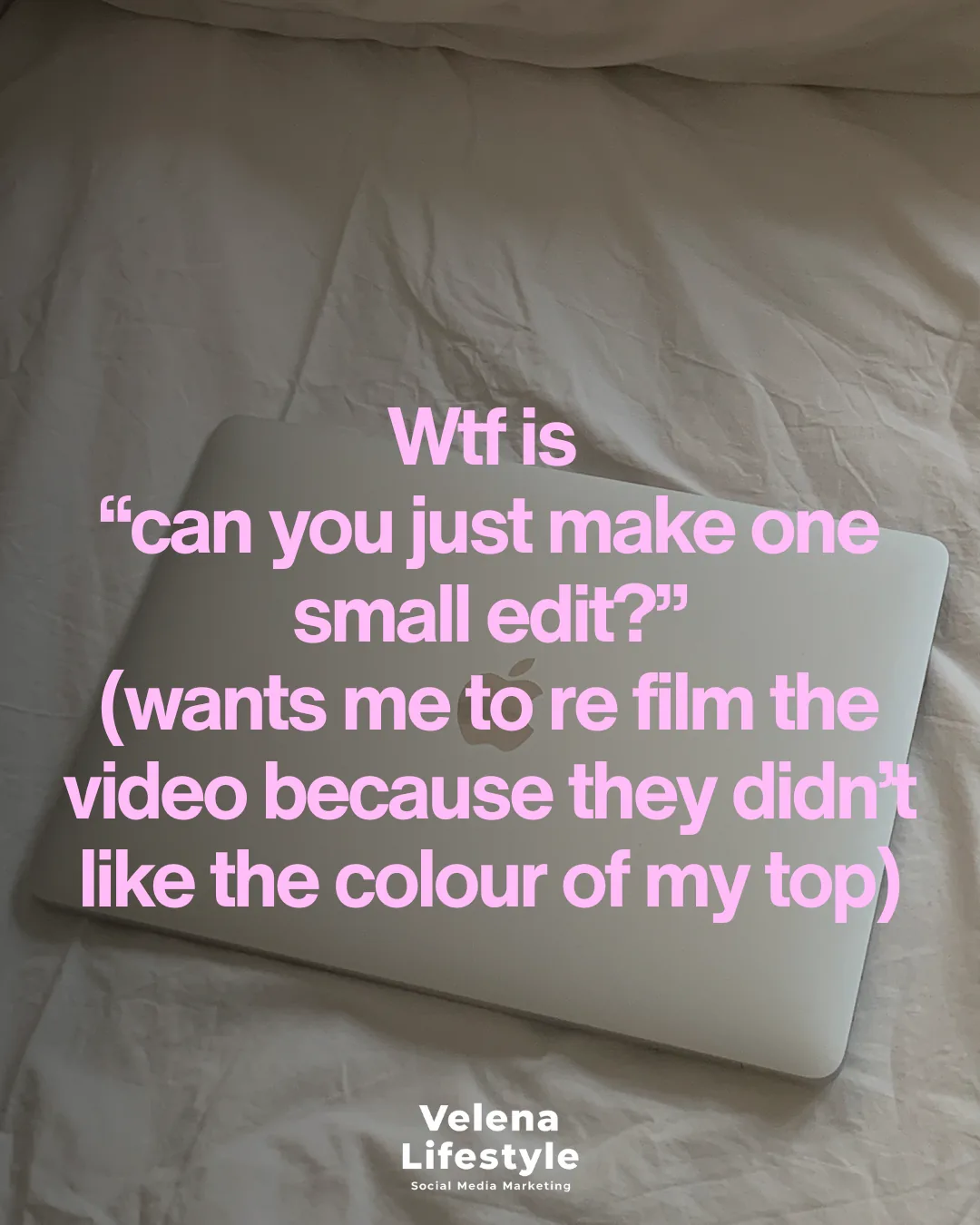
"Can you just make one small edit?"
What it actually means: reshoot the whole video because a top was the wrong colour.
Feedback is normal and healthy. What is not normal is dressing up a full reshoot as a five minute favour, then being surprised when it takes another half a day of a creator's unpaid time to fix a decision that had nothing to do with the quality of their work.
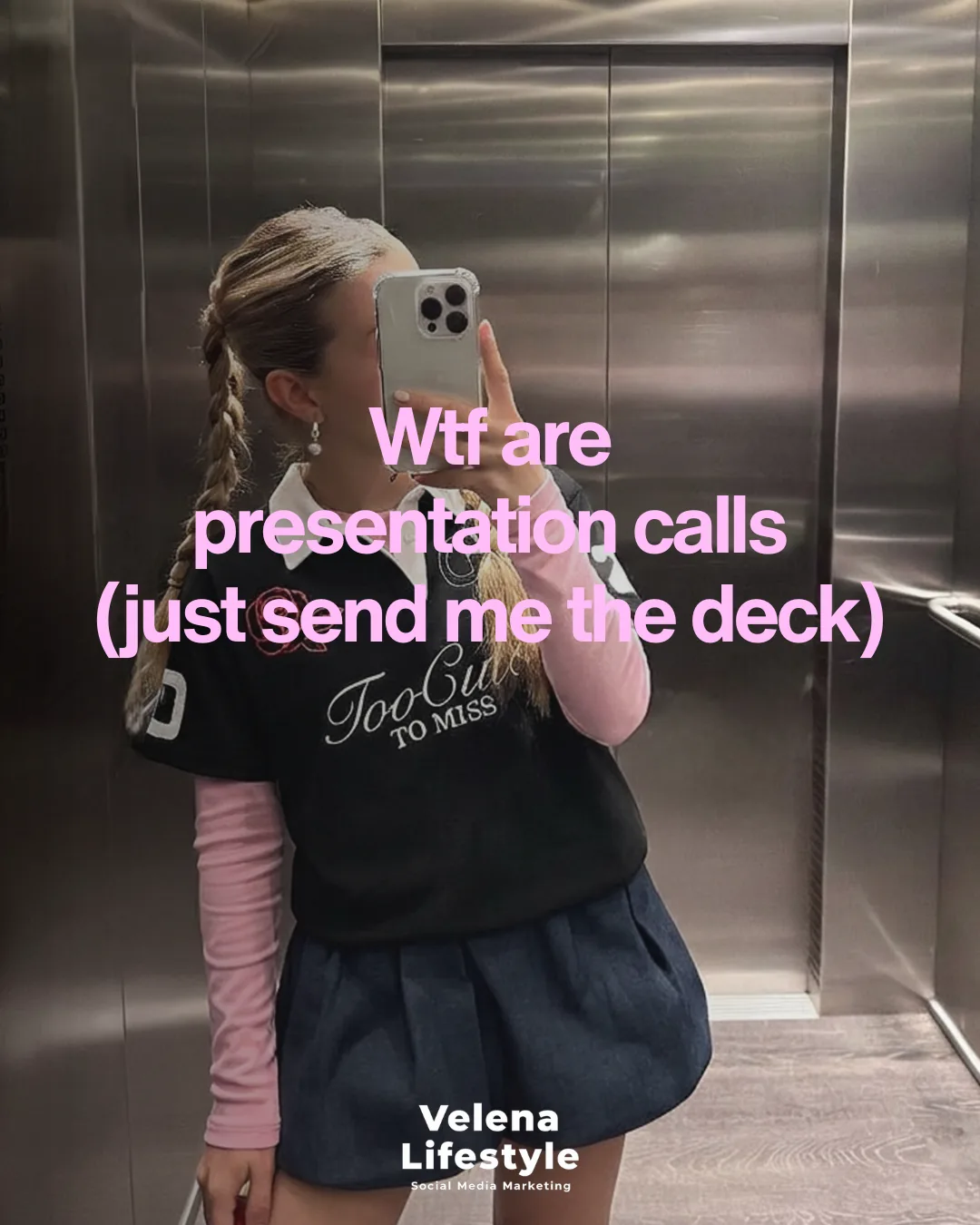
"Let us hop on a call so we can present the opportunity."
What it actually means: an hour of someone's day to hear what could have been three lines in an email.
A creator's time is their entire business model. Every hour spent on a call that a document could have replaced is an hour they are not filming, editing, or pitching the next brand that will actually pay them properly.
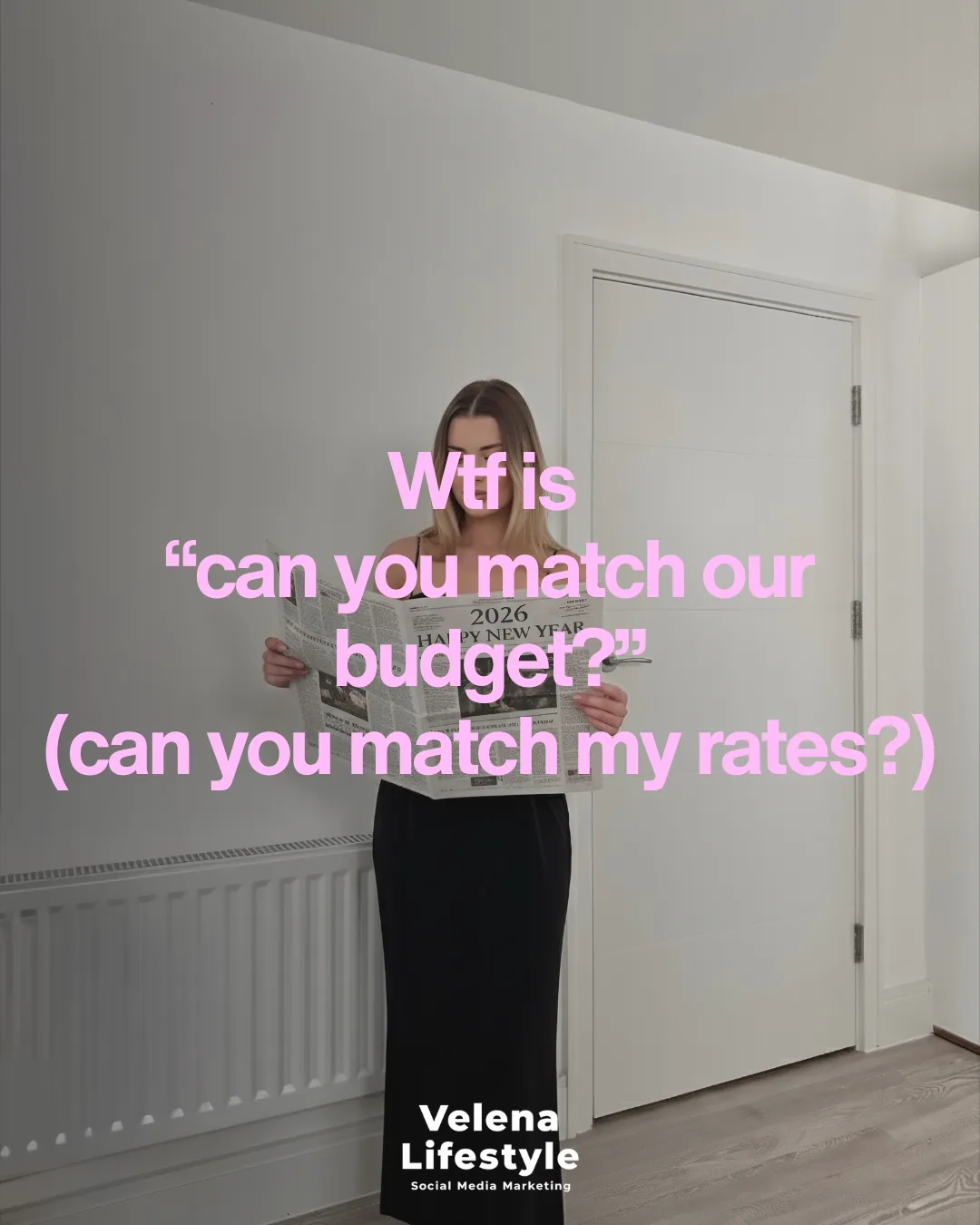
"Can you match our budget?"
What it actually means: can you discount your rate to cover the gap in ours.
A brand's budget constraint is a real thing. It is not, however, the creator's problem to solve by working for less than their rate reflects. If the number does not work, the honest answer is a smaller deliverable, not a smaller creator.
"We would love a long-term partnership."
What it actually means: starting with one video, for free, to see how it goes.
A real long-term partnership starts with a real first payment. Asking someone to prove themselves for free before the relationship becomes paid puts all of the risk on the person with the least power in the conversation.
"It is only a thirty second video."
What it actually means: four hours of scripting, lighting, filming, and editing compressed into a number that sounds small.
The length of the finished video is not the size of the job. A good thirty seconds is the result of writing several versions of a hook, filming multiple takes, and editing until the pacing earns someone's attention. Judging the price by the runtime ignores almost everything that actually happened to make it.
"We have no budget for this right now."
What it actually means: no budget for creators, evidently plenty for the ad spend that will run their video.
A brand that cannot pay a creator but can pay a platform to distribute that creator's face and voice at scale has not run out of money. It has decided where the money goes, and the creator was not on the list.
"We will tag you, that is great exposure."
What it actually means: a mention instead of a payment.
Exposure has never paid a council tax bill, and it will not start now. A tag is a nice addition to a paid collaboration. It is not a substitute for one.
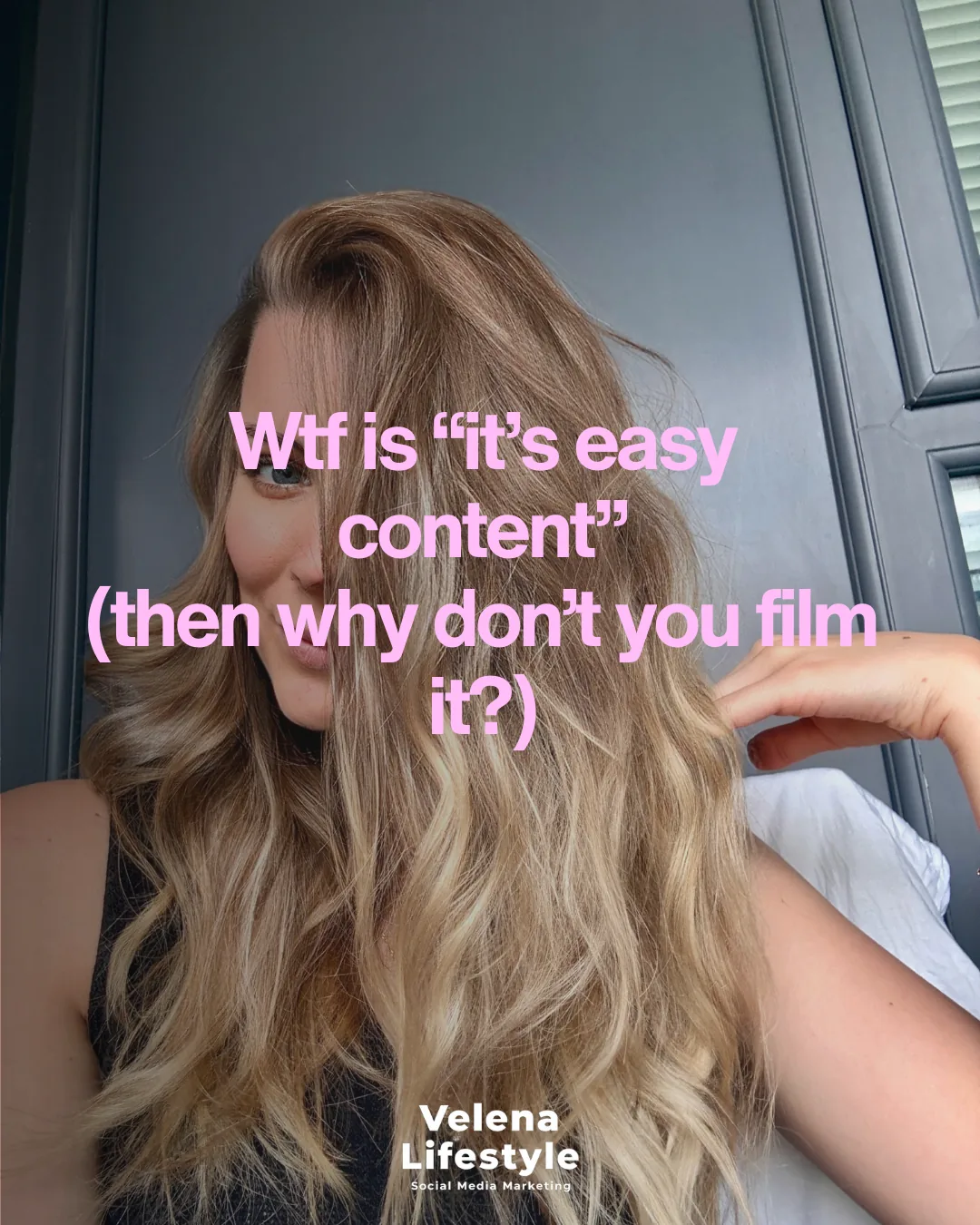
"It is easy content, it will not take long."
What it actually means: easy enough that they will not do it themselves, but somehow still worth underpaying someone else to do.
If a piece of content were genuinely as easy as that framing suggests, the brand would simply make it. The fact that they are hiring someone else to do it is the clearest evidence that it takes a skill, and skills are not free.
What broken promises actually break
It would be easy to file all of this under bad negotiation and move on. We do not think that is honest. What we hear from creators is not a pricing disagreement. It is exhaustion, and underneath the exhaustion, something closer to grief.
Someone spends a weekend filming and editing a video for a brand they genuinely admired, on the promise of a long-term relationship, and receives one tagged Instagram Story in return. Someone turns down a paying client to hold a slot for a brand call, only for the brand to vanish after the call and never send the brief they promised. Someone reshoots a video three times for free because a top was the wrong shade of green, and starts to wonder whether the problem really is the top, or whether they are simply someone whose time nobody feels obligated to respect.
That last thought is the one that does the real damage. Not the unpaid hours on their own, painful as those are, but what they teach a person about their own worth. Enough of these interactions in a row and a genuinely talented creator starts to believe that this is simply what the industry is, that asking to be paid properly makes them difficult, and that the dream they started with was naive. Some leave the industry entirely. Others stay, but smaller, pricing themselves low because low is what they have been taught to expect, and passing that same low expectation on to the next creator who asks them what a fair rate looks like.
That is the real cost of treating creators as a free or cheap resource rather than as small business owners. It is not just one bad experience. It is a quiet erosion of an entire industry's confidence, one unpaid reshoot at a time.
This is not a feeling, it is a market
The creator economy is not small and it is not a hobby. It is a real, fast-growing industry, and the imbalance inside it is measurable, not anecdotal.
Read those three numbers together and the pattern is unmistakable. More brands want UGC than ever. Rates are falling anyway. That only happens when the people buying the work hold almost all the power in the negotiation, and enough of them choose to use it the way the patterns above describe.
This is not a US problem, or a UK problem. It is global.
Every one of the patterns in this article has been described to us in more than one language. The currency changes. The platform changes. The excuse rarely does.
Glassdoor's average annual salary for a UK content creator, against a £50 to £250 going rate for a single briefed UGC video.
People creating content across Japanese platforms inside a market worth billions in ad spend, most of them paid fractions of a yen per view while platforms and agencies keep the rest.
The size of South Korea's influencer marketing market in 2025. Micro-creators, not the idols, do most of the actual work, often inside contracts running six years or longer.
Different currencies, different platforms, same underlying arithmetic: the people producing the content that brands run in front of millions of people are, almost everywhere, earning less than the value they create. A creator in Manchester and a creator in Osaka are being asked to solve the same problem: prove your worth for free, then maybe we will pay you properly.
"Different currencies, different platforms, same underlying arithmetic: the people producing the content are earning less than the value they create, almost everywhere."
None of this means every market is identical. South Korea's creator economy sits inside a uniquely concentrated entertainment industry, with multi-channel networks like Sandbox managing hundreds of creator teams under long exclusive terms. Japan's market is shaped by a strong platform-ad-revenue model where individual creators see a small slice of a very large pie. The UK sits closer to the US pattern, with UGC increasingly treated as a distinct, deliverables-based service rather than an influencer post. But underneath the local detail, the shape is the same: a genuinely global industry, still working out whether the people who make it run get to share in what it is worth. For the full picture on UK rates specifically, see our UGC rates guide.
Creators are small businesses, not free labour
A UGC creator with a camera, a following, and a body of work is not a hobbyist doing brands a favour. They are running a small business: sourcing clients, managing their own time, investing in their own equipment and skills, and carrying every risk of a bad month themselves, with no employer safety net underneath them. The moment a brand treats that person as an unpaid extension of its own marketing team rather than as a supplier it is contracting, it has misjudged exactly what it is dealing with.
That misjudgement is not victimless, and it is not only a problem for the individual creator. When a whole industry quietly normalises underpayment, it drags rates down for everyone in it, including the brands who do want to pay properly and now compete for attention against brands offering the same work for free. It also filters out the creators who could have grown into the best, most reliable partners a brand could ask for, because they burned out or walked away before anyone gave them the chance to prove it.
The role brands and agencies actually have here
Every business that hires a UGC creator is not just buying a video. It is either strengthening this industry or quietly hollowing it out. There is no neutral option. Here is what taking the first path actually looks like in practice.
A creator should always know the full scope, the deliverables, and any claims they will be asked to say on camera before they commit to anything. Withholding that information is not efficiency, it is a way of shifting risk onto the person least able to absorb it.
Price the brief, the scripting, the shoot, and the edit, not the number of seconds in the final cut. A fair rate acknowledges the hours a creator cannot see, and it should never be presented as a favour the brand is doing them.
One reasonable revision round, defined before the shoot, protects both sides. A reshoot driven by a preference that was never in the brief is new work, and new work gets paid.
If a brand genuinely wants an ongoing relationship, the first project is the place to prove it, not the place to ask for a free trial. Trust is built by paying properly from the start, not by asking someone to earn payment later.
Calls, revisions, and briefing conversations all cost a creator time they could be spending on paid work elsewhere. Keep them efficient, keep them necessary, and recognise that every hour asked for is an hour taken from someone's business, not given for free by a fan.
If there truly is no budget for creator content, the honest response is to wait until there is, not to ask a creator to close the gap for free. A business that finds budget for its ad spend has a budget. It has simply chosen not to spend it here.
None of this is generous. It is the baseline decency of hiring any professional. The reason it reads as a list of favours is exactly the problem this article is describing.
AI is coming for cheap content. We think it makes real creators worth more, not less.
We need to say clearly that this next part is our opinion, formed from what we are seeing in briefs, in creator conversations, and in the performance data we watch every week, not a settled fact. But we hold it with some conviction, so here it is.
AI-generated "UGC" is already here. Synthetic faces reading a script, photorealistic "customers" holding a product that was never in their hands, entire testimonial libraries generated in an afternoon for close to nothing. On a spreadsheet, this looks like the end of the pricing conversation this article has been having. If a brand can generate a hundred fake testimonials for the cost of a few prompts, why would it ever pay a real person again?
We think the opposite is happening, and the early evidence already backs it up. Only 15 percent of consumers report high trust in AI influencers, and 48 percent say AI-generated content makes a post feel less trustworthy, the single most common complaint about social content overall. Even more strikingly, disclosing that content is AI-generated does not fix the problem. Research on AI influencer content has found that explicit disclosure actually deepens the trust penalty rather than repairing it. Telling someone "this was AI" does not make them trust it more. It confirms the suspicion that made them distrust it in the first place.

Here is why we think that matters more than it looks like it does today. UGC's entire value proposition is that a real person had a real experience with a product. That is not one feature among many. It is the whole product. A polished brand advert that looks slightly artificial is still, at worst, a slightly less polished advert. A "customer testimonial" that looks artificial is not a lesser testimonial. It is a lie, and audiences are getting faster at spotting the difference every month, not slower.
Our prediction: verified human content becomes the premium tier
As synthetic content gets cheaper and more common, we expect the market to split in two, the way most markets eventually do when a cheap synthetic alternative appears. There will be a low-cost tier of AI-generated filler, priced near zero, used for volume and testing. And there will be a second tier: verifiably human, briefed, paid, credited content, priced as the premium option, because the scarcity has moved. It used to be cheap to fake authenticity and expensive to buy real production values. We think that is inverting. Soon it will be cheap to fake production values and expensive to prove a human genuinely made something.
If that prediction is right, it changes the entire argument of this article. Paying creators fairly stops being only a moral obligation and becomes a straightforward commercial one. The brands that build real, paid, well-documented relationships with real creators now are building the exact asset that a flooded market of synthetic content will make more valuable, not less: content an audience can actually believe.
We are not neutral here. We built an agency on real creators, and we would say this even if it were not also convenient for us to believe. But the data so far is pointing the same direction we are.
How this shapes the way Velena Lifestyle works
We built Velena Lifestyle from the creator side of this exact relationship, so this is not an abstract principle for us. Every project we run for a brand starts with a real brief, sent before anyone is asked to commit to anything. Every creator we work with is paid a rate that reflects the brief, the shoot, and the edit, not just the seconds in the final cut. Usage rights are written down in plain terms before filming starts, so nobody discovers after the fact what their face is being used for and for how long. Revisions are agreed up front, and a genuine reshoot is treated as new work, because it is.
We also believe part of running a UGC agency responsibly is helping the wider industry get healthier, not just protecting the creators inside our own roster. That means being transparent with the brands we work with about what fair UGC pricing actually looks like, and it means treating every creator we bring onto a project the way we would want a business to treat someone we cared about. Small, local creators built this industry from bedrooms and spare rooms. The businesses hiring them owe it to that history to hire them properly.
If you are a creator who has lived any part of what this article describes, we see you, and it is not a reflection of your worth. If you are a brand reading this and recognising a pattern you have used, this is your sign to change it. Both of those things can be true, and both are exactly why we wrote this.
Brands: build your content the fair way
If you want UGC and social media handled properly, briefed clearly, priced fairly, and delivered with real usage rights, that is exactly what we do. Add social media management alongside it and your content is planned, posted, and reported on every month too.


Watch our work on YouTube
Velena Lifestyle
Agency UGC and client showcases, made the way we believe this work should be done.
Watch the agency channelVelena and Dragos
Our personal travel and food channel, where the on-camera style started.
Watch Velena and DragosFeatured UGC video examples and portfolios
This is what UGC looks like when it is briefed properly and made by creators who were paid fairly for it.


What clients say
If you want a self-starter with the ability to think strategically and minimize the time between ideation and creation, Velena is your go-to. She has done a phenomenal job with managing our UGC portfolio, curating and creating our content.
Fantastic service. Been a client for 3 years now and have seen fantastic results, increased viewers, followers and viral videos. Copywriting was on point and has been used in magazines like Conde Nast, Timeout and more.
I have known Velena for many years and she is a great content creator and reliable. I highly recommend her. Looking forward to hiring her again.
Meet the founders

Velena Lifestyle is run by Velena Nikolova, creative director and UGC creator, and Dragos Nistor, who leads business and strategy. Velena has built her own career from exactly the position this article describes, and that experience shapes every brief, every rate, and every contract we put in front of a creator today. Based in High Wycombe, Buckinghamshire, we work with UK and international brands.
Fair UGC: FAQs
What should a fair UGC brief include before a creator agrees to anything?
The full scope of deliverables, the platforms the content will run on, any specific claims the creator will be asked to make, the rate, and the usage rights being granted. A creator should never be asked to agree before seeing this.
Is paying creators in free product ever acceptable?
It can work for genuine, unpaid reviews from people who already use and like a product. It is not a substitute for payment on a professional briefed shoot with defined deliverables and usage rights.
How many revisions should be included in a UGC brief?
One reasonable round, agreed before filming starts. Anything beyond that, especially changes driven by preference rather than genuine error, is new work and should be paid as such.
Why did UGC rates fall in 2025 even as demand grew?
More brands wanted UGC and more creators entered the market at the same time, which gave buyers more leverage in negotiations. Rates fell industry-wide as a result, even though the underlying skill and effort required did not.
What does a genuine long-term creator partnership look like?
Paid fairly from the very first project, with clear terms set from the start, rather than an unpaid trial period used to decide whether the creator has earned payment.
How does Velena Lifestyle price and brief UGC creators?
We send the full brief before anyone commits, price the work by the effort it actually takes rather than the length of the final video, and put usage rights and revision terms in writing before filming starts.
Is underpaying creators only a US or UK problem?
No. The same patterns show up in Japan, South Korea, and every other creator market we have looked at. The currency and platform change, but the underlying imbalance between what creators produce and what they are paid does not.
Will AI replace UGC creators?
We do not think so, and this is our view rather than a settled fact. AI content already suffers a measurable trust penalty with consumers, and disclosure makes that penalty worse, not better. We expect verified human content to become a premium tier as synthetic content floods the market, not a discounted one.

Dragos co-founds Velena Lifestyle and leads its business strategy. A LinkedIn Top Entrepreneurship Voice, he writes about UGC, the creator economy, and building a fairer content industry in the UK.
References
- Neal Schaffer, Creator Economy Statistics, citing the 2025 Creator Earnings Report (Influencer Marketing Hub and NeoReach)
- Collabstr, 2025 Influencer Marketing Report
- Nielsen, Global Trust in Advertising and Brand Messages
- StarNow, How Much Do UK Creators Make, citing Glassdoor salary data
- Social Native, The AI Content Trap: Why Synthetic UGC Is Quietly Killing Brand Trust
Hire creators the way you would want to be hired
Tell us your project. We will brief it properly, price it fairly, and put it in writing before anyone starts filming.
Work with usHome > The Cost of Easy Content