
- In the UK in 2026, beginners charge £50 to £150 per video, established creators £150 to £350, and creators with proven ad results £350 to £700 and more, all with organic rights only.
- Usage rights are the biggest lever: paid ads for 3 to 6 months typically add 20 to 40 percent, 12 months 30 to 50 percent, and perpetual rights 100 to 150 percent.
- Follower count is not part of a UGC price. You pay for the video and the right to use it, not for anyone's audience.
- Buying several videos at once lowers the price per video by around 10 to 20 percent and gives you hooks to test in your adverts.
- Our own packages show the price on the page: Basic carries organic rights, and Standard, Premium and the Bundle add 12 months of paid advert rights.
The short answer: what UGC costs in the UK
Most UK brands pay between £150 and £350 for one UGC video from an established creator, with the right to post it on their own channels. That band comes from our UGC Rates Report UK 2026, which brings together published industry surveys, UK creator rate cards and our own published prices. Beginners sit below it, at £50 to £150, and creators who can show what their videos did in a brand's ad account sit above it, at £350 to £700 and beyond.
Independent platform data points the same way. Collabstr's 2025 report, built on the collaborations booked through its platform, put the average asking price for a UGC job at 198 US dollars, and the average brand spend at about 178 dollars. The same report found that content usage rights raised the cost of a campaign by around 39 percent. That last figure is the one to remember: the price of the video and the price of what you may do with it are two different things.
The reason UGC is priced this way, and not like influencer marketing, matters for your budget. With UGC you are paying for a finished video and the right to use it, not for access to a creator's followers. The creator does not post it to their own audience at all. That keeps the price predictable and is a large part of why UGC is one of the most cost effective formats a brand can buy.
One trend is worth knowing before you set a budget. Collabstr found UGC asking prices fell by about 44 percent in a year, as many more creators entered the work. More supply has held beginner and mid tier rates steady even as demand rises, so for brands, good UGC is now easier to afford than it has ever been. For creators it means the ones who can prove results are pulling away from the ones who cannot.
Demand is not slowing either. The Influencer Marketing Hub benchmark, which surveys marketing professionals each year, found that half of its 2026 respondents working with UGC creators plan to grow that work, by spending more or by starting for the first time, and none plan to cut it. Rising demand with plenty of supply is why rates have held steady rather than climbing, and why the gap between average and excellent work is now what decides a price.
The three UGC price tiers in the UK
UK creator rates settle into three tiers, set mainly by experience and by the evidence a creator can show. Within each tier, the niche, the deliverable and the rights move the figure up or down.
The niche then stretches every band. Our report found UK finance and fintech briefs paying £250 to £450 a video, beauty and skincare £200 to £400, and health and wellness around £150 to £250. High volume, low margin categories such as fast fashion sit at the bottom of each band. If you want a figure for your exact brief, the free UGC rate calculator is built on these same bands and gives you a range in five questions.
UGC rates by format and platform
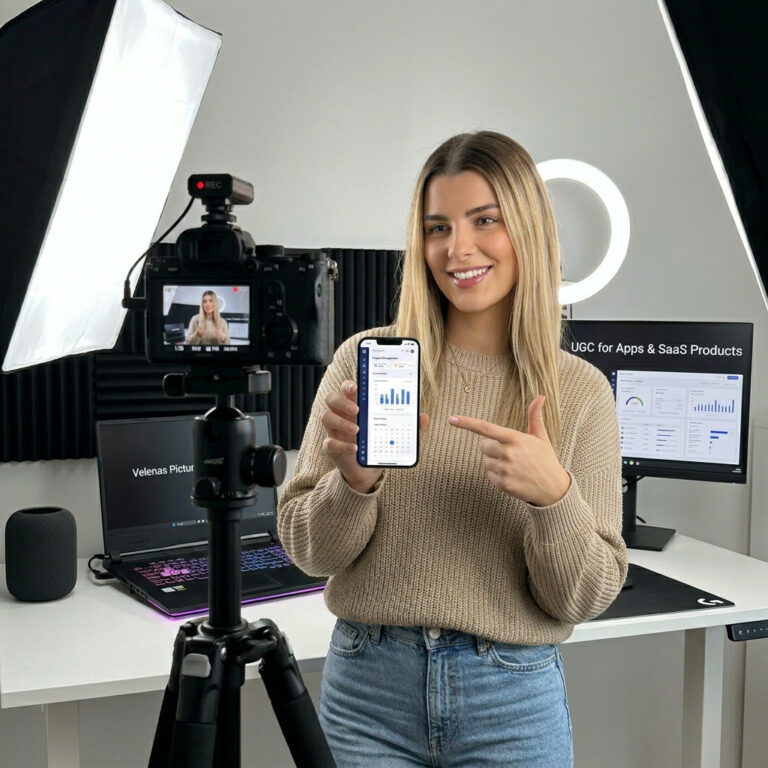
Not all UGC is a talking head video. The format changes the effort, and the effort changes the price. These are the working UK conventions from our report, at the established tier with organic rights, before any usage fee.
Length counts too. In our calculator, which states its own working openly, a 30 to 60 second edit is weighted at 1.3 times a video of up to 30 seconds, a scripted tutorial at 1.45 times, a photo set at 0.7 times and a voiceover alone at 0.45 times. Those weights are our own judgement, since no published table exists, but they match the way creators quote in practice.
Platform matters, but less than people think. A TikTok clip and a polished YouTube piece need different edits, and the rate follows the edit, not the logo. What stays constant is the principle: you pay for the production and the rights, not the size of anyone's following. You can see platform native examples across our UGC portfolio.
Usage rights: the line that moves a UGC budget most
The most expensive misunderstanding in UGC buying is treating the price of the video as the whole price. A base rate conventionally covers organic use, which means posting on the brand's own channels. The moment the video runs as a paid advert, a usage fee applies, because the video is now an asset earning money at scale. These are the premiums in our report, and the ones our rate calculator uses.
- Organic use on your own channelsIncluded in the base rate. Your feed, your stories, your website and your emails.
- Paid ads for 3 to 6 months: plus 20 to 40 percentEnough for a launch or a season of testing. The calculator takes 15 percent for a single month, 25 percent at three months and 35 at six.
- Paid ads for 12 months: plus 30 to 50 percentThe usual choice for a video you expect to keep running. Per month it is far cheaper than a short licence renewed again and again. The calculator takes 40 percent.
- Perpetual paid use: plus 100 to 150 percentNo end date. Worth it only for a video you are sure will run for years, and many creators decline it. The calculator takes 125 percent.
Some published rate cards sit higher than these bands. Elev8or's rate card, for example, adds 100 percent for 12 months and 150 to 200 percent for perpetual use, so treat the figures above as the working middle of the market rather than a ceiling.
Two more rights sit on top of paid usage, never instead of it. The first is running the advert from the creator's own account, often called whitelisting. Brands now ask for a code rather than account access: an Instagram partnership ad code is valid for 60 days unless revoked, as Billo's guide explains, and TikTok lets a creator authorise Spark Ads for up to 365 days, as Lindsey Gamble reported. Xolo's whitelisting guide puts this at 30 to 100 percent of the content fee a month. The second is category exclusivity, where the creator agrees not to work with your competitors for a time, which JoinBrands puts at 30 to 50 percent.
The practical rules are simple. Agree the rights in writing before anything is filmed, buy only the term you will actually use, and put the end date in your diary, because running adverts on rights that have run out is both a legal problem and a relationship problem.
The six things that change a UGC price
Every UGC quote is built from the same handful of parts. Know them and you can read any quote, and see quickly where a figure has come from.
- Usage rightsThe biggest lever by far. The same video can fairly double in price on rights alone, as the section above shows.
- Niche and complexityA fintech walkthrough that must be accurate and compliant costs far more than an unboxing. Regulated and high consideration categories are priced up everywhere in the market.
- Track recordDocumented ad results are the strongest reason a creator can give for a higher rate, and brands treat them that way.
- Length and deliverablesExtra hooks, raw files, platform cuts and longer edits each add time. Briefs that name them up front price more cleanly than briefs that discover them later.
- TurnaroundStandard timelines are built into the price. Rush delivery adds a premium, which JoinBrands puts at 25 to 50 percent, because it squeezes the production.
- VolumeA batch lowers the price per video. Elev8or puts a three video bundle at 10 to 15 percent off the single rate, and our report found bundles of five or more at around 15 to 20 percent off.
Notice what is not on the list: follower count. Because UGC is bought as videos you own and run yourself, you are paying for creative skill and rights, not reach. That is the core difference between UGC and an influencer campaign, which our guide to UGC versus influencer marketing covers in full.
VAT is a line of its own. Every market figure above is before VAT. A creator or agency that is VAT registered adds it on top, and anyone with taxable turnover over £90,000 in the last 12 months must register, as GOV.UK sets out. When you compare quotes, compare like with like.
Velena Lifestyle UGC prices
Our prices are on every product page, and the figures below come straight from the shop, so they are always the current ones. Every package is made in house by our team, and you choose who is on camera: Velena, Dragos, both of them, or nobody, with a voiceover. The price is the same whichever you choose.
Basic gives you one video in one format with organic rights for your own channels. Standard adds a script from your approved claims, two hooks, all three formats and 12 months of paid advert rights on Meta, TikTok and Google. Premium adds a third hook, a fourth format, the raw footage and adverts run from Velena's own handle. The Bundle is three Standard videos filmed in one session, for less than three bought separately.



Testimonials are one of twelve ranges, each with the same four packages, from beauty and fashion to apps and software. You can compare them all on the UGC pages, or go straight to the paid ads packages if your videos are for adverts first. Nothing is filmed until you have approved the brief and the script.
UGC, influencer or studio: what you are paying for
Brands often compare three very different things on price alone. They are not the same product, and seeing the difference is the quickest way to spend well.
Match the spend to the job. Many brands use all three: a studio piece for the website, influencers for a launch, and a steady supply of UGC to feed the adverts in between. If influencer work is part of your plan, our influencer packages set out the deliverables and the rights before anything is posted.
When you buy through an agency rather than hiring a creator directly, the price also covers the work around the video: the brief and the hooks, the filming and an edit for each platform, the agreed round of changes, a consistent standard across every video, and the rights in writing. That is the difference between a cheap clip and content you can confidently put advertising money behind. Our guide to how a UGC agency works explains the route in more detail.
The return on a UGC budget
UGC looks affordable next to studio production and influencer fees, but the real case for it is what it returns. Content made by real people is trusted more than polished brand advertising, and it sells better.
In Nielsen's 2021 Trust in Advertising study, recommendations from people they know were the most trusted channel, at 89 percent, ahead of every paid format. Bazaarvoice, drawing on its own research across retailers, reports that UGC lifts conversion by 144 percent and revenue per visitor by 162 percent. Those figures come from shopper reviews and photos as well as creator video, so read them as the direction of travel, not a promise for one video.
One thing multiplies the value: a single UGC video rarely does one job. The same video can run as an advert, sit on a product page, open an email and post on your own channels. Divide the cost across every place it works and the real price per use falls fast. A video that runs as a top performing advert for a year is one of the best value assets a marketing budget can buy. For more on the case, read the benefits of UGC, and model the payback with the free social media ROI calculator.
Three UGC pricing mistakes to avoid
The brands that waste money on UGC nearly always make one of these three errors. Each is easy to avoid once you know it.
That last point is newer than the others and catches brands out. The Digital Markets, Competition and Consumers Act 2024 made fake and concealed incentivised reviews a banned practice from 6 April 2025, as CMS's legal summary sets out, and the Competition and Markets Authority has published guidance on fake reviews. UGC used as an advert is fine; UGC dressed up as a customer's verdict is not. Our article on the ASA and CAP Code on social media covers the advertising side.
How to get the most from a UGC budget
Spending well on UGC is less about finding the lowest rate and more about buying the right mix. Four habits make the biggest difference.
- Buy in batches, not one-offsFor paid social, three to five variations of hook and angle will nearly always beat a single video, because they give you something to test. A bundle also lowers the price per video.
- Be clear about usage up frontDecide before you brief whether you need paid rights and for how long. Sorting it early avoids paying to extend a licence later, and it is the single biggest line to get right.
- Match the tier to the jobUse simpler videos for high volume testing, and scripted or premium work for hero placements and regulated categories. Not every video needs premium production.
- Brief properlyA clear goal, a hook direction, the claims you can make and the format you need save more money than any discount, because they prevent the reshoot.
A simple way to plan a first budget: decide how many angles you want to test, add the paid rights for the term you will really use, and allow for the extras you know you need, such as raw footage or a fourth format. If you will need new videos every month, a monthly plan usually works out cheaper than buying one-off batches. If you are not sure which kind of video you need at all, the UGC quiz points you to the right one in a minute.
See what a UGC budget buys
Tap a video to play it. There is more on the UGC pages.



If you are a creator pricing your own work

Plenty of people reading this are on the other side of the brief, setting their own rates. The same figures apply, and a few habits keep them working for you.
A written agreement protects both sides, even for a small job. It should cover the deliverables, the rounds of changes, the timeline, the payment terms and the usage rights, with when they start and end and on which platforms. If you are VAT registered, VAT is a line of its own. Reprice every few months as your portfolio grows: the rate calculator remembers your answers in the link it gives you, and the free engagement rate calculator gives you the other number brands ask for. Our article on spotting UGC scams covers the briefs to walk away from.
Pair UGC with monthly management
Once you have the videos, someone has to plan the posts, publish them and answer the comments they bring in. Our social media management does that every month, with a strategy behind each post and a report at the end of it. Every plan runs month to month, with 2 months notice.



You can compare every plan side by side on the social media management page.
UGC rates: questions
How much does a single UGC video cost in the UK?
From an established UK creator, £150 to £350 with organic rights, according to our UGC Rates Report UK 2026. Beginners charge £50 to £150 and creators with proven ad results £350 to £700 or more. Our own Basic testimonial video starts at £120.
Why do UGC rates vary so much?
Because UGC is priced like production, not reach. Usage rights, the niche, the creator's track record, the deliverables, the turnaround and the volume all move the number. Follower count does not.
What is the average UGC rate?
Collabstr's 2025 report put the average asking price for a UGC job at 198 US dollars, and average brand spend at about 178 dollars. In the UK, most brand spend sits in the established band of £150 to £350 per video before usage rights.
Do I pay extra for usage rights?
Usually, for paid ads. Organic use on your own channels is normally included. Paid ads for 3 to 6 months typically add 20 to 40 percent, 12 months 30 to 50 percent, and perpetual use 100 to 150 percent. Our Standard, Premium and Bundle packages include 12 months of paid advert rights in the price.
Is UGC cheaper than hiring an influencer?
Usually, yes. With UGC you pay for videos you own, not for access to an audience, so there is no reach premium. Influencers earn their higher fee on awareness, and the two work well together.
Do you offer UGC bundles?
Yes. Every range has a Bundle of three Standard videos filmed in one session, for less than three bought separately, and the UGC Monthly Plan delivers a Bundle every month for less again.
How should I budget for a UGC campaign?
Decide how many angles you want to test, whether you need paid rights and for how long, and your timeline. A batch of three to five videos is a strong start for paid social. The free UGC rate calculator gives a quick estimate.
Can I run UGC as paid ads?
Yes, with paid usage rights agreed in writing. Our Standard, Premium and Bundle packages carry 12 months of paid advert rights on Meta, TikTok and Google, with no limit on spend.
What is included in a UGC video price?
Through an agency, the price usually covers the brief and hooks, the filming, an edit for each platform, an agreed round of changes and the usage rights in writing. You are paying for a finished video ready to post or run, not raw footage.
Do UGC prices differ by platform?
A little. A TikTok clip and a polished YouTube piece need different edits, so the rate follows the format and length. The principle stays the same: you pay for production and rights, not reach.
Is VAT included in UGC rates?
Market rates are usually quoted before VAT. A creator or agency that is VAT registered adds it on top. Anyone with taxable turnover over £90,000 in the last 12 months must register, so compare quotes like with like.
- Velena Lifestyle, UGC Rates Report UK 2026
- Collabstr, 2025 Influencer Marketing Report
- Influencer Marketing Hub, Influencer Marketing Benchmark Report
- Elev8or, UGC rate card
- JoinBrands, UGC creator rates
- Xolo, UGC whitelisting explained
- Billo, how to create and share an Instagram partnership ad code
- Lindsey Gamble, TikTok extends the ad authorisation period
- Nielsen, Trust in Advertising 2021
- Bazaarvoice, Shopper Experience Index 2022
- CMS, the DMCC Act bans fake reviews
- Competition and Markets Authority, fake reviews guidance
- GOV.UK, register for VAT

A question this article did not answer? Ask our team, and a person will reply.