- A phone and a few free apps are enough to edit good social media content. The skill is in choosing a look and keeping it, not in owning every app.
- Snapseed and Lightroom still cover photo editing. Lightroom's free tier includes most editing tools; masking, healing and RAW editing need a paid plan.
- For Reels, CapCut is still capable, but read its terms before you upload footage you do not own outright. Instagram's own free editor, Edits, arrived in April 2025 and exports without a watermark.
- Canva remains the quickest way to make graphics and Stories; the free plan is generous, and Pro adds the background remover and Magic Resize.
- Face and body editors such as FaceApp and Peachy are fine for play, but never on content that advertises a beauty or body product: the ASA ruled in 2021 that filters which exaggerate a product's effect can make an advert misleading.
Why the edit matters more than the camera
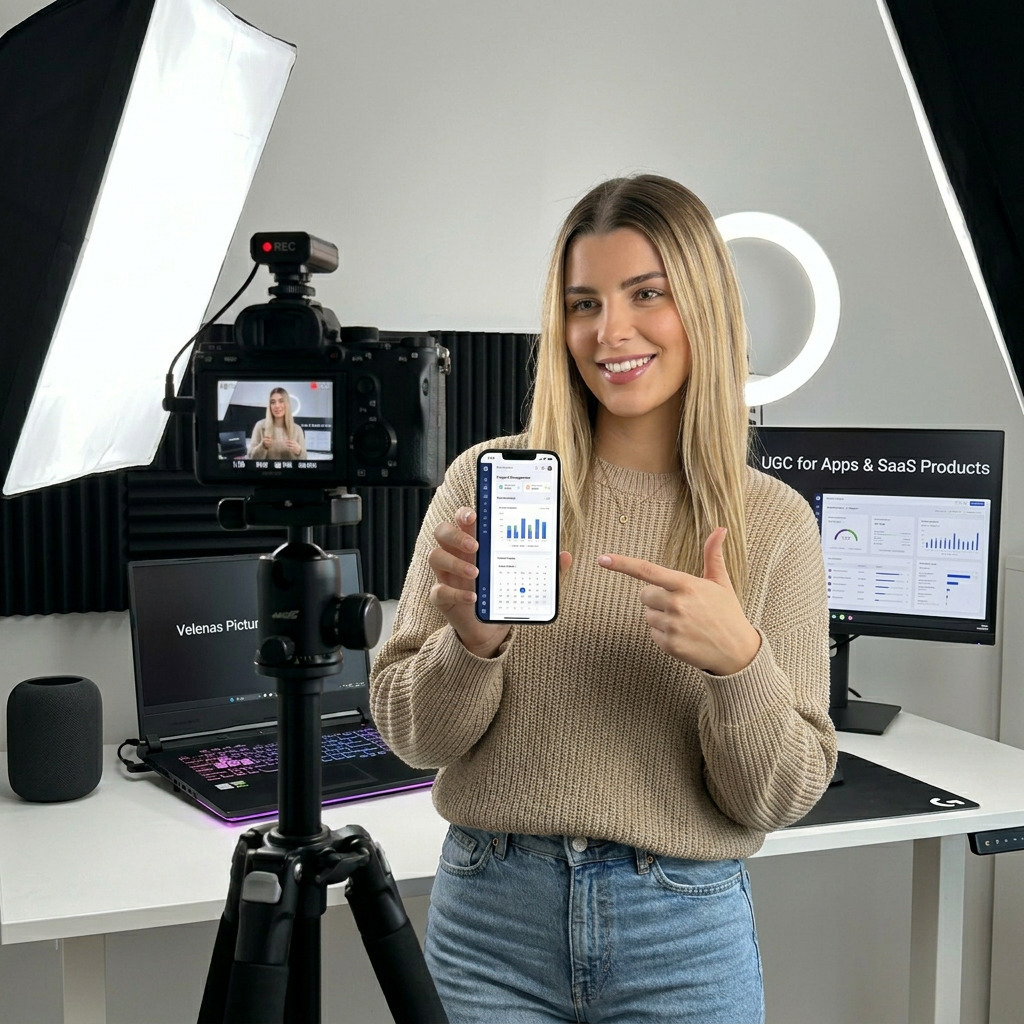
When this list was first written in January 2024, Velena was editing almost everything she posted on her phone, for her own channels and for the brands she made UGC (user generated content) for. That has not changed much. Our team now films and edits content for businesses every week, and a large share of it still passes through apps on a phone before it is ever published. The camera matters less than people think. What makes a feed look considered is the edit: light that is consistent from post to post, colours that look like the same brand every time, crops that suit the platform, and video that is cut tight enough to hold attention.
The original version of this article was a quick tour of seven apps with an example picture for each. It was written in the voice of a creator talking to other creators, and it was useful as far as it went. Two years on, enough has changed to justify a proper rewrite. Instagram changed the shape of the profile grid. Instagram launched its own video editor. CapCut rewrote its terms of service in a way that worried creators and brands alike. Adobe moved more of Lightroom's tools behind its subscription. And the rules on filters in advertising, which were already in place in 2024, matter more now that so much brand content is made by creators on their phones.
So this version keeps the seven apps from 2024, says plainly what each is good for today, adds the one app we would put on the list now, and is honest about two of the original seven that we would now use with much more care. It is written for two kinds of reader: creators who edit their own work, and small businesses who make their own content and want it to look as good as possible without paying for software they will not use.
How we judge an editing app in 2026
There are hundreds of editing apps, and most of them do roughly the same things. When we decide whether one earns a place on our phones, we look at five things, in this order. None of them is about how many filters an app has.
With those in mind, here are the seven apps from the 2024 list, in the order we would reach for them today, followed by the one we would add.
Snapseed: precise photo editing, free
Snapseed is Google's photo editor, and it is still the app we recommend first to anyone who wants control over a photo without paying for it. Its strength is precision: you can brighten one face without touching the sky, lift the shadows in one corner, or straighten a horizon in a couple of taps. The selective tools, healing brush and curves are the ones we use most.
Snapseed went several years without a major update, which led some people to assume it had been abandoned. In June 2025 Google released Snapseed 3.0 for iPhone and iPad, a redesign with a grid of your edited photos, new tabs for looks, favourite tools and the full tool set, and a new film style. At the time of that report it was not clear when the redesign would reach Android, though the Android app remains available.
Use it for: fixing a photo that is nearly right. A product shot that is a little dark on one side, a portrait where the light was uneven, a venue picture with a crooked doorframe. It is less suited to building a consistent preset across a whole feed; for that, Lightroom is better.
Lightroom: the look you can repeat
Adobe Lightroom is the app we use when a set of pictures needs to look like it belongs together. Its real advantage is presets: once you have an edit you like, you save it and apply it to the next photo, and the next, so a month of posts shares one colour and one mood. For brands, that consistency is worth more than any single beautiful photo.
What you get for free has narrowed over time, so it is worth being precise. According to Adobe's own Lightroom mobile FAQ, the capture, organisation and sharing features are free, along with most editing tools. The premium features, which need a subscription, include cloud storage and syncing across devices, healing, masking, geometry tools, batch editing and RAW editing. For most social media photos taken on a phone, the free tools are enough. If you shoot RAW on a camera, or need to remove things from a picture regularly, the subscription starts to make sense.

Use it for: building your feed's look and keeping it. Make one preset for your brand, test it on ten different photos (indoors, outdoors, daylight, evening), adjust it until it works on all of them, and then use it on everything. Small tweaks per photo are fine; a new look every week is what makes a feed feel scattered.
CapCut: capable video editing, with terms to read first
In 2024 CapCut was the app we used for most Reels: trimming clips, adding music, transitions, text and captions, all on a phone and quickly. It is still a very capable editor, and its auto captions and templates save real time.
What has changed is how carefully we treat what goes into it. CapCut updated its terms of service on 12 June 2025, and the wording drew criticism from creators. As Marketing4eCommerce reported, the terms grant CapCut and its partners an "irrevocable, worldwide, royalty-free, transferable, and sublicensable license" over content you create or upload, and treat that content as non-confidential. The same report notes that a commercial licence was already in the earlier creator terms, so this was not entirely new, and that there was no confirmation CapCut was using people's videos in campaigns. Even so, it is a broad licence.
For a creator's own lifestyle content, many people decide that is acceptable. For a client's footage, an unreleased product, or a paid UGC video where the brand is buying the rights, it deserves a second thought. The brand may have a contract that says the footage is confidential until launch, or that only they may use it. If you edit for clients, read the current terms yourself, tell your client which tools you use, and if in doubt use an editor whose terms do not ask for a licence over your uploads.
Use it for: your own short video, captions and quick edits. Check the music: a sound available inside an editing app is not automatically cleared for a brand's paid advert.
Instagram Edits: the one we would add today
If we were writing this list from scratch, the app we would add is Edits, Instagram's own video editor. It was announced in January 2025 and, according to Android Authority's report on its launch in April 2025, it is free on iOS and Android and exports videos without a watermark, so you can post them elsewhere too. It has a timeline editor, captions, trending audio, a green screen tool, AI tools that animate still images or isolate a person or object, and direct publishing to Instagram and Facebook.
The appeal is simple. If most of your video goes to Instagram, an editor made by Instagram exports in the shapes and quality Instagram expects, and keeps your drafts in one place. It is also a sensible alternative for anyone who has decided, after reading CapCut's terms, that they would rather edit somewhere else. As with any app, read its terms before you upload client footage; Edits is a Meta product and sits under Meta's terms.
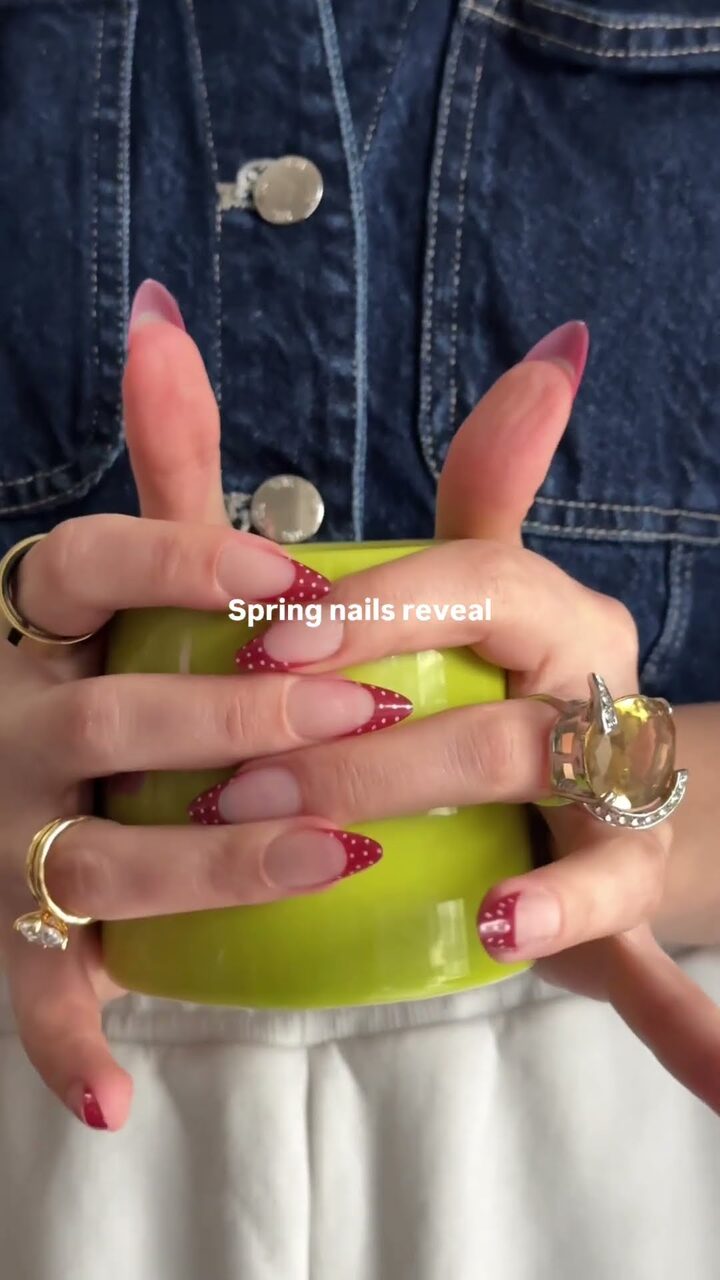
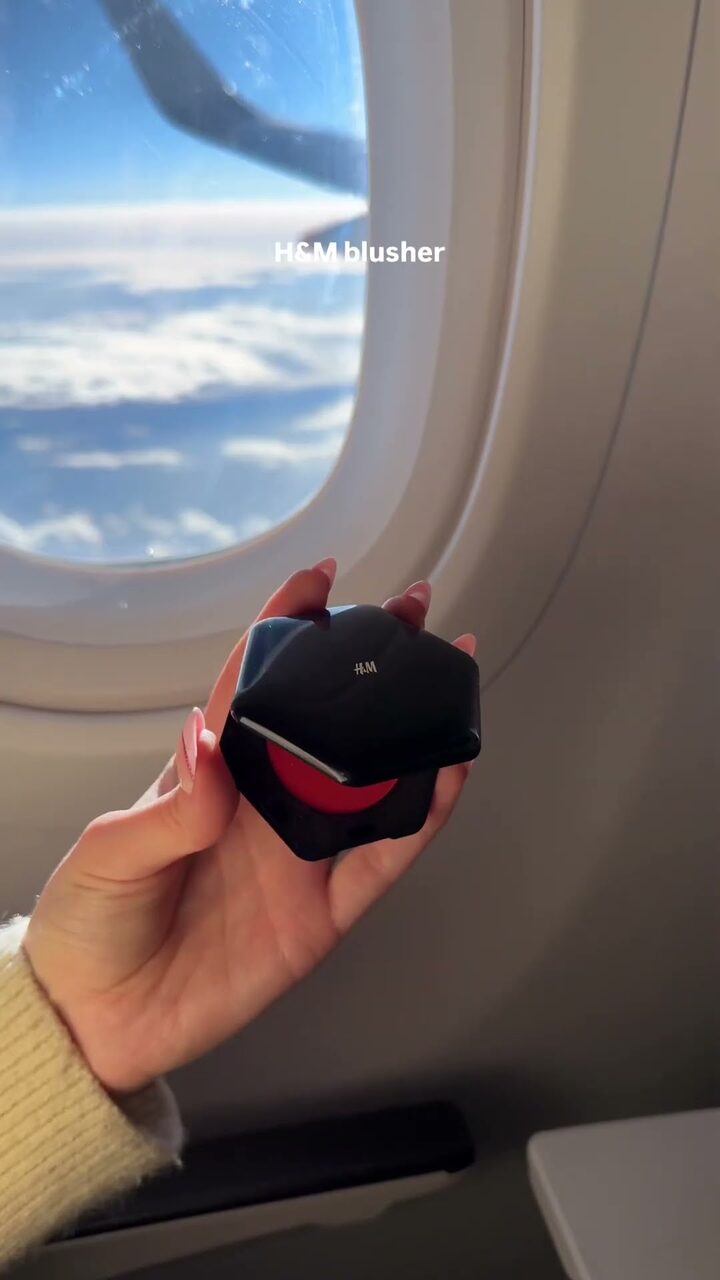
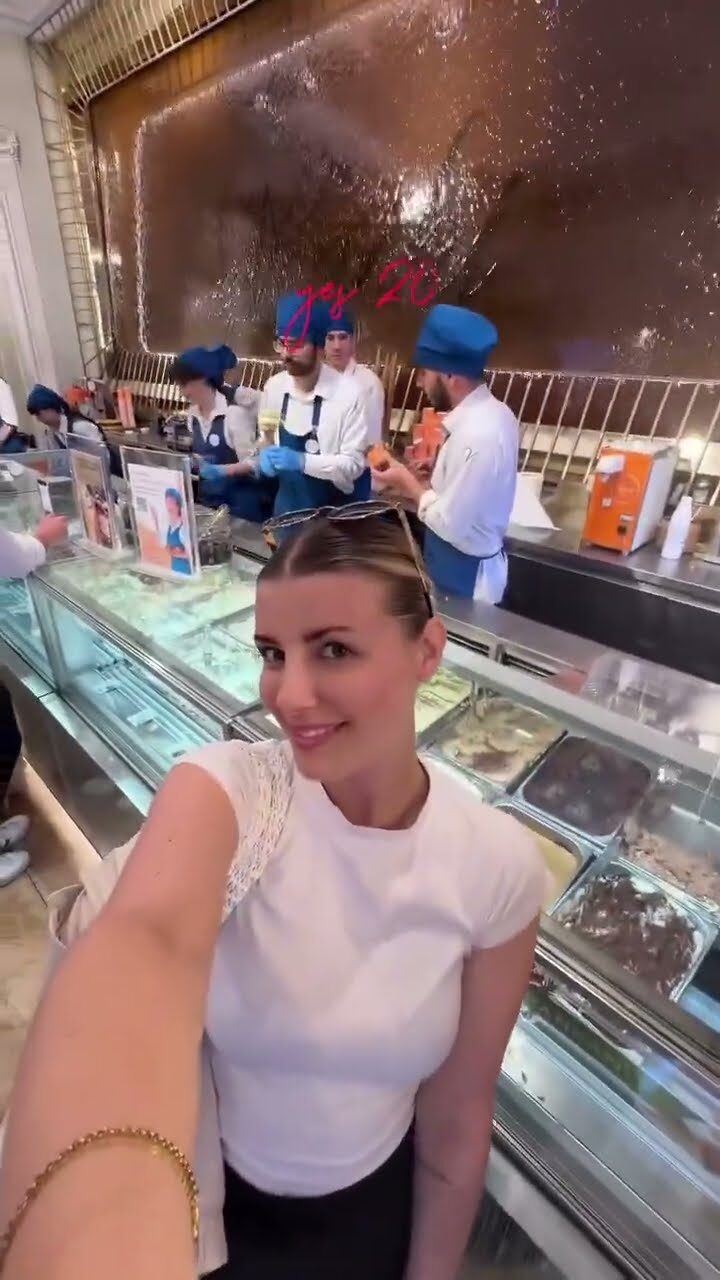
Use it for: Reels made mainly for Instagram, quick captioned clips, and talking to camera videos where a clean cut and readable captions matter more than effects. Our guide to making Instagram Reels covers what to put in them.
Canva: graphics, Stories and carousels
Canva is still the fastest way for a small business to make graphics that look professional: Stories, carousels, quote posts, menus, event announcements and simple adverts. Its templates do most of the design work, and the phone app is nearly as capable as the desktop version.
The free plan is generous, but it helps to know where the line sits. According to Style Factory's 2026 comparison of Canva Free and Pro, the free plan gives you one brand kit limited to three colours and 5GB of storage, while Pro adds the background remover, Magic Resize (which reformats one design for other platforms), up to five brand kits and 100GB of storage, along with a much larger template library. If you make graphics every week and post to several platforms, Magic Resize alone can justify Pro. If you make a few Stories a month, free is fine.

Use it for: anything with text on it. Set up your brand colours and fonts once, make three or four templates you reuse (a Story, a carousel cover, a quote, an offer), and resist the temptation to start from a fresh template every time. A template used fifty times is a brand; fifty different templates are noise.
PhotoGrid: collages and the end of the square
PhotoGrid makes collages: several photos in one post, with backgrounds, borders and filters. In 2024 Velena mostly used it for a smaller job, putting a white frame around a picture so that it fitted Instagram's ratio without being cropped.
That particular use needs updating. Instagram's profile grid used to show square thumbnails, which is why so many people framed their pictures. Since early 2025 the grid has shown taller 3:4 thumbnails instead, and you can no longer switch back, as Kapwing's guide to the new grid explains. The same guide gives the range for feed posts as 1.91:1 to 4:5. In practice, a tall 4:5 photo now fills the feed well and is cropped only slightly on the grid, so most pictures no longer need a frame at all. Before you post, check how your cover will look on the 3:4 grid, and keep faces and text away from the very top and bottom.
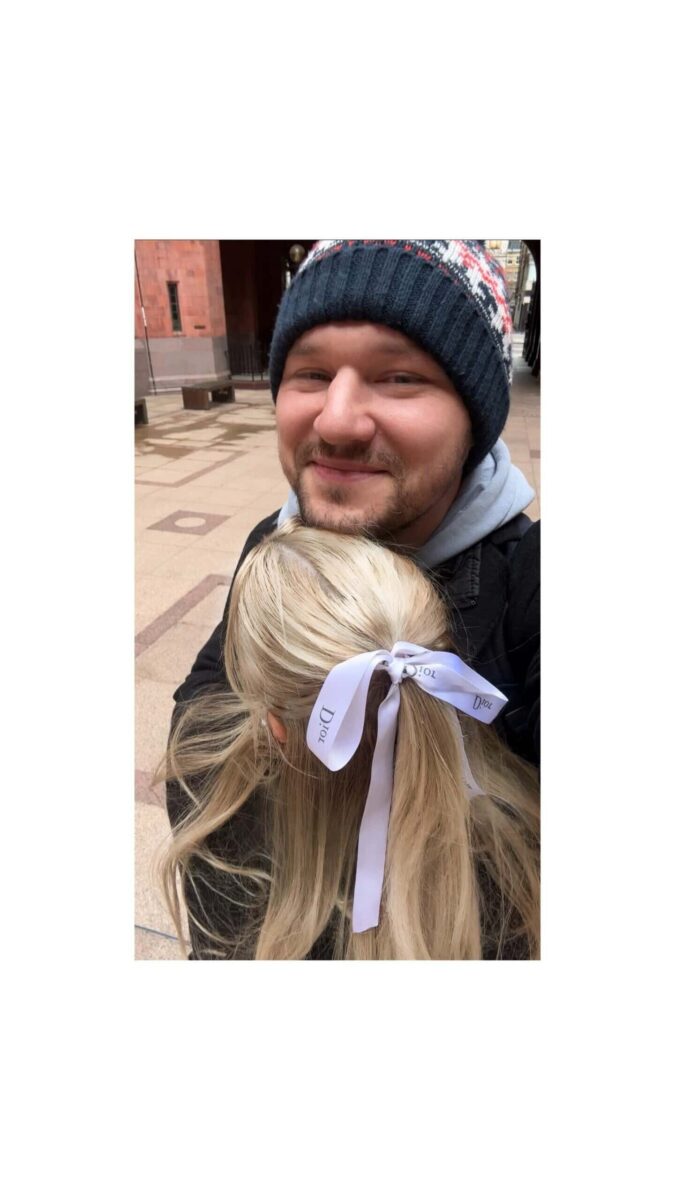
Use it for: collages, before and after layouts, and the occasional framed picture for a landscape photo you do not want cropped. For everyday posts, shoot or crop to 4:5 and skip the frame.
FaceApp and Peachy: use with care
The 2024 list included two apps that change how people look. FaceApp uses AI to change faces: ageing, hairstyles, expressions and make up. Peachy is a face and body editor that can reshape a figure, smooth skin and add light effects. Both are fun, and both can produce striking pictures. We would now be much more careful with them, for three reasons.
The first is advertising law. In February 2021 the Advertising Standards Authority ruled against two tanning brands whose influencer posts used filters that made the product look more effective than it was. In its guidance on beauty filters, the ASA says filters are "not inherently problematic", but that influencers and brands should not apply them to content directly relevant to the product if they could exaggerate its effect, and that "the responsibility ultimately lies with the advertiser". If you are paid or gifted to show a skincare, make up, haircare, tanning or fitness product, the picture must show what the product really does. A face or body editor on that content is a risk to the brand and to you.

The second is privacy. Apps that edit faces with AI usually do the work on their servers, not on your phone. When FaceApp's privacy came under scrutiny in 2019, the company told TechCrunch that it uploads only the photo you choose to edit and that most images are deleted from its servers within 48 hours. That may be perfectly acceptable for your own selfie. It is a different decision when the photo shows a client, a customer or anyone who has not agreed to it.
The third is trust. Audiences are increasingly good at spotting heavy editing, and a brand whose pictures look nothing like the product in someone's hands loses more than it gains. Our view is simple: use these apps for play and personal posts if you enjoy them, and keep them well away from anything that sells a product. Our guide to the ASA and CAP rules for social media covers the wider rules on labelling and claims.

Our workflow, from phone to post
Apps are only half of it. The other half is the order you use them in. This is roughly the routine our team follows for a single post, and it works just as well for a business owner editing on the train.
- Shoot for the editGood light does more than any app. Face a window, avoid overhead lights, and film or photograph in the tall shape you will post in. Take more than you need: a few seconds before and after each clip gives you room to cut.
- Choose before you editPick the best picture or the best three clips first. Editing ten versions of the same moment wastes time and makes the choice harder, not easier.
- Fix, then styleCorrect the basics first in Snapseed or Lightroom: straighten, crop, balance the light. Only then apply your preset or look. A preset cannot rescue a crooked, dark picture.
- Cut video tightIn Edits or CapCut, remove every pause and every second that does not add something. Put the most interesting moment first, add captions so the video works with the sound off, and keep text inside the safe area away from the edges.
- Add text lastMake cover images and graphics in Canva from your saved templates, so the brand looks the same every time.
- Check it as a viewerLook at the finished post on your phone at normal size, and check the cover on the 3:4 grid. If anything is hard to read or looks over-edited, fix it before you post.
- Save the source filesKeep the original photos and clips, not only the edited versions. You will want them for a different crop, a different platform or a client who asks for the raw footage.
If you are unsure when to post once the edit is done, our free best time to post tool gives a starting point for UK audiences, and the free image converter turns heavy files into lighter ones for your website.
When to hand the edit to a team
Everything above is enough to make good content yourself, and plenty of businesses do exactly that. The point at which it stops working is usually not skill but time. Editing takes longer than filming, and when the business gets busy the edit is the first thing to slip. If you would rather spend that time running the business, our team plans, films and edits content in house, and the people who plan your content are the people who edit it.

If what you need is video for adverts or product pages rather than a full feed, the UGC packages show every range with its price and the rights included, and our guide to what UGC is explains how it differs from influencer content. Nothing is filmed until you have approved the brief.
Editing apps: questions
What is the best free photo editing app for Instagram?
For precise fixes, Snapseed, which is free and made by Google. For a consistent look across your feed, Lightroom's free tier, which includes most editing tools and presets. Many people use both: Snapseed to fix, Lightroom to style.
Is Lightroom mobile free?
Partly. Adobe says capture, organisation, sharing and most editing tools are free. Premium features such as masking, healing, geometry tools, batch editing, RAW editing and cloud sync need a paid subscription.
Is it safe to edit client videos in CapCut?
Read the current terms first. Since June 2025 CapCut's terms grant it a broad, irrevocable licence over content you upload. For your own content that may be fine; for a client's confidential or paid footage, tell the client and consider an editor with narrower terms.
What is Instagram Edits?
Instagram's own free video editing app, available on iOS and Android since April 2025. It has a timeline, captions, audio, green screen and AI tools, publishes straight to Instagram and Facebook, and exports without a watermark.
Do I still need a white border on Instagram photos?
Usually not. Since early 2025 the profile grid shows 3:4 thumbnails, and feed posts can be as tall as 4:5. A tall photo fills the feed and is cropped only slightly on the grid. Borders are still useful for wide landscape photos you do not want cropped.
Can I use beauty filters on sponsored posts?
Not on anything that shows what the product does. The ASA has ruled that filters which exaggerate a cosmetic product's effect can make an advert misleading, and the advertiser is responsible. A filter unrelated to the product is not a problem in itself.
Is Canva Pro worth paying for?
If you make graphics every week for several platforms, usually yes: Magic Resize, the background remover and more brand kits save real time. If you make a few Stories a month, the free plan is enough.
Do I need expensive equipment to make good content?
No. A recent phone, a window for light and the free tiers of the apps above will take you a long way. Spend on a tripod and a small light before you spend on software.
- 9to5Google, Snapseed 3.0 for iPhone (June 2025)
- Adobe, Lightroom for mobile FAQ
- Marketing4eCommerce, CapCut's new terms (June 2025)
- Android Authority, Instagram Edits rolls out (April 2025)
- Style Factory, Canva Pro vs Free (2026)
- Kapwing, Instagram's new grid layout, sizes and dimensions
- ASA, the (mis)use of social media beauty filters when advertising cosmetic products (February 2021)
- TechCrunch, FaceApp responds to privacy concerns (July 2019)
A question this article did not answer? Ask our team, and a person will reply.