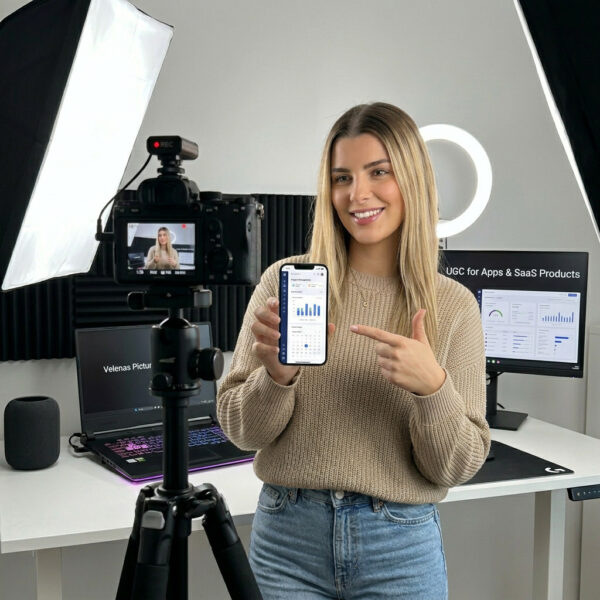

- A UGC creator is paid by brands to make natural, customer style content, mostly short videos for the brand's own channels and adverts. You do not need a large following to start.
- Step 1 is a niche: build it from what you already know and love, so your content sounds like you and brands can see where you fit.
- Step 2 is a portfolio of three to five videos, each featuring a different product you already own, filmed on your phone and shown on one simple page.
- Step 3 is outreach: find where each brand is active, ask how it prefers to discuss collaborations, and write a short, personal pitch that explains why you fit.
- Get the rules right from the start: gifted products count as income for tax, gifted or paid posts on your own channels must be labelled as ads, and since April 2025 fake reviews have been banned in the UK.
What a UGC creator actually does in 2026
UGC first meant anything ordinary people posted online about a brand: a review, a photo, an unboxing filmed for friends. Brands loved it because it felt honest. Today the term also describes a job. A UGC creator is someone a brand pays to make content in that natural, customer style, usually short vertical videos the brand posts on its own channels, uses on its product pages or runs as adverts. The creator does not need to post it on their own account, which is why you do not need thousands of followers to start. What brands are buying is the content and your ability to make it feel real.
When this guide was first written in November 2023, Velena was a UGC creator based in London and had been sharing her journey for about three years. The question she was asked most often was the simplest one: where do I start? Her answer was three steps, plus one habit, and they still hold. What has changed since is everything around them: the rules on tax and advertising, the formats brands ask for, and how much competition a new creator faces. So this version keeps the three steps, explains each one more fully, and adds the parts a beginner needs in 2026.
Our guide to what UGC is explains the brand side in detail, and our comparison of UGC and influencer marketing shows where the two overlap. This article is for the person on the other side of the camera.

Step 1: determine your niche
The path into UGC starts with choosing a niche. This is not only a business decision; it is a matter of knowing yourself. Look at your surroundings, your interests, your hobbies and your personality. Your niche becomes an extension of who you are, and the more it is, the more natural your content will sound.
Velena's own niche came from her background in fashion marketing and journalism, so fashion, beauty and lifestyle content was a natural fit, and her first portfolio videos featured the skincare and make up she actually used. Yours could be anything you know well: a parent sharing practical tips, someone who follows every new piece of tech, a cook, a gardener, a runner, or someone whose daily life happens by the sea or in the mountains. The point is to align your content with what you genuinely care about, because that connection is what makes it convincing and what keeps you going on the slow weeks.
A good niche passes three tests:
Do not worry about choosing too narrowly. A clear niche helps a brand picture you in its campaign, and you can widen it later. Many creators start with one area, such as skincare, and grow into neighbouring ones, such as haircare, wellness and lifestyle, as their portfolio grows.
Step 2: create your portfolio
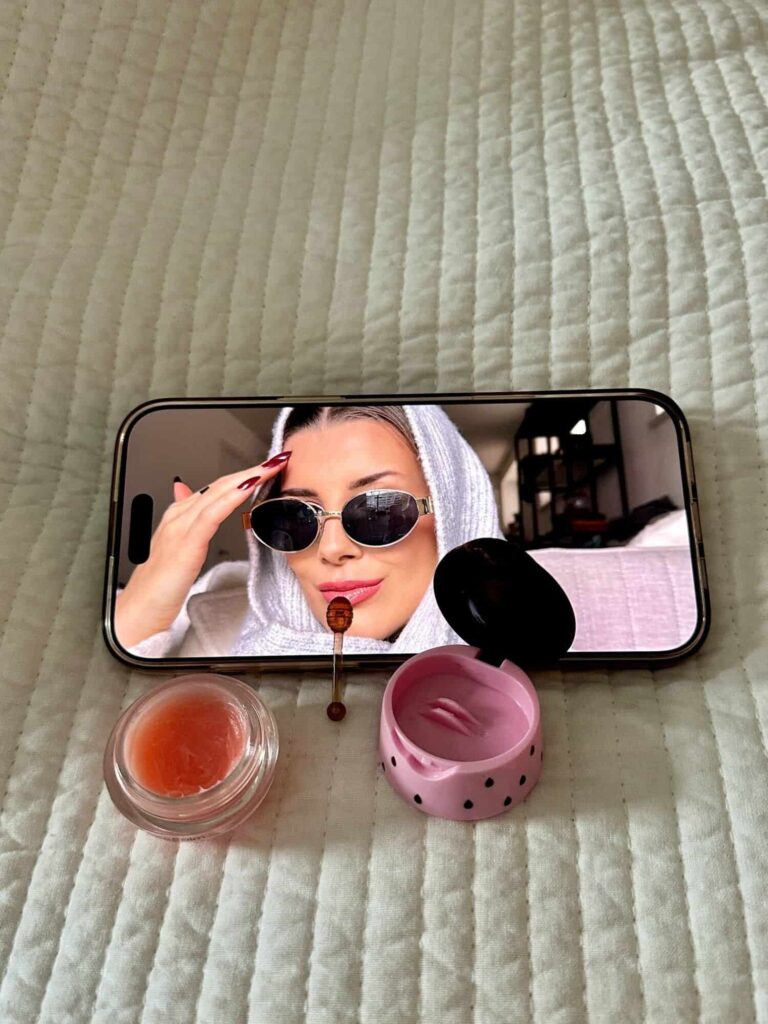
Once you know your niche, the next step is to show what you can do. A portfolio is your visual CV: it proves you can make the kind of content a brand needs before it spends any money on you. You do not need the newest equipment to make one. Use what you already have at home, and let your enthusiasm lead. When Velena started, she would pick her favourite skincare or make up products and explain, with real feeling, why each one had a place in her routine.
Make three to five videos, each featuring a different product. That range shows your versatility and gives a brand a fuller picture of your skills than one video ever could. Vary the formats as well as the products, because brands buy different kinds of video:
- A talking to camera reviewYou, a product and an honest opinion. The most requested UGC format, and the one that shows whether you are natural on camera.
- An unboxing or first impressionsOpening a product for the first time, with genuine reactions and close shots of the details.
- A demonstration or tutorialShowing how a product is used, step by step, with clear hands and good light.
- A routine or day in the lifeThe product shown in context, as part of a morning, a workout or a meal.
- A voiceover videoProduct shots with your voice over them and no face on screen, for creators who prefer not to appear, or brands who want the product to be the star.
Keep each video short, tall (9:16, the shape used by Reels, TikTok and Shorts), well lit and tightly edited. Open with a strong first line or shot, because a brand watching your portfolio judges the opening seconds the same way its customers will. Add captions so the video works with the sound off. Our guide to the editing apps we use covers the free tools that will do all of this on a phone, and our UGC examples guide shows what each format looks like when it works.


Then put the videos somewhere a brand can see them in one click. In 2023 Velena recommended Canva, and it is still an easy way to make a clean, professional portfolio page or PDF for free. Better still, as our article on what we would do differently if we started UGC again explains, is a simple website on your own domain, because it is the one place no platform can change or take away. Either way, include a line about who you are, your niche, the videos grouped by format, and how to contact you.

Step 3: reach out to brands
Now comes the part most beginners dread and the part that actually starts a career: reaching out to brands and making a good first impression. Social media is the most useful tool you have here, and using it with a little strategy opens doors.
Start by finding where each brand you want to work with is most active. For many consumer brands that is Instagram or TikTok; for software, apps and business services it is often LinkedIn. Follow the brand, engage genuinely with its posts for a while, and look for the person who handles content or partnerships. Then start a conversation. Do not be shy: brands appreciate creators who take the initiative.
Once you have made contact, ask how the brand prefers to discuss collaborations. Some want email, some are happy to continue in messages, some have a form or a creator programme. Adapting to their preferred route shows professionalism and respect for how they work, and it puts your pitch in front of the person who can say yes.
Then comes the part that matters most: make your pitch personal. Brands receive a great many messages, and yours needs to stand out. Explain exactly why you are a good fit for this brand. Share a short personal story that connects with its values or its products. If you have a perspective that suits what it sells, whether as a skincare enthusiast, a tech fan or a parent dealing with the joys and challenges of family life, say so, and let your personality show. A good first message is short and specific:
Send it, note it in your contact file, and follow up once, politely, about a week later if you hear nothing. Then move on. Silence is common and rarely personal; brands are busy, and many messages are answered weeks later or not at all. The creators who succeed are the ones who send good pitches consistently, not the ones who send one perfect pitch and wait.

Bonus tip: keep a contact file
When brands share their email addresses, keep them in a dedicated file. Even if a brand is not interested right away, an opportunity may come up later: a new product, a new marketing manager, a bigger budget next quarter. Keeping these contacts organised can change your career, because a warm contact who already knows your name answers far faster than a stranger.
Record the brand, the contact, the date, what you sent, what they said and when to follow up. Since 2023 we would add one thing: these are people's personal details. The ICO's guidance on business to business marketing says that named business contacts are personal data under UK GDPR, and that sole traders are treated like individuals for marketing emails. Keep only what you need, store it securely, never add people to a newsletter without asking, and delete anyone who asks you to.
Pricing your first briefs
The 2023 version of this guide stopped at the first reply from a brand. In 2026 the next question is always the same: what do I charge? There is no single answer, but there are principles that hold.
Price the work, not the seconds. A thirty second video can take hours of scripting, filming and editing. Price the video and the usage rights separately, because a video a brand posts once on its own page is worth less to it than a video it runs as a paid advert for a year. And decide in advance how many rounds of changes are included. Our guide to UGC rates in the UK explains how rates are built, our UGC rates report for 2026 sets out the market in more detail, and the free UGC rate calculator gives you a figure for a brief in five questions.
Be careful with gifted collaborations. A free product in exchange for content can be a reasonable way to build a portfolio in the very early days, but it is still payment, it still counts as income for tax, and it should not become the norm. Our article on the cost of easy content explains why "we will gift you a product" so often costs the creator more than it pays.
The rules to get right from day one
Three areas of UK law and regulation apply to UGC creators from the first brief. None of this is legal or tax advice, and for anything that affects your own position speak to an accountant or solicitor, but these are the basics every beginner should know.
Our guide to the ASA and CAP rules for social media covers labelling and claims in more depth, and our report on graduating into the creator economy explains what sole trader and limited company structures mean for what you keep.
Mistakes beginners make, and what to do instead
Most of the problems new creators run into are predictable, which means most of them are avoidable. These are the ones we see most often.
- Waiting for perfect equipmentA recent phone, a window and a cheap tripod are enough. Spend on light before you spend on a camera.
- A portfolio of one kind of videoFive talking to camera reviews show one skill. Five different formats show five reasons to hire you.
- Copied pitchesA message that could have gone to any brand usually goes nowhere. One specific line about the brand changes the reply rate.
- Working without anything in writingEven a short email confirming the fee, the deadline, the revisions and the usage rights protects you. A proper contract is better.
- Sending files before paymentSend watermarked previews and ask for a deposit. Clean files go out when the final payment arrives.
- Ignoring the adminLog every payment and every gift from the first one. Twenty minutes a week saves days in January.
- Falling for offers that seem too goodRequests to pay for a "creator course" before a job, or to send bank details to unknown accounts, are warning signs. Our article on UGC scammers covers the common ones.
Velena's closing advice in 2023 still sums it up: finding your niche, building a strong portfolio and reaching out to brands with a plan are the foundations of a UGC career, and what makes it work is authenticity and showing what makes you different. Our UGC tips and tricks article goes further on filming and editing once you are up and running.
If you are a brand reading this
Everything above is what a good creator brings to a brief: a clear niche, a varied portfolio, a personal pitch, a contract and honest content. If you would rather commission that without finding and managing creators yourself, our team makes UGC in house, and you choose who is on camera: Velena, Dragos, both, or nobody, with a voiceover. Every package shows its price and the rights included, and nothing is filmed until you have approved the brief.


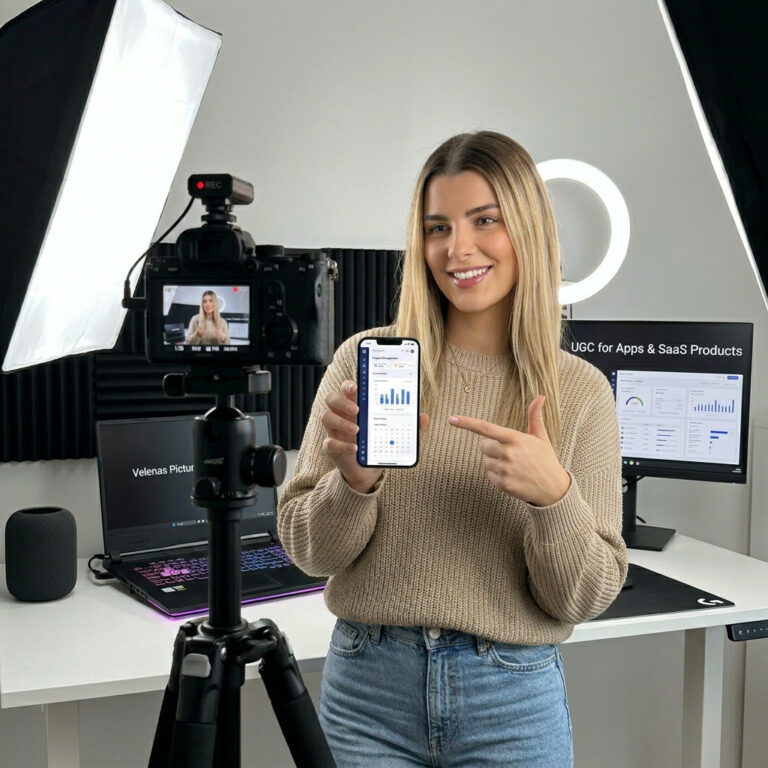
If you want to choose by who is on camera first, the women led, men led and couple pages show the work that way, and the voiceover page shows videos with nobody on screen.
Becoming a UGC creator: questions
Do I need followers to become a UGC creator?
No. Brands pay UGC creators for the content itself, which they post on their own channels, product pages and adverts. Your portfolio matters far more than your follower count.
How many videos should a UGC portfolio have?
Three to five to start, each featuring a different product and ideally a different format: a review, an unboxing, a demonstration, a routine and a voiceover. Add and replace videos as you make better ones.
What equipment do I need to start UGC?
A recent smartphone, natural light from a window, a simple tripod and free editing apps. A small light and a clip-on microphone are the first upgrades worth making.
How do I find brands to work with?
Start with brands you already use and like, find where they are active on social media, engage genuinely, then ask how they prefer to discuss collaborations. Send a short, personal pitch with one idea and a portfolio link.
Should I work for free products at the start?
Sparingly, if at all. A gifted product can help fill an early portfolio, but it is still payment, it counts as income for tax, and it should not become your normal rate. Your own products can fill a portfolio just as well.
Do I have to pay tax on UGC income?
Income from UGC, including the value of gifted products, counts as trading income. If your gross trading income is over £1,000 in a tax year, HMRC says you need to register for Self Assessment, by 5 October after that tax year ends.
Do I need to label UGC as an ad?
If you post paid or gifted content on your own channels, yes, clearly and up front. Content you make for a brand to post on its own channels is the brand's advertising, and the brand is responsible for how it is presented.
Can I review a product I have not used?
No. Since 6 April 2025, UK rules ban fake consumer reviews, meaning reviews presented as genuine experience when they are not. Only make a review or testimonial video for a product you have really tried.
A question this article did not answer? Ask our team, and a person will reply.