

- A testimonial video comes in three kinds: a real customer's, a commissioned creator's, and an expert's or employee's. Each has its own rules, and they must never be mixed up on the page.
- Since 6 April 2025, the Digital Markets, Competition and Consumers Act 2024 bans fake consumer reviews and reviews that hide the fact they were commissioned. The CMA can now fine up to 10 percent of global turnover without going to court.
- A commissioned testimonial is fine, and useful, as long as the creator has really used the product, says what they really found, and the video is clearly presented as an advert or a paid piece, never as a customer review.
- The CAP Code adds three working rules: hold evidence that a testimonial is genuine, have permission, and make sure nothing said in it misleads. Claims in a testimonial need the same proof as claims in any other advert.
- The best testimonial briefs give facts and approved claims, then let the creator speak in their own words after a real period of use. Scripted verdicts read from a card sound false and often are.
- Our testimonial videos start at £120, filmed in house after the product has been used, with advert rights from the Standard package.
Three kinds of testimonial video, and why the difference matters
"Testimonial video" is used loosely, and the looseness is where brands get into trouble. There are three quite different things a business can mean by it, and the law, the advertising code and plain honesty treat each of them differently.
All three can sit in the same marketing plan, and all three can work. What cannot happen is the second or third being presented as the first. A creator's video placed in your star rating widget, captioned "what our customers say", or posted from an account that looks like a stranger's is no longer a testimonial advert. It is a review that hides the fact it was commissioned, and in the UK that is now a banned practice in its own right.
This guide is about the second kind, the commissioned creator testimonial, because that is what a brand orders from a UGC producer like us. But it covers the first kind too, because a good testimonial strategy collects real customer videos alongside commissioned ones, and the two should be kept visibly apart. If you are new to the format as a whole, our guide to what UGC is covers the wider picture, from formats to who owns the footage.
Why testimonial videos persuade
People buy on the say-so of other people. Reviews are the clearest proof. Research from Northwestern University's Spiegel Research Center found that the likelihood of a purchase for a product with five reviews is 270 percent greater than for a product with none, and that the effect is stronger for higher priced products, where conversion rose 380 percent against 190 percent for a cheaper one. The same research found purchase likelihood peaks for ratings between 4.0 and 4.7 rather than at a perfect five, which is a useful reminder that shoppers trust a record that looks real over one that looks polished.
Video adds what text cannot: a face, a voice and the product in use. Wyzowl's Video Marketing Statistics 2026 found that 85 percent of people say they have been convinced to buy a product or service by watching a video, and that 63 percent would rather learn about a product from a short video than from any other format. The same survey found testimonial videos are the third most common type of video marketers make, at 57 percent, behind only social media videos and explainers.
Those two findings explain the pull of testimonial video, and also the temptation. If reviews sell and videos sell, a video that looks like a review sells twice. That is precisely why the law now draws a hard line around it. The persuasive power of a testimonial comes from the viewer believing it is an honest account of someone's experience. Take away the honesty and you are not just breaking a rule; you are spending the trust that made the format work in the first place.
The good news is that honesty and performance are not in tension. A commissioned testimonial from a creator who genuinely used the product for a week or two, filmed in their own words, has everything that makes the format persuasive: a real person, a real reaction, a real routine. Labelling it as an advert does not remove any of that. Viewers on social media see sponsored labels on almost everything they scroll past; what turns them off is not the label, it is a performance that sounds read from a card.
The legal line: commissioned is fine, concealed is banned
Since 6 April 2025, the consumer protection parts of the Digital Markets, Competition and Consumers Act 2024 have been in force. Schedule 20 lists commercial practices that are unfair in every case, with no need for anyone to show a customer was actually misled. Three of them bear directly on testimonial video.
- Fake consumer reviews (paragraph 13)Submitting, commissioning or publishing a consumer review that "purports to be, but is not, based on a person's genuine experience" is banned. A creator who has never used the product filming a glowing verdict is the textbook case. So is an actor reading a script written as if they were a customer.
- Concealed incentivised reviews (paragraph 13)A review also breaks the rule if "a person has been commissioned to submit or write the review" and "that fact is not made apparent". The Act says commissioning includes "incentivising by any means", so a free product, a discount or a fee all count. A commissioned testimonial is legal only when the commissioning is made apparent.
- Paid editorial and posing as a consumer (paragraphs 12 and 25)Using editorial content to promote a product where the trader paid for the promotion, without making that clear, is banned. So is "falsely representing oneself as a consumer". A brand account, or anyone paid by the brand, must not pretend to be an ordinary buyer.
The Act defines a consumer review as "a review of a product, a trader or any other matter relevant to a transactional decision", and the CMA's short guide for businesses makes clear the form does not matter: it lists "a verbal opinion expressed in a video on a sharing platform" among the forms a review can take. A testimonial video is squarely inside the definition. The full CMA guidance, Fake reviews (CMA208), was published on 4 April 2025.
The consequences are no longer theoretical. As CMS sets out, the CMA can now decide for itself that consumer law has been broken and fine a business up to 10 percent of its global turnover, without first going to court. Our guide to the ASA, the CAP Code and social media covers the wider regime, including the CMA's investigations into review practices.
On top of the law sits the advertising code. The ASA's advice on testimonials and endorsements summarises the rules of the CAP Code that apply to every testimonial in an advert:
Put the law and the code together and the working rule is simple. A commissioned testimonial needs three things to be true at once: the person really used the product, the words reflect what they really found, and anyone watching can tell it was commissioned. Miss the first two and it is a fake review. Miss the third and it is a concealed incentivised review. Get all three right and it is an honest advert, which is exactly what it should be.
We are a content agency, not a law firm, and this is our working reading of the rules rather than legal advice. If your product sits in a regulated category, or the stakes of a campaign are high, the CMA and ASA guidance linked here is the place to check before anything runs.
How to label and place a commissioned testimonial
"Make it apparent" sounds abstract until you have to decide where a video goes and what sits next to it. In practice, most mistakes happen not in the video itself but in how it is placed. These are the placements we see brands use, and how to keep each one on the right side of the line.
A few things should never sit next to a commissioned testimonial, because each of them implies the video is a customer review.
- Star ratings, a review count, or a "verified buyer" badge.
- Headings such as "Customer reviews", "What our customers say" or "Real reviews".
- A first name and initial in the style of a review site, as if the creator were an anonymous buyer.
- Captions written in the first person by the brand, as though the brand were the customer.
- Any suggestion that the creator found the product by chance or paid for it themselves.
The test we use is a simple one: if a reasonable viewer saw this video where you plan to put it, would they think a customer chose to make it? If the answer is yes, change the placement or the words around it until the answer is no. It is a five-minute check, and it is far cheaper than the alternative.
What a testimonial may claim
A testimonial does not create a safe space for claims. The CAP Code treats a claim in a creator's mouth exactly as it treats a claim in your own copy: if the advert says or implies the product does something, you need the evidence before it runs. The ASA's guidance is blunt that a customer's words are not an excuse to get round the code, and the same is true of a paid creator's.
The safest testimonials talk about experience rather than outcomes. "It absorbed quickly and did not leave my skin sticky" is a description of what one person found, and easy to stand behind if they genuinely found it. "It cleared my acne in a week" is a claim about results that needs proof, and in some categories it is a medical claim the product cannot lawfully make at all.
On filters specifically, the ASA's 2021 guidance on beauty filters followed rulings against two tanning brands whose influencer stories used filters that made skin look darker. Its advice is to avoid filters on photos or videos "directly relevant to the product being advertised", and to write that into creator agreements. The same thinking now covers AI editing: the ASA's May 2025 note on AI in advertising says a disclosure label is very unlikely to rescue an image that misrepresents what a cosmetic product does.
In our own work, we script only from claims the brand has approved, we tell the brand before filming if a requested wording reads as medical, and nothing is filmed until the brief and the claims are agreed in writing. The substantiation stays with the brand, because the brand is the advertiser and holds the evidence; our job is to make sure the video never says more than that evidence supports.
How to brief a testimonial video
Most weak testimonials are weak because of the brief, not the filming. A brief that dictates every word produces a video that sounds dictated. A brief with no facts produces vague praise. The aim is in between: give the creator everything they need to understand and use the product properly, set the boundaries clearly, then leave the verdict to them.
- The product, in plain factsWhat it is, what it is for, how to use it and for how long before a fair verdict is possible. A serum may need two weeks; a kitchen gadget, a few uses. If the creator films before the product has had a fair chance, the testimonial is a first reaction, and should be labelled as one.
- The approved claims, as a listEvery claim the creator may make, worded as your evidence supports it. Add a short list of things not to say, especially medical words, comparisons with named competitors, and promises of results.
- The audience and the doubt you want answeredWho is watching and what stops them buying. A testimonial is strongest when it answers one real objection, such as "will it suit sensitive skin" or "is it worth the price", with one real experience.
- The format and the placementFirst reaction, review after use, three reasons, or a story, and where it will run: your product page, a paid advert, or both. This decides the length, the opening and whether you need several hooks.
- An honesty clauseSay in writing that the creator should say what they really found within the approved claims, and that if they do not like the product they should tell you rather than fake it. A creator who can say no is the only kind whose yes is worth filming.
- Practical detailsBrand name pronunciation, packaging that must be visible, colours or settings to avoid, the call to action, captions, and the rights you need, including how long you may run it as an advert.
The honesty clause matters more than it looks. It is what turns a commissioned testimonial from a performance into evidence. It also protects you: if a creator cannot honestly recommend the product, you want to know before you spend media budget on a video that says otherwise. On our side, the creator uses the product before filming, and the testimonial says what was found, within the claims you approved. If you are hiring creators directly rather than through a studio, our guide to finding and briefing UGC creators in the UK covers contracts, rights and red flags.
The script, beat by beat
A testimonial script is not a word for word speech. It is a sequence of beats, each with a job, that the creator then fills in their own words. Thinking in beats keeps the video tight and keeps the creator's voice intact. For a 30 second testimonial, a reliable sequence looks like this.
Hooks for testimonials work best when they lead with tension. A few shapes that consistently earn the first three seconds:
- The doubt: "I was sure this would be another one that does nothing."
- The specific result: "Two weeks in, and this is the part that surprised me." (Only if the result is one your claims support.)
- The objection: "Is it worth the price? Here is what I found."
- The comparison with what came before: "I have used the same one for years. This is why I switched." Keep it to "what I used before", not a named rival, unless you can substantiate a fair comparison.
Longer testimonials, 45 or 60 seconds, stretch the experience beat rather than the hook. Shorter ones, 15 seconds, collapse the before and the experience into a single moment of use. In every length, the creator should know the beats and the approved claims well enough to speak naturally, then do two or three takes rather than one perfect recital. Our packages page lists the six formats we film; the beats above apply to all of them.
Where the testimonial will run as an advert, ask for more than one hook on the same video. The body and the verdict stay the same; only the first three seconds change. It costs little extra in the same session, and it gives whoever runs your adverts several openings to test against each other rather than one guess. Our guide to UGC advertising explains how hooks are tested and measured once the video is live.
Testimonial videos we have filmed
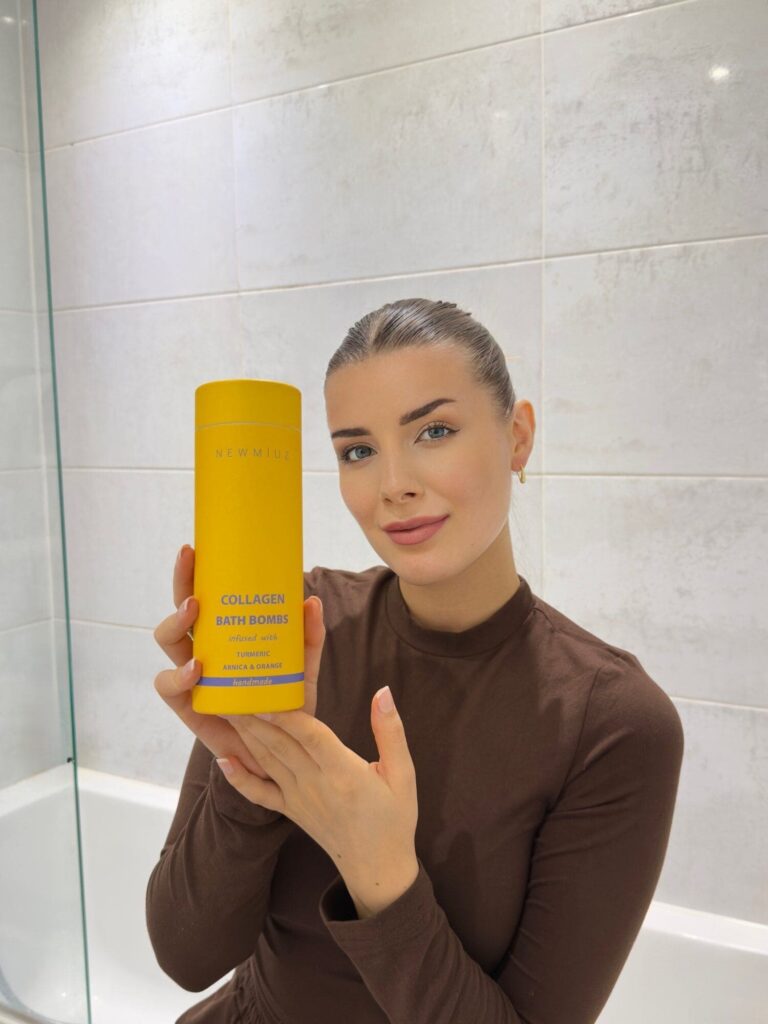
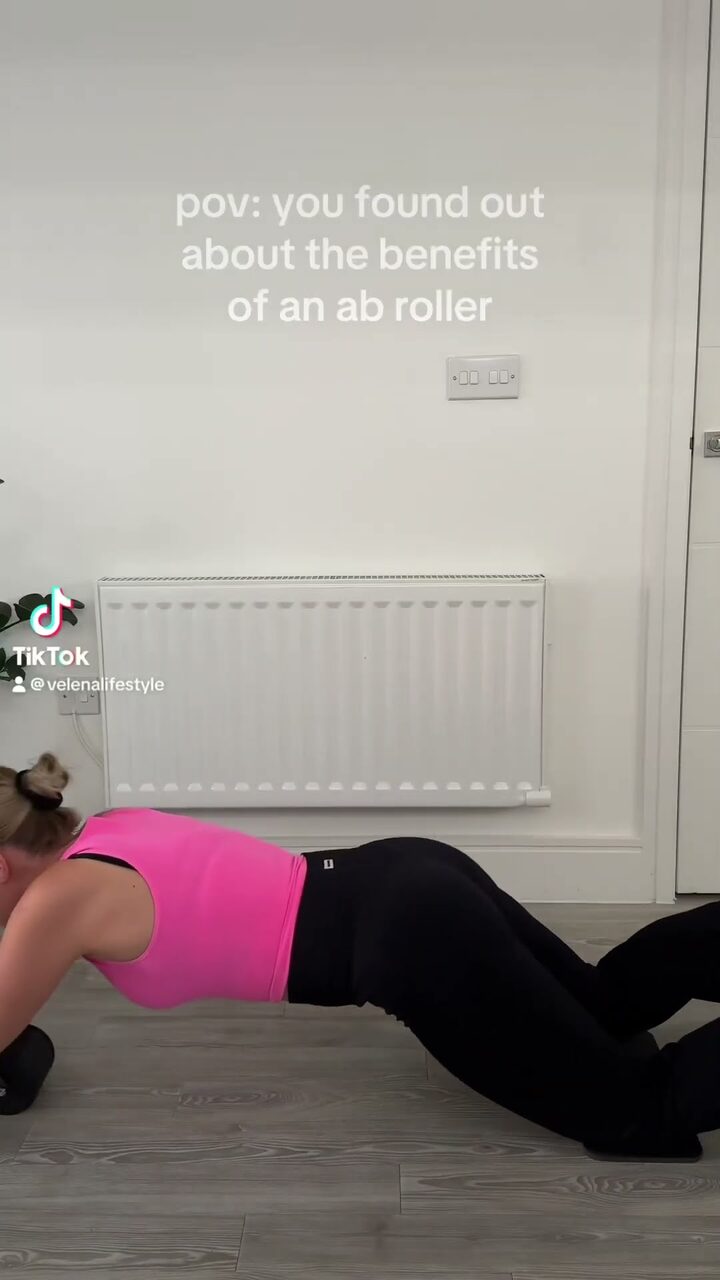
Tap a video to play it. Every one was filmed for a client after the product had been used. There is more on our testimonial work page.

Collecting real customer testimonials properly
Commissioned testimonials should sit alongside real customer ones, not replace them. A real customer's video carries a kind of credibility no paid creator can, and a product page with both, clearly separated, is stronger than either alone. Collecting customer videos has its own rules, and they are mostly about permission and honesty.
- Ask everyone, not only the happy onesInvite reviews from customers in a consistent way, after they have had time to use the product. Asking only customers you expect to be positive, or filtering out the critical ones, skews the picture shoppers see, and the CMA's guide says a business that publishes reviews must take "reasonable and proportionate steps to prevent and remove fake reviews".
- Disclose any incentiveIf you offer a discount, a gift or a prize draw entry for a video review, that review is incentivised, and the incentive has to be made apparent wherever the review appears. A short, visible line on the video or under it, such as "received a discount for sharing a review", makes the incentive apparent.
- Get permission in writingRule 3.50 of the CAP Code requires permission to use a testimonial in an advert. Because the video shows a person's face and voice, it is also personal data, so under UK GDPR the permission should be specific, recorded and easy to withdraw. The ICO's guide to consent says to keep records of who consented, when, how and what they were told.
- Keep the evidence while it runsRule 3.47 asks you to hold evidence that the testimonial is genuine and the contact details of the person who gave it, for as long as you use it. An order record and the original file are usually enough.
- Edit for length, never for meaningTrimming a customer's video is fine. Cutting it so that it says something they did not mean is not. The ASA has upheld complaints about testimonials cut or altered in a misleading way.
- Label it as what it isA real customer's video can sit in your reviews section. If the customer was incentivised, say so. If they are also an employee, a friend or an investor, say so too: the ASA has ruled that material connections must be disclosed.

A practical way to run both streams side by side is to treat real customer videos as your proof and commissioned testimonials as your demonstration. The customer section answers "do people like it?" with volume and honesty, including the occasional three star review. The commissioned section answers "what is it like to use?" with a well lit, well paced video that shows the product clearly. Our own brand, HoneyBee & Co., keeps its customer reviews on each variety's page, separate from anything we make for it.
What a testimonial video costs in the UK
Testimonials are usually the simplest UGC brief, which is why they tend to sit at the lower end of the market. Our UGC Rates Report UK 2026, which brings together published industry surveys and UK creator rate cards, puts a simple testimonial from around £120, and the standard single video from an established UK creator at £150 to £350 with organic rights only. Adding paid advert rights, extra hooks or the raw footage moves the price up, and it should: those are the things that make a testimonial work as an advert.
When you compare quotes, compare what is included rather than the headline. Four questions sort most of them out: does the creator use the product before filming, who writes the script, which rights are included and for how long, and how many hooks and formats you receive. A cheap video with organic rights only can end up the expensive option if you later need to buy advert rights separately. The free UGC rate calculator gives a market range for your brief in five questions.
Our testimonial range has four packages with fixed prices. The creator uses the product before filming in all four, and you choose who is on camera: Velena, Dragos, both of them, or nobody, with a voiceover instead. The price is the same whichever you choose.




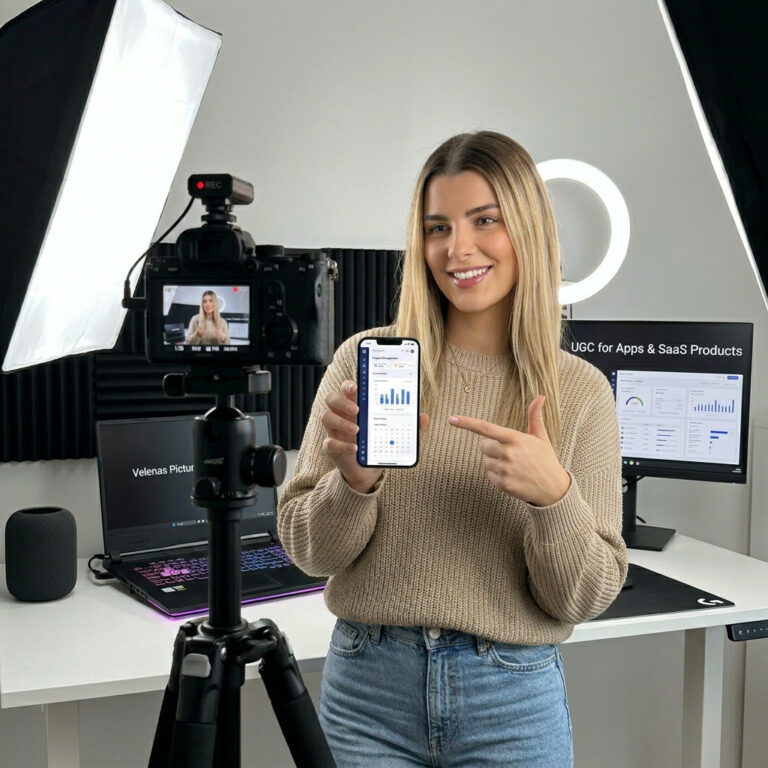
Which package fits depends almost entirely on where the video will be shown. For a product page or your own feed, Basic is enough. For a paid advert, Standard is the starting point, because Basic has no advert rights. Premium suits a brand that wants to cut more versions later from the raw footage, or run adverts from a creator's handle. If you want to test which angle persuades best, the Bundle gives you three at once.
What good looks like: approving the cut

When the first cut arrives, it is tempting to judge it on whether you like it. A better test is whether it does its job and whether it is safe to run. Go through these checks before you approve, ideally with the sound off first and then with it on.
Where to use a testimonial, and how to measure it
A testimonial video earns its cost when it is used in more than one place. The same finished video, labelled honestly in each, can do three or four jobs.
- Product pages, in a section of its own above or beside the reviews, to show the product in use. Measure the conversion rate of visitors who play the video against those who do not, and the page's overall conversion rate before and after it goes up.
- Paid social, as a sponsored advert to people who do not know you yet, or as a retargeting advert to people who have visited but not bought. Measure hook rate, hold rate and cost per purchase for each hook separately.
- Email, in a welcome series or an abandoned basket email, where it answers the doubt that stopped the purchase. Measure the click rate of emails with and without it.
- Organic social, on your own feed, labelled as a creator collaboration. Measure saves, shares and the questions it prompts in comments, which are often the best brief for your next testimonial.
Tag every link from a testimonial with the video and the hook it came from, so you can tell which version brought the visitor. Our free UTM link builder makes tagged links in seconds, and the social media ROI calculator shows what a testimonial needs to bring in to pay for itself.
Give a new testimonial time before you judge it. On a product page, a few days of traffic tells you little; a few weeks, compared with the same weeks before, tells you more. In paid adverts, judge each hook on enough spend to mean something, then keep the winner and replace the rest. Testimonials tire like any other advert: when the same people have seen one too often, a new creator, a new angle or a new hook usually does more than a bigger budget.
Common mistakes with testimonial videos
Most of the trouble we see with testimonial videos comes from a handful of habits. Each is easy to fix once you know to look for it.
There is an eighth mistake that sits above the rest: treating a testimonial as a substitute for a product people genuinely like. A testimonial amplifies what is already true. If customer reviews are mixed, a commissioned video will not fix them, and the gap between the two will be visible to anyone who scrolls down the page.
UGC testimonial videos: your questions
Is it legal to pay a creator for a testimonial video in the UK?
Yes, as long as the creator has really used the product, the testimonial reflects what they really found, and the fact it was commissioned is made apparent wherever it appears. What the DMCC Act 2024 bans is a fake review, or a commissioned review that hides the commissioning.
Can I show a creator testimonial among my customer reviews?
No. Placing a commissioned video among customer reviews, in a star rating, or under a "what our customers say" heading presents it as a consumer review that conceals it was commissioned. Give it its own section with an honest heading.
How should a commissioned testimonial be labelled?
As a paid advert, the platform's sponsored label usually does the job, as long as the caption does not contradict it. Posted by the creator, it needs an upfront "Ad" label and the platform's paid partnership tool. On your own site, a heading such as "Filmed for us by a creator" is clear and honest.
Does the creator have to use the product first?
Yes. A testimonial that claims to be based on experience but is not is a fake consumer review. If the video is filmed at first use, present it as a first reaction rather than a verdict.
Can a testimonial say the product gets results?
Only results you can prove before the advert runs. The CAP Code treats claims in a testimonial like any other claim. Health and medicinal claims have extra rules, and food and supplement health claims must match the GB register.
Can I offer customers a discount for a video review?
You can, but the review is then incentivised, and the incentive must be made apparent wherever the video appears. Offer it to customers consistently, not only to those you expect to be positive, and get written permission before using the video in an advert.
Can I edit a customer's testimonial?
For length and clarity, yes. To change its meaning, no. The ASA has upheld complaints about testimonials cut or altered in a misleading way. Keep the original file as evidence.
How long should a testimonial video be?
Most work at 15 to 30 seconds for adverts and 30 to 60 seconds for product pages and email. Whatever the length, the hook belongs in the first three seconds and the verdict before the end. Our testimonial videos can be 15, 30, 45 or 60 seconds.
What does a testimonial video cost in the UK?
Our UGC Rates Report UK 2026 puts a simple testimonial from around £120 and an established creator's video at £150 to £350, organic rights only. Our testimonial packages start at £120, with advert rights from the Standard package.
Who appears in your testimonial videos?
You choose: Velena, Dragos, both of them, or nobody, with a voiceover. Everything is planned, filmed and edited in house by our team, after the product has been used, and the price is the same whichever you choose.
- legislation.gov.uk, Digital Markets, Competition and Consumers Act 2024, Schedule 20
- CMA, short guide for businesses publishing consumer reviews
- CMA, Fake reviews guidance (CMA208), 4 April 2025
- CMS, the DMCC Act consumer provisions in force from 6 April 2025
- ASA, Testimonials and endorsements
- ASA, Influencers' guide to making clear that ads are ads
- ASA, the misuse of social media beauty filters, February 2021
- ASA, disclosure of AI in advertising, May 2025
- GOV.UK, Great Britain nutrition and health claims register
- ICO, a guide to consent
- Spiegel Research Center, How online reviews influence sales
- Wyzowl, Video Marketing Statistics 2026
A question this article did not answer? Ask our team, and a person will reply.