
UGC for Ecommerce: Turning Product Pages Into Proof
The average cart abandonment rate sits above 70 percent. Here is how ecommerce and DTC brands use UGC on product pages, in ads, and post-purchase to close more of that gap.
Brief an ecommerce UGC project
Key takeaways
- The average online cart abandonment rate sits above 70 percent, and unclear or unconvincing product pages are a major contributor.
- UGC in Facebook and Instagram ads drives roughly 4x higher click-through rates and about 50 percent lower cost per click than standard ad creative.
- The highest-impact placement is not always the ad, it is the product page itself, right beside the buy button, where doubt gets resolved at the moment of decision.
- Ecommerce UGC should map to the funnel: cold-traffic ads, warm retargeting, product-page proof, and post-purchase content that turns buyers into your next creators.
- Velena Lifestyle produces ecommerce and DTC UGC end to end, from creator selection to finished, ad-ready and page-ready video with usage rights included.
What is UGC for ecommerce and DTC brands?
UGC for ecommerce is authentic, creator-style user-generated content, unboxings, reviews, demos, and everyday use, made for a direct-to-consumer or online retail brand to run across ads, product pages, and email. It exists to answer the one question every online shopper is silently asking: is this actually as good as the listing says?
Ecommerce has a structural trust gap that no other retail format shares. A shopper cannot pick the product up, and the listing photos are, by definition, the brand's best case for itself. UGC closes that gap with evidence from someone who already bought it and has nothing to gain from saying it worked. That evidence shows up at every stage of the funnel: a scroll-stopping ad, a product-page video that resolves the last doubt before checkout, and a post-purchase review that becomes the next buyer's proof.
Why ecommerce brands cannot skip UGC
The numbers here are not soft brand-trust statistics. They are hard performance numbers from paid media platforms and checkout data.
Put together, these numbers point at two separate jobs for UGC in ecommerce: winning the click cheaply, and then winning the sale once the shopper lands. Most brands only solve the first. The second is where the real revenue is sitting unclaimed.
The trust gap in online shopping
Every online retail category shares the same structural problem: the shopper is being asked to commit money to something they cannot touch, based entirely on photos and copy the brand chose. Professional product photography is not dishonest, but it is inherently the brand's best-case presentation, shot in perfect light, on a model or in a studio, with every flaw edited out.
This is not a new problem, but it has gotten harder to solve with photography alone. Shoppers now compare listings across multiple tabs in seconds, and polished imagery has become the baseline expectation rather than a differentiator. When every competing listing looks equally professional, the deciding factor shifts to whichever page offers proof that goes beyond the studio shot, and that proof is exactly what UGC supplies.
A customer photo or video does not have that incentive. It shows the product in an ordinary kitchen, on an ordinary desk, in an ordinary hand. That is precisely why it carries more weight with the next shopper: it looks like proof, not marketing. The gap between "the brand says this is great" and "a stranger who already paid for it says this is great" is the entire reason UGC exists as a category, and it is largest in ecommerce, where the shopper has no other way to verify the claim before buying.
5 UGC formats that convert for ecommerce
1. Unboxing and first use
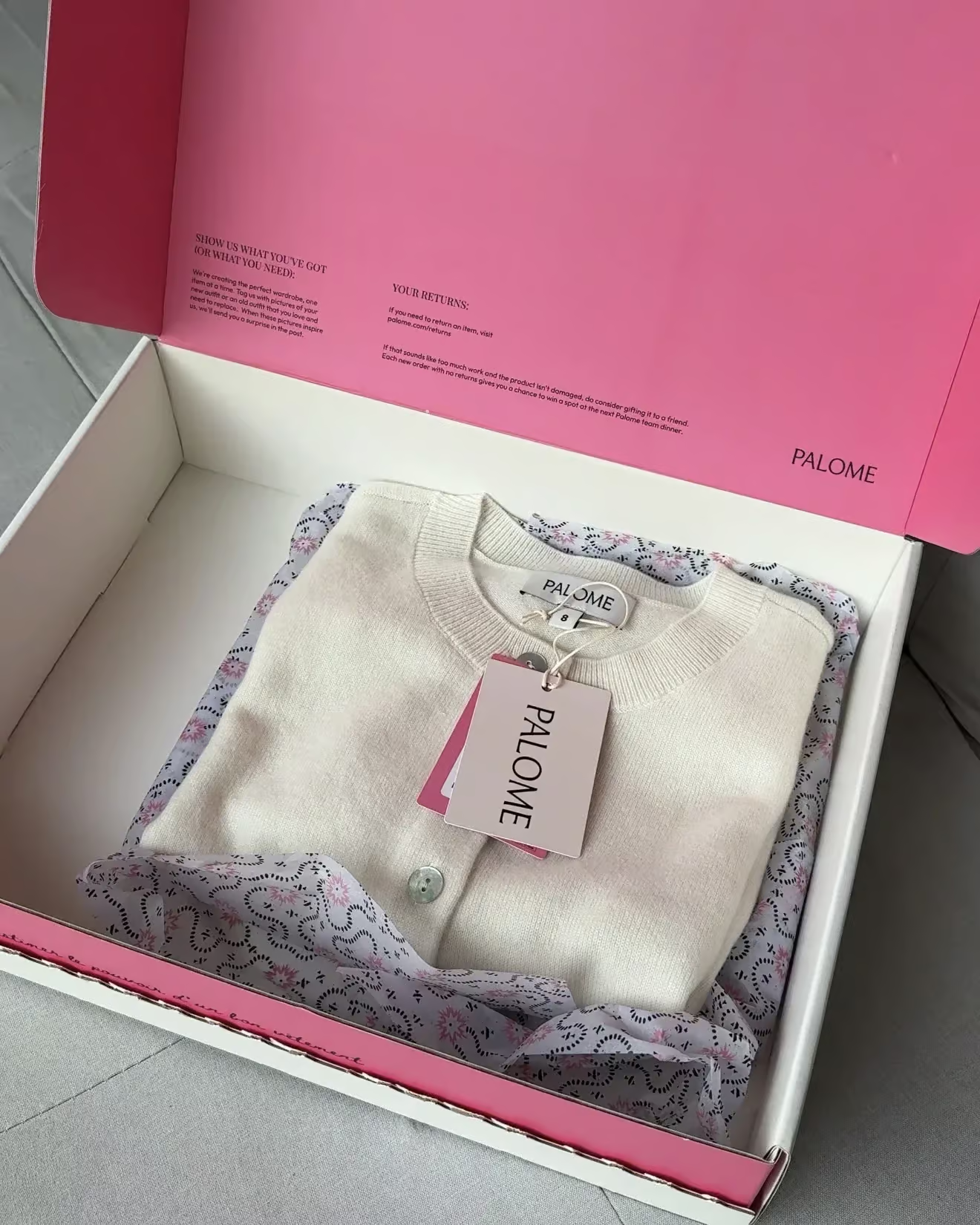
The moment a customer opens the box and uses the product for the first time mirrors exactly what the next buyer is about to experience. It answers packaging, sizing, and first-impression questions that a product listing cannot fully cover, and it is one of the strongest formats for new launches specifically.
2. Problem-solution demo
A creator names a specific, relatable problem, then shows the product solving it on camera. This format works because it mirrors the shopper's own internal monologue: "will this actually fix my problem," answered visually rather than asserted in copy.
3. Honest review and comparison
A creator who tried the product and is willing to mention a minor downside alongside the upsides reads as far more credible than uniform praise. Comparison content, this versus the thing I used before, is especially persuasive for considered purchases where the buyer is actively weighing alternatives.
4. Everyday use and lifestyle integration
Showing the product woven into a normal routine, not staged, not a special occasion, helps the shopper picture owning it themselves. This format is particularly effective for home, kitchen, and everyday consumer goods where the purchase decision hinges on whether it will actually get used.
5. Results and before/after
Where applicable, a creator showing a measurable outcome, a result achieved, a task completed faster, a problem visibly solved, gives the strongest proof of all. This is the closest thing to a case study in a format built to perform as a paid ad.
UGC vs professional product photography
Most ecommerce brands already invest in professional product photography, and that investment still matters. The two formats are not competing, they solve different parts of the same problem.
| UGC | Studio product photography | |
|---|---|---|
| Feels like | A real customer's experience | The brand's best-case presentation |
| Best at | Trust, ad performance, resolving doubt | Showing colour, detail, and true product form |
| Cost per asset | Low, from £130 | Higher, studio and styling costs |
| Where it wins | Ads, retargeting, beside the buy button | Hero listing image, catalogue, print |
The strongest product pages use both: a clean studio hero shot so the shopper knows exactly what they are buying, and UGC directly beneath or beside it so they believe it will work for them too. Removing either one leaves a gap the other cannot fill.
Brands sometimes ask which to invest in first when budget is limited. If the studio photography already exists and looks professional, the next pound is almost always better spent on UGC, since the trust gap tends to be the larger unaddressed problem on most product pages today.
Mapping UGC to the ecommerce funnel
The same shoot can and should feed every stage of the funnel, from the first cold impression to the post-purchase moment that turns a buyer into your next creator.
Hook-led UGC introduces the product to people who have never heard of the brand. This is where the 4x CTR and lower CPC effect shows up most clearly, because the format earns attention that a polished studio ad does not.
Warm shoppers who added to cart but did not buy respond well to a review or results-style video that answers the specific doubt holding them back, rather than a repeated product shot.
The highest-leverage placement, and the most commonly skipped. A short customer video or photo gallery beside the buy button gives proof at the exact moment of decision, when the shopper's doubt is highest and the opportunity to lose them is greatest.
Existing customers respond to seeing other real customers, which supports upsells, cross-sells, and repeat purchase. It is also where you recruit your next round of UGC creators, from people who already love the product.
Treating UGC as an ads-only tactic leaves the product-page and post-purchase value on the table entirely, which is one of the most common and most costly mistakes ecommerce brands make with it.
The most overlooked placement: the product page
Cart abandonment sits above 70 percent industry-wide, and while shipping costs and account friction are the largest documented causes, unresolved doubt about the product itself is a major share of the remainder. A shopper who has added an item to cart is already close to buying. What stops them at that final moment is usually a lingering question the listing did not answer: does this actually look like the photos, does it actually work as described, would someone like me be happy with it.
A short UGC video or a gallery of real customer photos placed directly beside the buy button, not buried in a reviews tab several scrolls down, answers that question at precisely the moment it is being asked. This is the single highest-leverage placement for UGC in ecommerce, and it is also the one most brands skip, having invested their UGC budget entirely in paid ads and never brought the content back to where the purchase decision is actually made.
Placement within the page matters almost as much as the decision to include UGC at all. Content sitting above the fold, or immediately adjacent to the price and buy button, gets seen by every visitor. Content buried at the bottom of a long page, past specifications and shipping information, only gets seen by the small fraction of shoppers who scroll that far, which is usually the group who were already going to buy regardless.
If you are only running UGC in ads today, embedding the same finished videos on your top product pages is very often the fastest, cheapest conversion lift available to an established store.
High-consideration vs low-consideration products
Not every ecommerce product needs the same UGC strategy. The right approach depends heavily on how much thinking a shopper does before buying.
Low-consideration, impulse-friendly products
Cheap, everyday items with fast repeat purchase cycles benefit most from high volume, low-cost UGC that emphasises quick wins and immediate satisfaction. Speed and volume matter more than depth here, since the buying decision itself is fast and low-risk.
High-consideration, higher-price products
Bigger-ticket items need UGC that goes deeper: comparison content, longer-form reviews, and results shown over time. A shopper spending significantly more wants more reassurance before committing, so a single 15-second clip is unlikely to be enough on its own. Pairing a short ad-length cut with a longer-form review embedded on the product page covers both the discovery moment and the due-diligence moment.
Subscription and repeat-purchase products
For products bought on a recurring basis, UGC that shows the product as part of an established routine, not a first impression, does more to convert a new subscriber, because the buyer is really asking whether this will still be worth it in three months, not just today.
UGC for your own store vs Amazon and marketplaces
Where you sell changes how UGC gets used, though the underlying content need is the same.
Your own DTC store
You control the page entirely, so UGC can sit exactly where it does the most work: beside the buy button, in a dedicated reviews-with-photos section, or as an embedded video near the top of the page. You also control the checkout, so product-page UGC has a direct, measurable line to conversion and abandonment.
Amazon and other marketplaces
Marketplace listings have stricter format rules, but customer photos and videos in the review section carry enormous weight precisely because shoppers already trust the marketplace's review system. UGC-style creative also performs well in marketplace-native ad formats, for the same reasons it performs on social: it reads as a real customer's experience rather than a brand message.
If you sell on both, the same underlying video assets can usually serve both channels with minor recutting, so a single UGC batch stretches further than it would on either channel alone.
One practical difference worth planning for: marketplace review sections are moderated by the platform, not the brand, so you have less control over which customer content appears prominently. On your own DTC store, you choose exactly which videos and photos get featured and where, which is another reason a strong owned product page remains worth investing in even as marketplace sales grow.
How to brief ecommerce UGC creators
Product-focused UGC needs a different brief from lifestyle or beauty content, because the goal is usually to answer a specific, practical question rather than to build aspiration.
Identify the single biggest hesitation a shopper has, sizing, durability, ease of use, and brief the creator to address it directly on camera.
Ask for the product used the way a real customer would use it, in their own home or routine, not a studio setup.
"It solved my exact problem" beats "I love this product." Brief for specificity, not enthusiasm.
A 30-second cut works for ads; a 15-second version often works better embedded on a product page, where attention spans are shorter and the shopper is already close to deciding.
For a full walkthrough of finding and briefing the right creator, see our guide on how to find UGC creators in the UK.
Common mistakes ecommerce brands make with UGC
Running UGC only in ads, never on the product page
This is the single biggest missed opportunity in ecommerce UGC. The same finished video that performs in ads should also sit on the product page, where it does its most valuable work.
Briefing for enthusiasm instead of specificity
Generic praise convinces no one. A specific result or a specific problem solved is what makes a viewer believe the content is real.
Ignoring the retargeting stage
Cart abandoners need a different message from cold traffic. Showing them the same top-of-funnel hook again wastes the opportunity to answer their actual objection.
Treating UGC as a one-off project
A single batch of videos will fatigue. Ecommerce brands that treat UGC as an ongoing pipeline, refreshed every few weeks, consistently outperform those running one old batch for months.
Not asking happy customers for content
Some of the best, cheapest UGC comes from customers who already love the product. Brands that never ask are leaving free, highly credible content unclaimed.
UGC for product launches and seasonal peaks
New product launches and high-volume shopping periods each put a different demand on your UGC pipeline, and planning for both in advance beats reacting to either.
For a new product launch
Unboxing and first-use content is the natural fit, because it mirrors the exact experience your first customers are about to have with a product that has no reviews or social proof yet. Pairing it with a problem-solution demo helps establish why the product exists before the reviews have had time to accumulate.
For seasonal peaks and sale events
High-traffic periods bring in colder, less familiar audiences who need more convincing per visit, exactly when your existing creative is most likely to be fatigued from months of steady spend. Brief fresh seasonal-angle content four to six weeks ahead of a major sale period, rather than relying on evergreen assets to carry a traffic spike they were not built for.
Post-launch, ongoing
Once a product has real customers, ask happy buyers for content directly. This is where the cheapest, most credible UGC in your entire pipeline usually comes from, and it compounds: more reviews and customer photos lead to higher product-page conversion, which leads to more customers, which leads to more content.
How to measure ecommerce UGC performance
Treat ecommerce UGC like performance marketing from day one, tracking each stage separately rather than judging the whole programme on a single blended number.
The first signal on paid social. UGC creative should show a clear lift over standard branded ad creative within the first test cycle.
Compare conversion on pages with embedded UGC against pages without it. This isolates the product-page effect specifically, separate from ad performance.
If product-page UGC is working, abandonment on those specific pages should trend below your site average over time.
The number that ultimately decides whether a creative batch earns more budget. Track it per video so winners get scaled and the rest get retired.
One measurement trap worth naming: a UGC video can lift product-page conversion without ever showing up as the last click in your attribution model, because a shopper often watches the video, leaves, and returns later through a direct visit or a search. Where possible, compare conversion rate on pages with and without embedded UGC over a matched period, rather than relying only on last-click attribution, which will systematically undercount the effect.
Estimate production budget with our free UGC rate calculator, and model the payback with the social media ROI calculator.
How we produce ecommerce UGC
At Velena Lifestyle we build ecommerce UGC around the specific doubt a product needs to resolve, not a generic showcase. We select creators who can speak credibly to the use case, brief for specificity over enthusiasm, and cut each shoot for both ad placements and shorter product-page embeds so one project covers both jobs. We deliver with organic rights included and a 12-month paid media licence, so you can run the winners as ads without paying again.
You can order set packages such as paid ads creative and testimonial UGC, or send a custom ecommerce brief through the UGC agency page. New to UGC entirely? Start with the What Is UGC guide, and see the wider case in the benefits of UGC.
Featured UGC video examples and portfolios
Browse real finished work across the formats discussed above before you brief your own.



Add monthly social media management
Once you have the videos, keep the channel moving. Add social media management to have your content planned, posted, and reported on every month. Four tiers, clear pricing, no long lock-in.




Watch our work on YouTube
Velena Lifestyle
Agency UGC and client showcases, so you can judge the standard first.
Watch the agency channelVelena and Dragos
Our personal travel and food channel, where the on-camera style started.
Watch Velena and DragosWhat clients say
If you want a self-starter with the ability to think strategically and minimize the time between ideation and creation, Velena is your go-to. She has done a phenomenal job with managing our UGC portfolio, curating and creating our content.
Fantastic service. Been a client for 3 years now and have seen fantastic results, increased viewers, followers and viral videos. Copywriting was on point and has been used in magazines like Conde Nast, Timeout and more.
I have known Velena for many years and she is a great content creator and reliable. I highly recommend her. Looking forward to hiring her again.
Meet the founders

Velena Lifestyle is run by Velena Nikolova, creative director and UGC creator, and Dragos Nistor, who leads business and strategy. We have produced UGC across ecommerce, beauty, fashion, food, wellness, hospitality, and SaaS, so we know which formats and placements convert by category. Based in High Wycombe, Buckinghamshire, we work with UK and international brands.
Ecommerce UGC FAQs
What is UGC for ecommerce brands?
Authentic, creator-style video and photo content, unboxings, reviews, demos, everyday use, made for an online retail brand to run in ads, on product pages, and in email. It answers whether the product is really as good as the listing says.
Does UGC actually reduce cart abandonment?
It addresses one of the drivers of it. Cart abandonment sits above 70 percent industry-wide, and unresolved doubt about the product is a meaningful share of that. UGC placed on the product page resolves that doubt at the moment it matters.
What UGC formats work best for ecommerce?
Unboxing and first use, problem-solution demos, honest reviews and comparisons, everyday lifestyle integration, and results or before/after content. Most brands use a mix depending on the product.
Where should ecommerce UGC be used?
Cold-traffic ads, retargeting, product pages, and email or post-purchase content. The product page is the most valuable and most commonly skipped placement.
Does UGC really outperform standard ad creative?
Yes, on the numbers that matter for paid social. UGC in Facebook and Instagram ads drives roughly 4x higher click-through rates and about 50 percent lower cost per click than standard creative.
How much does ecommerce UGC cost?
Our UGC videos start from £130, with the final price set by length, format, and usage rights. See our UGC rates guide for the full breakdown.
Should I put UGC on my product pages or just run it as ads?
Both, but if you can only do one, prioritise the product page. It is where doubt is highest and the purchase decision is actually made, and it is the placement most brands skip.
How do I brief a creator for ecommerce UGC?
Identify the single biggest hesitation a shopper has, brief the creator to address it directly, ask for real usage context rather than a studio setup, and cut the video for both ad and product-page placements.
How often should I refresh ecommerce UGC?
Treat it as an ongoing pipeline rather than a one-off project. A single batch fatigues within weeks on paid social, so brief the next batch before performance drops.
Can I use customer content instead of hiring creators?
Yes, and you should ask. Existing happy customers can produce some of the most credible, lowest-cost UGC you will get, though quality and consistency will vary more than with a briefed creator.
Do you provide the creators?
Yes. As an agency we source, brief, and direct creators matched to your product and the specific doubt it needs to resolve, so you never have to find or manage them yourself.
Does ecommerce UGC work for marketplace listings as well as my own store?
Yes. The same content strengthens Amazon and marketplace review sections and native ad formats, alongside your own product pages and paid social, often with only minor recutting needed per channel.
How should I plan UGC for a product launch?
Prioritise unboxing and first-use content, since it mirrors what your first customers are about to experience and helps establish trust before organic reviews accumulate.

Dragos co-founds Velena Lifestyle and leads its business strategy. A LinkedIn Top Entrepreneurship Voice, he writes about UGC, ecommerce marketing, and building a modern content agency in the UK.
Related guides


Turn your product pages into proof
Tell us the product and the doubt it needs to resolve. We bring the creators, the brief, and the rights.
Work with us