
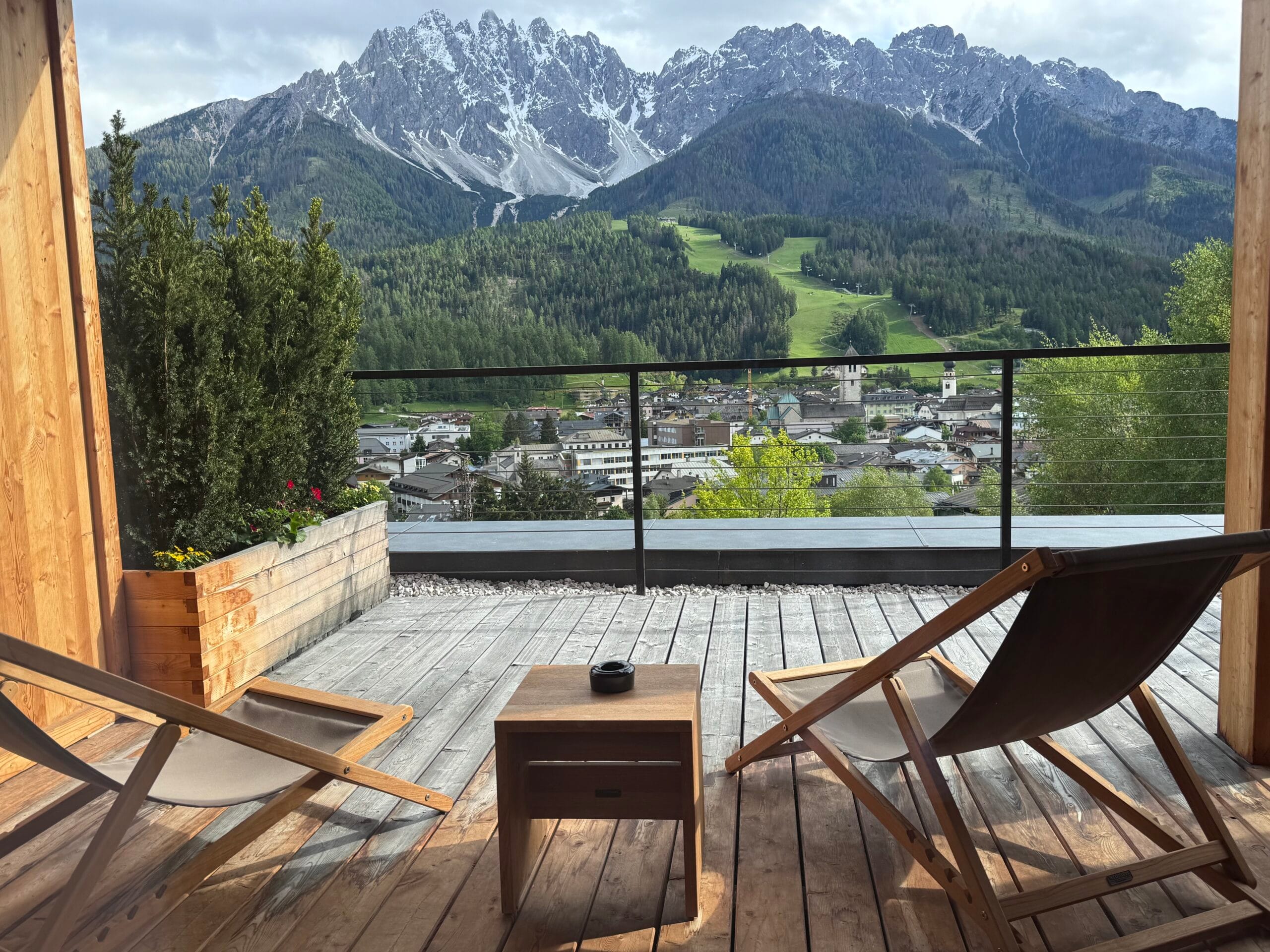
UK hospitality, 2026
Hospitality social media in the UK: the 2026 report for hotels and restaurants
What is working for UK hotels, restaurants and travel brands this year, what the benchmark data actually says, what content costs across the market, and the numbers from eleven accounts we run ourselves. Written by the two people who film the work.
The two questions we are asked most
Sixteen parts, nine cited sources, roughly an hour. Or read the six line summary first.
In this report
Sixteen parts, and where to start
Parts 1 to 4 are the data. Parts 5 to 9 are the practice. Parts 10 to 13 are the work and the money. Parts 14 to 16 are the rules and the new discovery layer.
- The state of UK hospitality on social
- What hospitality social media is
- The five content pillars
- The 2026 benchmarks
- The content and the formats
- Platform playbooks
- By venue type
- The content workflow
- The UK hospitality year
- Community and reviews
- Paid amplification
- Case studies
- What it costs in the UK
- Compliance and rights
- How to brief an agency
- Showing up in AI search
- Glossary
Executive summary
The 2026 picture in six lines.
- Social is no longer a marketing add on for UK hotels and restaurants. It is the primary discovery channel and increasingly the primary booking influence.
- Every UK hospitality brand surveyed by KAM and Kitch is on Instagram at a median 30,132 followers, and 71 per cent are on TikTok, where the median brand draws 114,500 views.1
- Short form video is the sector's biggest organic reach engine, because 81 per cent of Facebook interactions now come from paid and unpaid reach can no longer be assumed.2
- Direct digital is the fastest growing booking channel at 7.34 per cent a year while online travel agencies still hold 37.24 per cent, which makes an owned audience a direct route to margin.3
- Across the Snaptrip Group portfolio, seven brands and eleven accounts, our organic work lifted LateRooms.com Facebook views by 1,600 per cent and Instagram views by 13,200 per cent, from organic video alone.8
- A new discovery layer has arrived. Hotels now surface inside AI Overviews, ChatGPT and Perplexity answers, so being citable is the 2026 visibility question. Part 16 is the step by step.
Part 1
The state of UK hospitality on social media
UK hospitality entered 2026 spending more on social content than in any year before it, and a growing share of the decision to book a room or a table now starts on a feed rather than a search engine.
This is the picture for a sector contributing around 93 billion pounds a year and employing more than 3.5 million people.4 What is working, which platforms matter, and where the next wave of discovery fits in.
From OTA shelves to social search
For two decades the route to a UK hotel booking ran through an online travel agency. That is shifting. Mordor Intelligence values the UK hospitality market at 63.8 billion dollars in 2026, rising to 78.28 billion by 2031.3 Online travel agencies still command 37.24 per cent of bookings, but direct digital is the fastest growing segment at 7.34 per cent a year.3 The practical takeaway is simple: the audience you build on Instagram or TikTok is the audience you do not have to rent back at commission.
This matters most to small operators, and UK hospitality is overwhelmingly small. Around 176,000 businesses, 99.6 per cent of them SMEs,5 with independent hotels alone holding 57.28 per cent of the market.3 For an independent without a national ad budget, an owned audience is often the only discovery channel that does not charge per click.
The platform picture
The KAM and Kitch State of Social 2026 report surveyed 68 brands across more than 1,900 sites.1 Every contributing brand is on Instagram at a median 30,132 followers. TikTok adoption sits at 71 per cent, and committed brands see a median 114,500 views. Facebook remains widespread at 85 per cent, down from 97 per cent, but 81 per cent of its interactions now come from paid.2
| Platform | Adoption | What it does best | Status |
|---|---|---|---|
| 100 per cent of brands | Brand home, Reels reach, Stories for offers | Universal | |
| TikTok | 71 per cent of brands | Short form discovery, the biggest organic video reach | Rewards commitment |
| 85 per cent of brands | Community, reviews, paid amplification | Now a paid channel | |
| Not tracked in the benchmark | Evergreen destination and venue search | Undervalued for hotels |
Failure cascade
What treating social as an afterthought costs in 2026
No native short form. The brand cross posts the occasional photo instead of making content built for the platform.
Organic reach falls. With 81 per cent of Facebook interactions now paid,2 unpaid posts reach almost nobody.
The venue disappears from social search. Guests searching TikTok for a town and the word hotel, or for the best brunch near them, never see it.
Discovery defaults back to the OTAs, and the brand pays commission on bookings it could have earned directly.3
AI answers omit it. With no citable structured presence, the venue is absent from the answers a growing share of travellers now consult.
Our own data
What the numbers look like up close
Most articles on this topic recycle the same third party statistics. These are ours, from running organic social across the Snaptrip Group portfolio of seven UK travel brands, eleven accounts and more than 1,300 posts since September 2025.
Part 4 sets these beside the full industry benchmarks and Part 12 is the complete case study. The filmed work behind them sits in our hotel and restaurant UGC portfolio.
Part 2
What hospitality social media actually is
A specific discipline rather than a generic marketing add on, and defining it precisely is the first step to briefing it well.
It does two jobs at once: making a property look worth choosing, and giving the algorithm enough reason to show it to people who have never heard of it. With every UK brand now on Instagram and 71 per cent on TikTok, the baseline is no longer being present, it is whether the content earns reach.1
What it includes, and what it does not
What it includes
- Content creation: short form video, Reels, Stories and social stills
- Scheduling and publishing across platforms
- Community management and replies
- Paid amplification of organic content
- Commissioning creator content and partnerships
What it is not
- Online travel agency listing management
- Traditional press and PR
- Google Search and display advertising
- Website build and booking engine setup
- Architectural photography for print
That last exclusion matters and most agencies blur it. We film social content: vertical video, a long form property film and social stills shot on the same visit. A property that needs architectural interiors lit for a brochure should commission a photographer, and we will say so. The distinction is set out on the hospitality content creator page.
The three layers of a hospitality account
Every strong presence works on three layers at once, and a brief naming all three is far easier to deliver against than one asking only for nice photos.
- 01Brand
The aspirational layer: the rooms, the plates and the views that make somebody want to be there. What most people picture when they think of hotel content.
- 02Performance
The reach layer: short form built to be discovered, plus paid amplification, because 81 per cent of Facebook interactions now come from paid.
- 03Community
The retention layer: replies, reposts and the daily relationship that turns a one time visitor into a returning, recommending guest.
The three layers are also the honest way to decide who does the work. Brand and performance are production questions, answered by a visit that produces a library. Community is a management question, answered by somebody being there every day. Most properties need both, which is why hospitality social media management and on location production are sold as two different things rather than bundled into one vague retainer.
Part 3
The five content pillars for hotels and restaurants
If you take one framework from this report, take this one. The question we are asked most is simply what to post. Build every month from five pillars and rotate, so the feed stays varied without running dry.
- 01Property and venue showcase
The aspirational core: the spaces a guest is actually paying for, shot to make the choice feel obvious. The pillar that most directly supports a direct booking over an OTA listing. Room and suite reveals, common areas, the exterior at golden hour, the seasonal redress.
- 02Food and beverage
The most shareable pillar in hospitality. Food and drink travels further than almost anything else a venue posts, and it works for hotels and restaurants alike. Signature dishes and plating, bar service and pours, chef and kitchen stories, ingredient sourcing.
- 03Guest experience and storytelling
The pillar that sells the stay rather than the room. It narrates what a visit actually feels like, which is what turns a scroll into a saved post and a saved post into a booking. A day in the life, sample itineraries, local recommendations, seasonal reasons to visit.
- 04Behind the scenes
The trust pillar. Showing the people and the care behind a stay builds credibility that polished brand shots cannot, and it gives a feed the steady volume an ongoing account needs. Staff moments, sustainability in practice, design and renovation choices.
- 05Content from real guests
The proof pillar. Guest content carries social proof that brand made content cannot buy, and resharing it is the cheapest high trust format a venue has. Reposted guest Reels, tagged stays, reviews turned into content, creator visits. Always with consent and a clear tag.
Each pillar has a home elsewhere on this site if you would rather see it than read about it. Property and guest experience run through the hotel content packages, food and beverage through the restaurant content packages, and the behind the scenes and guest content pillars are scheduling problems more than filming ones, which is what a social media management UK plan exists to solve.
The pillars, filmed
What the first three pillars look like when we shoot them
Six cuts from real hospitality visits. Two hotel rooms, a distillery, a restaurant at service, a self catering cottage and an events space. Click any to play, nothing loads until you do.
A central budget hotel
Room and location, filmed in 54 seconds
Pillar oneIbis Styles Edinburgh
A city hotel room on a working trip
Pillar onePort of Leith Distillery
Drinks, food and the view
Pillar twoA London restaurant
Atmosphere at service
Pillar twoA Cotswolds cottage
Self catering in Chipping Norton
Pillar threeA wedding venue visit
What an events space feels like to a guest
Pillar threeAll six were filmed by the two of us, on stays and visits rather than on set. Pillars four and five are deliberately absent from this wall: behind the scenes footage belongs to the venue rather than to a showreel, and guest content is by definition filmed by guests. Part 8 shows a single property with its film and the cuts that came out of the same visit.
How to run the rotation
Plan a month as a rotation so you never stare at an empty calendar. A workable mix is roughly half property and food, a quarter guest experience and behind the scenes, and a quarter guest content and reactive posts.
- Batch by pillar, not by day. Shoot all your room or dish content in one session and schedule it across three or four weeks.
- Lead with the hero, not the logo. The first frame should be the room, the plate or the view, because the opening second decides whether anyone watches.
- Give every post one job. A booking link, a save prompt or a question, but only one.
- Keep two evergreen posts in reserve for the week a pipe bursts or a chef leaves. Every venue has that week.
Part 4
What the numbers say: the 2026 benchmarks
The part to bookmark. Benchmarks a UK hotel or restaurant can measure itself against, from neutral sources, followed by what those numbers look like on a live portfolio we run. Every figure names its source.
What is a good engagement rate for a UK hotel or restaurant?
The median daily engagement rate for UK hospitality is around 0.2 per cent on Instagram, 2.3 per cent on TikTok and 0.4 per cent on Facebook. This is where most operators first misjudge themselves, because the realistic bar is lower than people expect. Instagram sits below the 0.4 per cent all industry average, TikTok sits just under 2.6 per cent, and Facebook sits above its 0.1 per cent average only because the benchmark is explicit that the figure is almost entirely paid rather than organic.6
| Platform | Hospitality median | All industry | Note |
|---|---|---|---|
| 0.2 per cent | 0.4 per cent | Flattened. Growth now comes from quality rather than volume | |
| TikTok | 2.3 per cent | 2.6 per cent | Highest of the three. Rewards a committed strategy |
| 0.4 per cent | 0.1 per cent | Above average, but almost entirely paid fuelled |
Source: KAM and Kitch, State of Social 2026, medians across 68 UK hospitality brands.
How often should a hotel or restaurant post?
The sector norm is steadier than most assume. UK hospitality brands post a median of four Instagram posts or Reels a week, two TikToks and four Facebook posts.6 Format matters more than raw volume. Reels generate 44 per cent of Instagram interactions from only 19 per cent of views, while standard posts deliver 62 per cent of views and 44 per cent of interactions, so a healthy feed needs both reach formats and engagement formats.6 Hootsuite finds carousels the strongest Instagram format for dining and tourism at 3.7 per cent.7 On Facebook, paid drives 92 per cent of views and 81 per cent of interactions.2
The measurement gap, and why it is not the argument
The honest answer to what a booking from social costs is that most of the sector cannot yet say. Only 56 per cent of hospitality brands can track bookings or conversions directly from paid activity.6 What is measurable is the channel economics underneath. OTAs take 37.24 per cent of bookings while direct digital grows 7.34 per cent a year, so every booking earned through an owned audience is one not surrendered to commission.3 That is the real cost case, and it does not depend on a single attributed figure.
Why most brands outsource part of it
The benchmark also explains who does this work. The average UK hospitality social team is 1.3 people, and 87 per cent of brands use an agency or freelancer for at least one element.6 Limited time and resource was the single most cited challenge in the survey.6 A team of one and a third people cannot film, edit, schedule, caption and answer comments across three platforms and also cover the day job, which is the real reason the outsourcing figure is that high.
The same playbook on live accounts
Benchmarks describe the field. The table below is real results from the Snaptrip Group travel portfolio, whose organic social we have run since September 2025. Growth is against the prior period for the named accounts, reported as growth and engagement only.8
| Brand and platform | Metric | Organic growth |
|---|---|---|
| LateRooms.com, Facebook | Organic views | +1,600 per cent |
| LateRooms.com, Facebook | Watch time | +12,300 per cent |
| LateRooms.com, Instagram | Views | +13,200 per cent |
| Dog Friendly Cottages, Instagram | Views, fully organic | +6,600 per cent |
| Snaptrip, Instagram | Views, fully organic | +5,600 per cent |
| Last Minute Cottages, Facebook | Views, fully organic | +153.4 per cent |
| Big Cottages, Facebook | Views, fully organic | +124 per cent |
Source: Velena Lifestyle, Snaptrip Group portfolio reporting. Growth against the prior period since the September 2025 handover. Organic only. No paid campaign or revenue data included.
What the benchmark does not tell you
Three limits are worth stating before anyone plans a year around these numbers. The benchmark is a median, so half the sector sits below every figure in it and a venue at 0.15 per cent on Instagram is not failing, it is ordinary. It counts brands rather than sites, so a group of forty pubs and a single country house appear as one data point each. And it measures engagement rather than revenue, which is exactly the gap the sector cannot yet close, because only just over half of brands can attribute a booking to paid activity at all.
What follows from that is a working rule. Use the medians to decide whether your account is healthy, and use your own booking data to decide whether it is working. They are different questions and one number cannot answer both.
The metrics that actually predict a booking
Likes are the weakest signal in hospitality and the one most venues still report. The three that move with bookings are saves, shares and direct messages, because each of them is a person doing something that costs them effort. A save is a shortlist. A share is a recommendation to somebody who was not looking. A message is an enquiry with the friction already removed.
| Metric | What it means | What to do with it |
|---|---|---|
| Views | Distribution. How far the algorithm pushed it, not how good it was | Judge the hook and the first second, nothing else |
| Watch time and retention | Whether the content held anyone. The strongest predictor of reach on the next post | Cut the moment where the graph drops, and stop making that shot |
| Saves | A shortlist. Someone intends to come back to it, which for a venue means a trip being planned | Make more of whatever gets saved. Usually rooms, menus and itineraries |
| Shares | A recommendation. The only metric that reaches people who do not follow you and were not served you | Look at what is shareable rather than what is beautiful. Food travels furthest |
| Direct messages | An enquiry. The closest thing to a booking a social platform reports | Answer within the hour during service, and count them monthly as a real number |
| Follower growth | The slowest and least useful. It lags everything else by weeks | Read it quarterly, never monthly, and never as a headline |
| Profile link clicks | The handover to your own site. Where social stops and the booking engine starts | Compare it with booking engine sessions from social, and fix the gap between them |
None of these is in the KAM and Kitch benchmark, because the benchmark reports what brands publish rather than what they should watch. That is a gap rather than a criticism, and it is the reason the reporting we send retainer clients leads on saves, shares and messages instead of on reach.
A reporting sheet you can actually keep
The most common failure in hospitality reporting is that it is too elaborate to survive a busy month. Seven rows, once a month, is the version that lasts. Posts out, views, engagement rate, saves, shares, messages, and profile link clicks. Seven numbers, one row per month, twelve rows a year, and after four months you can see a trend rather than a snapshot. Anything more detailed than that gets abandoned by March in every venue we have worked with.
How to use this section
Take three numbers from it and write them at the top of your own reporting sheet: your Instagram engagement rate against 0.2 per cent, your TikTok rate against 2.3 per cent, and your weekly post count against four, two and four. That is a benchmark you can actually act on, and it takes ten minutes a month to keep.
Do not benchmark yourself against a brand in a different tier or a different country. A city centre budget chain and a Cotswolds country house are not competing for the same feed, and neither is a comparison to a global hotel group with a fifteen person content team.
Part 5
The content itself, and the formats behind it
Creator style content is now the dominant creative approach in UK hospitality, used by more brands than professional photography or videography, because it reads as real rather than staged.6
What it actually looks like
A short, on property creator video, usually 30 to 60 seconds, filmed vertically in the rooms, the restaurant or the grounds. Not licensed stock and not a glossy brand film. The point is the first person feel of a real stay, which is exactly the texture the benchmark data rewards. Professional photography still has its place and is used by 85 per cent of brands, but its share has fallen as authentic content has risen.6
Hotel content against restaurant content
The two differ in rhythm. Hotel content is a slower aspirational arc: arrival, room reveal, spa, view, the feeling of a stay across a day. Restaurant content is faster and tighter: the dish, the pour, the pass, the first bite, built to land in three seconds. Both belong on the property, food and guest experience pillars from Part 3, and both work hardest filmed by somebody who knows how hospitality reads on camera.
A hotel cut, roughly
- Second one: the door opening onto the view
- Seconds two to eight: the room, unhurried
- Seconds eight to twenty: one amenity that decides the booking
- Close: the view again, or breakfast
A restaurant cut, roughly
- Second one: the pour, the pull, the cheese pull
- Seconds two to six: the plate arriving
- Seconds six to fifteen: the room and the noise
- Close: the first bite, and the dish named on screen
The format most properties have never commissioned
Not every showcase is a short. One of the most trust building formats is the property shown naturally inside a longer travel film, around a real moment: settling into the room, heading down to breakfast, taking in the view. Because it sits inside a genuine stay rather than a standalone advert it reads as a review, which is exactly the first hand experience guests and increasingly AI search reward. It is also the format at the centre of every hotel package on this site.
Long form, in context
Six properties shown inside real travel films
These are not adverts. Each property appears part way through a film about a genuine trip, which is why they read as reviews rather than promotion. Budget tier and self catering are included deliberately, because good hospitality content is not only for luxury.
Leitlhof, the Dolomites
A 35 minute film with the hotel from minute one
Long formIbis Styles Edinburgh
Room and views inside a 48 hour city film
Budget tierA Copenhagen apartment
Breakfast and apartment, shown naturally
Self cateringIbis Styles York
Featured in the closing stretch of a York film
Budget tierA Cotswolds cottage
A family Christmas, self catering
SeasonalA London bus tour
The experiences around a stay are content too
ExperienceExperiences and the local area are a major selling point. A city tour, a tasting or a guided walk all become content that sells the destination rather than only the room, and the full set sits on the hotels and restaurants portfolio.
How to brief content that performs
The brief decides whether this works, not the budget. Give a creator a short shot list and a single message, then let them film it in their own voice.
- Specify a hook for the first second: a pour, a door opening onto the view, the first slice into a dessert. No slow pans, no logos, no intro card.
- Vertical, 9:16. Polished horizontal video reads as an advert and gets scrolled past.
- Ask for the B roll as well as the edit, so the same footage can be recut for ads later.
- One idea per video: one room, one dish, one moment. Thirty seconds doing one thing well beats a montage doing five things badly.
- Captions on, and a clear end prompt to book or save. Most viewers watch on mute.
Every deliverable, and what each one is actually for
Content visits produce five different things and they are not interchangeable. A venue that commissions only Reels has no website hero. A venue that commissions only photography has nothing to post. The list below is what comes out of a hospitality visit and what each piece is genuinely used for, which is the part most briefs leave out.
- The long form property filmTen to thirty minutes, cut as a real stay rather than an advert. Its job is the website, YouTube and the sales conversation, not the feed. It is the piece a corporate booker or a wedding enquiry watches all the way through, and the piece an OTA listing can never carry.
- Vertical ReelsThirty to sixty seconds, 9:16, built for discovery. Their job is reach: getting the property in front of people who have never heard of it. Every Reel should survive being watched on mute by someone who does not know where they are.
- Social stillsFeed and Stories images, formatted for social rather than print. Their job is the grid, the offer post and the carousel. Not a substitute for architectural photography and not sold as one.
- The B roll packThe raw usable footage, handed over rather than kept. Its job is everything you have not thought of yet: the ad you run in March, the Christmas cut, the recruitment post, the piece your own team wants to make. It is the deliverable clients undervalue at the point of sale and thank us for later.
- Captions and a Stories packThe writing and the sequencing, so the footage arrives usable rather than as a folder somebody has to plan around. On the retainer tiers this is the difference between content existing and content being published.
Ratios, and why three of them matter
Every Reel is delivered in 9:16, 4:5 and 1:1 because those three ratios are three different jobs. 9:16 is the feed and TikTok, where reach happens. 4:5 is the in feed post on Instagram, which occupies more vertical space than a square and stops the scroll for longer. 1:1 is the safe ratio for anything that will be cropped by a platform you do not control, including some ad placements and most third party listing sites. Delivering one ratio and letting the platform crop the rest is how a chef's face ends up half out of frame in a paid placement.
What a shoot cannot fix
Two honest limits, because they decide whether a visit is worth booking. Content cannot fix a property mid renovation, and filming around scaffolding produces footage nobody will publish. And content cannot fix a review problem: a venue averaging 3.6 out of 5 does not have a content problem, it has an operations problem that content will amplify rather than solve. In both cases the right advice is to wait, and we give it.
Buy once, use everywhere
One content visit is not a single post. It is a library you can cut, repurpose and run for months across every channel a guest touches before they book. The biggest cost in any shoot is getting creators on site in the first place, so the more you commission in one visit, the lower the cost of each usable asset.
One visit, many formats
- A long form film for YouTube and your own site
- Vertical Reels for Instagram and TikTok
- Social stills for feed and Stories
- B roll for your own team to cut from
Where it all ends up
- Your OTA gallery on the major booking platforms
- Website hero and booking engine
- Google Business Profile
- Email, metasearch and paid campaigns
Keep the B roll
- Cut three to five ad versions from one visit
- Swap the first three seconds to test hooks
- Refresh creative when an ad fatigues
- All without paying for another visit
The bit most venues get wrong about boosting
Boosting puts a small budget behind a post that has already beaten your own average organic engagement, to reach people who do not follow you. Two rules save money: boost winners only and never on day one, and watch cost per result rather than likes.
The catch is that the boost button optimises for cheap engagement, not bookings. If the goal is reservations, skip it and run a traffic or conversion campaign in the ads manager with your booking page as the destination. Boost for awareness, run campaigns for revenue.
One condition makes all of this work: your agreement should give you ownership of the deliverables and, for anything used in paid ads, explicit paid usage rights for the term and territory you need. Part 14 covers the rights detail in full.
Part 6
Platform playbooks
Each platform rewards a different rhythm, so a single feed cross posted everywhere underperforms on all of them. Cadence here is drawn from both the sector benchmark and the live Snaptrip accounts, where the flagship posts three to four times a week per platform and the smaller brands hold a sustainable two.8
The cadence that works, platform by platform
Instagram, four posts or Reels a week
The non negotiable anchor, with every UK hospitality brand active on it.1 Lead with Reels, which generate 44 per cent of interactions from only 19 per cent of views. Carousels for full room tours, Stories for time sensitive offers.6
TikTok, two or more a week
Rewards commitment rather than dabbling: committed brands see a median 114,500 views.1 Win the first three seconds, use native trending audio rather than silent uploads, and let personality lead over polish. Two strong videos beat five rushed ones.
Pinterest, pin weekly
The most undervalued platform for hotels. Unlike a feed, a pin keeps surfacing for months, because Pinterest is a visual search engine with high travel planning intent reaching more than 550 million people a month.9 Build boards around destinations, room types and itineraries.
Facebook, three to four a week
Still pulls weight, but as a paid and reputation channel rather than an organic feed: paid drives 92 per cent of views and 81 per cent of interactions.2 Use it for reviews, retention, events and a credible presence guests check before booking.
The common thread is consistency over intensity. A property posting to a steady, platform appropriate cadence will out perform one that posts in bursts and goes quiet, which is exactly the pattern behind the Snaptrip growth in Part 4.
Captions, audio and hashtags, the three things briefs never specify
The video gets the attention and the three details around it decide how far it travels. All three are cheap to get right and expensive to get wrong.
Captions
- First line is a hook, not a greeting. It is the only line most people read
- Name the location in words, because social search reads the caption
- One call to action, at the end, and never more than one
- Burned in on screen text as well, because most viewing is on mute
Audio
- Native platform audio, not chart music, or a business account risks being muted
- Trending sounds help on TikTok and matter far less on Instagram than people think
- Ambient sound from the venue itself outperforms music on food and service clips
- Never let a voiceover run over a moment the room is already telling
Hashtags
- Five to ten, specific rather than broad. A town beats a country
- Mix venue, location and category: the dish, the town, the type of stay
- They are a weak signal now and a free one. Worth doing, not worth agonising over
- Never in a comment. Put them in the caption where search can read them
YouTube, the platform hospitality forgets
It sits outside the four playbooks above because it is not a feed, and treating it as one is why most venues abandon it. YouTube is a search engine and an archive, which makes it the natural home for the long form property film that has nowhere else to live. A film sitting on YouTube keeps being found by people typing the name of a town and the word hotel, months and years after it was published, in a way no Reel does.
The practical version is small. One property film per season, titled as a search would phrase it rather than as a brand would, described properly with the location and the room types named, and embedded on your own site so it works twice. Shorts are optional and are simply your existing Reels reposted. That is the entire commitment, and it is roughly an hour a season.
How the four platforms feed each other
The mistake is running them as four accounts. They are one library published four ways. A single visit produces the film for YouTube and the site, the vertical cuts for Instagram and TikTok, the stills for the feed and Pinterest, and the B roll for whatever gets boosted on Facebook. The cadence differs per platform, the content does not, and a venue that understands that spends once and publishes for a month.
Where to spend the effort
You do not need to be everywhere. For most hotels and restaurants, in this order.
- Instagram first. The one platform every guest checks before booking, so it has to be current.
- TikTok second, but only if you will commit to two a week. Half hearted TikTok is wasted effort.
- Pinterest third, treated as a search engine. Keyword rich descriptions naming the location, the season and the room type keep driving traffic for months.
- Facebook as a paid layer, not an organic priority. Boost your strongest Reels to reach an older, higher intent local audience.
Part 7
By venue type: why a country house and a city budget hotel should not post the same way
The pillars and the playbooks are the frame. What goes inside them should change completely depending on what your venue actually sells. A five star country house sells a feeling. A city budget hotel sells ease, location and value. Their content should look and sound nothing alike.
| Type | Lead with | Tone | Platform priority |
|---|---|---|---|
| Luxury and five star | Design, service, arrival, location. Slow and cinematic | Restrained, editorial, aspirational. Never discount led | Instagram, Pinterest, selective TikTok |
| Boutique and design led | Personality, design details, local culture, the people behind it | Distinctive, warm, story led | Instagram, TikTok |
| Upscale and full service | Amenities, food and drink, events, seasonal packages | Polished but accessible | Instagram, Facebook, TikTok |
| Midscale and budget | Value, location, convenience, consistency | Friendly, clear, reassuring | Facebook, Instagram |
| Resort, country house and spa | Experience, seasons, wellness, grounds and activities | Immersive, seasonal storytelling | Instagram, Pinterest, Facebook |
| Bed and breakfast, inn and independent | The host, the welcome, the locale | Personal, authentic, low volume and high charm | Instagram, Facebook |
| Type | Lead with | Tone | Platform priority |
|---|---|---|---|
| Fine dining | Craft, plating, provenance, the chef story | Refined, restrained, aspirational | Instagram, selective TikTok |
| Bistro and neighbourhood | Atmosphere, regulars, daily specials, value | Warm, characterful, community led | Instagram, TikTok, Facebook |
| Fast casual and quick service | Menu heroes, value, speed, trends | Playful, fast, trend led | TikTok, Instagram |
| Cafe, bakery and coffee | The aesthetic, the pastries, the morning ritual | Cosy, lifestyle, high frequency | Instagram, Pinterest, TikTok |
| Bar, pub and cocktail | Atmosphere, drinks craft, events, nightlife | Energetic, evening led | TikTok, Instagram |
How to find your own approach
Before you plan a single post, answer one question: what is your venue actually selling? A feeling, a craft, a convenience or an energy. Everything follows from that.
- Selling a feeling, luxury and country house: fewer, richer posts. Restraint beats volume. Never lead with a discount.
- Selling a craft, fine dining and boutique: show the work and the people. Provenance and process are the story.
- Selling convenience, budget and quick service: be clear and frequent. Location, convenience and clarity first.
- Selling energy, bars and fast casual: fast, fun, trend aware, evening led.
The biggest mistake is copying a venue in a different tier. A budget hotel trying to look five star reads as inauthentic and converts badly.
Two venue types the tables above do not cover
Pubs with rooms and dedicated wedding and events venues both sell something the hotel and restaurant frames miss, and both are common enough in the UK to deserve their own line.
The pub with rooms
It is two businesses on one account and the feed usually favours the wrong one. The bar and the kitchen produce content constantly and the rooms produce almost none, so the rooms stay invisible and keep selling through an OTA. The fix is a quota rather than a rethink: one room or stay post for every three food and drink posts, and a pinned post that says out loud that there are rooms upstairs, because a surprising number of regulars do not know.
The wedding and events venue
The buying cycle is twelve to eighteen months and the audience is two people making one decision, which makes reach almost irrelevant and saves everything. Content should show the spaces empty as well as dressed, because a couple is imagining their own day rather than somebody else's. Real weddings need explicit permission from the couple before anything is posted, not just from the planner.
Multi property groups, and the account structure question
Groups ask one question above all others: one account or one per property. The answer depends on whether the guest is choosing the brand or the place. If somebody books you because of where it is, each property needs its own account, because the location is the product and a single account cannot rank in local social search for six towns at once. If they book you because of who you are, a single brand account is stronger and each property becomes a highlight and a location tag inside it.
The Snaptrip Group portfolio in Part 4 is the first pattern: seven brands, eleven accounts, each with its own audience and its own voice, run centrally. That works because the brands genuinely serve different audiences. Running eleven accounts for eleven near identical properties would be eleven times the work for one audience, and it is the most common structural mistake we are asked to unpick.
Trends worth following in 2026
Only where they fit your venue and your voice. These are the shifts actually shaping UK hospitality social this year.
- Social has become a search engineGuests search inside TikTok and Instagram for hotels in a named region or the best brunch in a named city. Write keyword led captions and on screen text naming the location, the dish and the offer.
- Personality over perfectionRaw, phone shot content with named faces now out performs glossy brand films. Put real people on camera.
- Nano and community creatorsLocal creators with 1,000 to 10,000 followers drive more genuine bookings than big names, at a fraction of the cost.
- LinkedIn for city and business hotelsFor properties chasing corporate and events trade it has become a real channel, with a named person posting human content rather than corporate announcements.
- Long form returns alongside shortLonger films are coming back as a way to tell a fuller story beside the short form feed. Cut one hero piece per season from the same visit.
- Revenue focused measurementBrands are judging content by saves, shares and bookings rather than likes, especially as only just over half can track bookings from paid.6
Part 8
The content workflow, from brief to report
Good hospitality content is not luck, it is a repeatable cycle. Here is how the work actually gets done each month, and the honest trade off between running it in house and bringing somebody in.
- BriefAgree goals, active pillars, platforms and the month priorities, so every piece has a job.
- ConceptTurn the brief into specific post and video ideas mapped to the five pillars.
- ShootCapture on property video and social stills, the creator led footage that reads as real rather than staged.
- EditCut to platform, add captions and native audio, and version each piece for Reels, TikTok and Stories.
- SchedulePublish at the right cadence per platform and manage community replies as they come in.
- MeasureReport on reach, engagement and growth, then feed the learning straight back into the next brief.
- RefreshRetire the formats that stopped working and recut the B roll rather than booking another shoot.
- RepeatThe cycle is monthly. The compounding is what produced the numbers in Part 4.
| Factor | In house | Agency or creator |
|---|---|---|
| Brand knowledge | Deep and immediate | Built through onboarding and an ongoing brief |
| Capacity | Often one person stretched across other duties | A team covering shoot, edit, schedule and replies |
| Kit and editing skill | Variable, depends on the hire | Specialist equipment and short form editing built in |
| Consistency | Drops when the venue gets busy | Held to a fixed monthly cadence |
| Time to start | Recruit, train, equip | Live within a content cycle |
The benchmark is blunt about the reality, with the average hospitality social team at 1.3 people and 87 per cent of brands already using an agency or freelancer for at least one element.6 The cycle above is the one we run for every retainer client, from brief to monthly report.
How working with us actually starts
This answers the question everybody asks after deciding they want help: what happens next. There is no discovery call gauntlet and no proposal you wait a week for.
Onboarding
From first message to first post
Through the contact page, with the property, roughly what you need and any dates that matter.
Either with the package that fits and available dates, or with the honest answer that you need something cheaper, something else, or nothing from us yet. We have talked properties out of a bigger package more than once.
Goals, pillars, platforms, access, and what the property is providing. For a hotel that means the stay and travel. For a restaurant it means service times and meals during the session. Nothing is filmed until this is in writing.
Built from the brief and sent to you before we arrive, so there are no surprises on the day and nothing important gets missed. This is where a property tells us which rooms, which dishes and which spaces matter.
Both of us, for the nights or the session the package specifies. We film around your operation rather than through it, and we work to whatever you set on staff and guests appearing on camera.
Everything arrives together through a shared Google Drive: the film, the Reels in 9:16, 4:5 and 1:1, the social stills and the B roll. On a retainer, a short monthly review follows covering what performed and what to film next.
One property, one visit
The film, and the vertical cuts that came out of the same footage
This is the workflow above, shown rather than described, and all five pieces come from one hotel. The film runs 35 minutes and the property is in it from the first minute. The four cuts below it run from 9 seconds to under two minutes. That is the economic argument for a stay over a shoot: once two people are on site, each additional cut costs a fraction of the first.
The film
35 minutes, the property from minute one
The hero deliverableThe room
A suite reveal, just over a minute
Cut oneBreakfast
The buffet, filmed on the same stay
Cut twoThe spa and the dinner
Fourteen seconds, cut for the feed
Cut threeThe arrival
Nine seconds, a five star hotel in the Italian Alps
Cut fourOne film and four cuts. Four of the five are the Leitlhof hotel in South Tyrol, filmed on a single stay, and the fifth is a five star property in the same range. The long film is the deliverable a property gets rather than a showreel: ask and we will send you a full one to watch where the client is happy for us to share it. The complete set is on the hotels and restaurants portfolio.
What we need from you, in full
The whole list, so there is no expenses conversation afterwards.
- Hotels: a room for two for the nights in the package, bed and breakfast on the entry tier and full board above it, plus travel to the property.
- Restaurants: access during the agreed session or day, and meals for both creators while filming.
- Both: your policy on staff and guests appearing on camera, and which spaces we can film.
- Nothing else. No crew, no lighting hire, no location fee, no second unit, no additional day rates.
The small team monthly cycle
If you are running social around an operations job, the only thing that survives a busy month is a routine. This one takes a few hours once the content exists.
- One shoot day a month. Capture three to four weeks of content in a single session so the calendar is never empty.
- One planning hour. Map posts to the pillar rotation and write the captions in one sitting.
- Schedule it. Leave a few open slots for reactive posts.
- Engage daily, briefly. Ten minutes on comments and messages does more for reach than a perfect grid.
- Read one number a month. Track saves and shares rather than likes.
Part 9
The UK hospitality year, and when to film it
New for 2026, because the question we are asked most after what to post is when to post it. UK hospitality demand is seasonal, booking windows are seasonal, and content that arrives in the same month as the demand has already missed it.
The rule that governs the whole calendar is simple: film one season ahead, publish six to eight weeks ahead of the booking window. A Christmas campaign shot in December is a record of last year. A Christmas campaign shot in October is inventory.
| Window | Film this | Publish for | Why it works |
|---|---|---|---|
| January and February | Rooms, spa, quiet interiors, the empty dining room | Spring breaks and Mother's Day | The quietest weeks are the easiest to film in, and the footage carries the whole spring |
| March and April | Gardens, terraces, the first outdoor service | Early summer and half term | Green comes back before demand does, so the footage is ready when the search is |
| May and June | Long evenings, weddings, events, the bar at golden hour | Peak summer and events enquiries | The best light of the year, and the strongest atmosphere footage a venue will ever get |
| July and August | Guests, families, the venue genuinely busy | Autumn breaks and off peak offers | Busy rooms read as proof. Nothing sells atmosphere like a room that is full |
| September and October | Fires, textures, autumn menus, the seasonal redress | Christmas parties and festive stays | The festive booking window opens now, and every competitor films it in December |
| November and December | Festive dressing, the winter arrival, the quiet morning after | January offers and next Christmas | Filmed once, this footage runs for two seasons rather than one |
Windows are drawn from our own scheduling across the Snaptrip Group portfolio and our hospitality shoots, not from a published source. Treat them as a working calendar rather than a statistic.
The dates that actually move UK hospitality demand
The windows above are the rhythm. These are the fixed points inside them, and the lead time each one needs before the content has to be live. Lead time is the number that matters, because it is the one every venue underestimates.
| Moment | Publish from | Lead time | What to lead with |
|---|---|---|---|
| Valentine's | Early January | 5 to 6 weeks | The table, the room, the package as one thing rather than three |
| Mother's Day | Early February | 5 to 6 weeks | Afternoon tea, lunch service, and booking before it goes |
| Easter and the spring break | Late February | 6 weeks | Families, gardens, dog friendly, the first outdoor table |
| May and August bank holidays | Six weeks out | 6 weeks | Availability and the reason to travel, in that order |
| Summer and school holidays | April | 10 to 12 weeks | Long stays, families, the things to do around you |
| Christmas parties | Late August | 12 to 16 weeks | Group dining, the private room, the menu, the deposit |
| Festive stays and New Year | September | 12 to 14 weeks | The arrival, the fire, the dressed dining room |
| January recovery | Late December | 2 to 3 weeks | Quiet, value and wellness. The one window that rewards short lead time |
Lead times are our own scheduling practice across hospitality and travel accounts, not a published source. A venue with an unusually long or short booking window should adjust them rather than adopt them.
Why the festive window is the one worth getting right
Christmas party enquiries for most UK venues open in September and are largely settled by early November, which means the content has to exist in August. That is the single hardest ask in the calendar, because August is the busiest month of the year in most venues and the last one anyone wants to film in. It is also why the festive campaign is the most common thing a venue is late on, every year, and the reason our Seasonal Campaign package exists as a three night visit rather than a one night one.
The workaround, if a shoot in August is impossible, is to film the festive dressing in the last week of the previous December and hold it for eleven months. The room does not change and nobody watching can tell. Most venues have never considered it and it is the cheapest fix in this report.
The off season is not a gap, it is the planning season
February and November feel like the wrong time to post because the venue is quiet. They are the right time, because a quiet venue is a venue whose guests are at home planning the next trip. Cutting the feed in the off season is the most common seasonal mistake we see and it costs the following season rather than the current one: an account that goes silent for six weeks loses distribution that takes about the same again to rebuild.
Three seasonal mistakes worth avoiding
- Filming the season you are in. By the time the edit lands, the demand has moved. Always shoot the next one.
- Only filming when you are busy. A full room is proof, but an empty room is where you get the clean architectural shots and the calm walk through. You need both, and only one of them can be filmed in August.
- Letting the feed go quiet in the off season. The off season is when guests plan. A venue that disappears in February disappears from the spring shortlist.
Part 10
Community management and reviews, the half nobody prices
Everything up to here has been about what you publish. This part is about what happens underneath it, which in hospitality matters more than in any other sector we work in, because the replies are public and the reviews are permanent.
Why hospitality is different
In most sectors an unanswered comment is a missed opportunity. In hospitality it is a booking question left overnight, a complaint compounding in public, or a guest who tagged you and got nothing back. The asymmetry is the point: a good reply is seen by a handful of people, and a missing one is seen by everybody who checks the account before booking. That is why community management sits in the management plans rather than in the content packages, and why the two are priced separately.
What good looks like, in four rules
- Answer inside the hour during serviceA message asking whether you have a table tonight is worthless tomorrow. Outside service, the same day is fine. Set the expectation in your bio rather than leaving people guessing.
- Reply to every review, including the good onesThe best reviews are where you get to say what you are actually proud of, in public, without it sounding like marketing. Most venues only reply to complaints, which makes the reply feed read like a complaints log.
- Reply to a complaint once, properly, and then move it off the platformAcknowledge specifically, take responsibility for the part that is yours, and offer a direct route. Never argue, never explain the operational reason at length, and never reply twice in public.
- Repost guest content with a thank you and a tagIt costs nothing, it is the highest trust content on the account, and it makes the next guest more likely to tag you. Always with permission.
The review reply that works, in three lines
Every effective response to a negative review has the same shape and it can be written in under a minute. Line one names the specific thing that went wrong, in their words rather than yours, so it is obvious the review was read. Line two takes responsibility for the part that is genuinely yours, with no explanation attached, because an explanation reads as a defence to everyone except the person writing it. Line three offers a direct route, by name, to a real person.
What breaks it is the fourth line. The moment a reply starts explaining that it was an unusually busy night, or that the guest did not raise it at the time, the audience stops reading a business taking responsibility and starts reading an argument. Nobody has ever been persuaded by the fourth line.
The three replies to write before you need them
Not templates to paste, but positions to have agreed in advance, because these arrive when the person answering is stressed.
- Service was slow. Acknowledge the wait specifically, own it without naming staffing, and give a name to ask for next time.
- The room was not clean. This is the one to move offline fastest. Acknowledge, apologise plainly, and give a direct email in the first reply rather than the second.
- A food safety or allergen concern. Never handled on social at all. Acknowledge receipt, give a direct contact, and stop. Anything else said in public becomes a record.
How much time this actually takes
Less than venues fear and more than they budget. Ten to fifteen minutes a day covers comments and messages for a single site account, and it does more for reach than an extra post, because platforms read early engagement as a quality signal and a reply from the account counts. What breaks it is that the ten minutes has no owner: it falls to whoever has their phone, which means evenings and weekends get missed, which is exactly when a hospitality account is busiest. Naming one person, with a second for their days off, is the whole solution and it costs nothing.
Across the plans that layer sits at the top of the range for that reason. Monitoring with issues flagged to you is one job; full community management six or seven days a week is a different one, and pretending otherwise is how agencies end up quietly not doing it.
Part 11
Paid amplification, and the small budget that beats a big one
Organic is where this report has spent most of its attention, because organic is what compounds. But with 81 per cent of Facebook interactions now coming from paid,2 a hospitality account that refuses paid entirely is choosing to give up one platform completely.
The rule that decides everything else
Never make content for ads. Make content, find out which of it works, and put money behind that. The single most reliable way to waste a hospitality ad budget is to brief a piece of creative specifically as an advert, because it will look like one, and hospitality creative that looks like an advert underperforms creative that looks like a stay. Everything in the B roll pack from Part 5 exists to be recut for this, which is why we hand it over.
What to put money behind, in order
- Your best organic Reel, at least a week oldSomething that has already beaten your own average. It has passed the only test that matters, on your own audience, for free.
- Retargeting people who watched itCheaper than any cold audience and warmer than any list. Somebody who watched 75 per cent of a room tour is closer to booking than most of your followers.
- Past guestsThe highest returning audience in hospitality and the most neglected. Upload the list, exclude anyone with a booking in the next 90 days, and speak to them as returners rather than as strangers.
- A tight geography, for anything localRestaurants, bars and pubs rarely need more than a 10 to 15 mile radius. Hotels need the feeder cities rather than the county.
- Cold interest audiences, lastThe most expensive and the least accountable. Worth testing once the three above are running, and worth turning off first.
Boosting against campaigns, stated plainly
The boost button optimises for cheap engagement, because that is what it is for. It is a reasonable tool for one job: putting reach behind a post that is already working, to build audience. It is the wrong tool for bookings, because it cannot optimise towards your booking engine and cannot be measured against a reservation. If the goal is revenue, the campaign is built in the ads manager, the objective is traffic or conversions, and the destination is the booking page rather than the profile.
| Objective | Use it for | What to watch |
|---|---|---|
| Boost, engagement | Growing a local audience around a proven organic post | Cost per engagement, and whether followers are local at all |
| Video views | Building a retargeting pool from a property film or room tour | Cost per 75 per cent view, not cost per view |
| Traffic | Getting people onto the booking engine for a dated offer | Landing page views against clicks. A gap means your page is slow |
| Conversions | Anything you can actually measure a booking from | Cost per booking against your own commission cost per booking |
The benchmark to judge it against
Not an industry cost per click, which varies too much by region and season to be useful. Judge it against the thing you already pay: OTA commission. If a booking through paid social costs less than the roughly 36 pounds a night that a 20 per cent commission takes on a 180 pound room, the campaign is cheaper than the channel you are already using. If it costs more, it is not, and the money belongs back in organic and in the content library. That is a comparison every operator can make from numbers they already have, and it does not require a single industry benchmark.
A first month that will not waste money
- Week one. Pick the two organic posts from the last quarter with the best saves and shares. Nothing new is made.
- Week two. Put a small daily budget behind both as video view campaigns. Build the retargeting audience.
- Week three. Run a traffic campaign to the booking page, retargeting the viewers from week two only.
- Week four. Compare cost per landing page view against the two creatives, turn off the loser, and only then consider a cold audience.
Four weeks, two pieces of existing content, and no new production. Most venues learn more from that than from a quarter of boosted posts.
Part 12
Case studies: what happens when it works
Two case studies, treated as proof rather than promotion. Numbers first, then the approach that produced them.
Case study, travel
Snaptrip Group: organic first across a seven brand portfolio
In September 2025 we took over organic social for the Snaptrip Group, a portfolio of seven UK travel and cottage rental brands running eleven accounts. The approach was organic first and video led: consistent short form at a sustainable cadence, with no reliance on paid reach for the publishable brands. Comparable organic growth followed across the other publishable brands, all without paid.8
Velena Lifestyle have been a breath of fresh air for our social media accounts. Their professionalism and knowledge have supported us massively.
★★★★★ Sean Thompson, Head of Marketing, Snaptrip Group. Google review, 5.0.The full write up, with the account by account figures and the exclusions we apply to them, sits in the case studies hub alongside the other five.
Case study, experiences
No Escape London: a three year content and copywriting partnership
No Escape London is an immersive entertainment brand in London, owned by Darrell Johnston, who also owns Purgatory Bar. We have worked with the business for three years across social content and copywriting, producing viral video and a steady rise in viewers and followers. The copywriting has featured in coverage in Conde Nast and Time Out, which is the client's achievement rather than ours, and reflects the strength of the words behind the brand.
Fantastic service. Been a client for 3 years now and have seen fantastic results, increased viewers, followers and viral videos. Copywriting was on point and has been used in magazines like Conde Nast, Timeout and more.
★★★★★ Darrell Johnston, Owner of No Escape London and Purgatory Bar. Google review, 5.0.Venue work of this kind starts as a conversation rather than a quote, so tell us about the property and we will say what fits on the contact page.
Part 13
What hospitality content costs in the UK
Two different questions get confused here. What the production market charges, and what an ongoing plan costs. This part answers both, and puts our own numbers in the same table so you can judge them against the market rather than against nothing.
What the production market charges
| Service | Typical UK rate | What it buys |
|---|---|---|
| Solo videographer, basic kit | 600 to 1,000 a day | One person, one camera, edit usually extra |
| UK videographer day rate | 400 to 1,500 a day | Wide range depending on kit and region |
| London videographer | 1,200 to 3,500 a day | Metropolitan rates |
| Three person crew | 2,500 to 4,500 a day | Director, operator, sound. Full production |
| Specialist hotel photographer | from 650 a day | Architectural interiors, lit, for print and brochure |
| Travel micro creator, per deliverable | 150 to 2,500 | Priced on audience rather than output |
Source: 2026 UK production rate guides. These are market figures for context and are not our prices.
Two things follow from that table. A long form property film alone, at one to three shoot days plus three to six edit days, benchmarks well above what a whole package costs. And a hotel photographer at 650 a day is doing a different job from us, which is why we say plainly that a property needing architectural interiors should hire one.
What we charge, and what each figure covers
These render live from the shop, so the number on this page is the number at checkout. The full comparison, the deliverable lists and the buying decision live on the package pages rather than here, because this is a report rather than a shop window.
| Package | Price | On site | Film | Reels | Stills |
|---|---|---|---|---|---|
| The Property Film | £1,950 | two creators, one night on site | 10 to 15 minutes | 6 | 10 |
| Film and Campaign | £3,200 | two creators, two nights on site | 15 to 20 minutes | 10 | 15 |
| Seasonal Campaign | £4,800 | two creators, three nights on site | 20 to 30 minutes | 14 | 20 |
| Hotel Monthly Retainer | £1,800/mo | a monthly visit with an overnight stay | Not included | 8 | 10 |
| Menu Spotlight | £650 | a 2 to 3 hour session | Not included | 4 | 8 |
| Content Day | £1,450 | a full day at your venue | 5 to 8 minutes | 6 | 12 |
| Restaurant Monthly Retainer | £950/mo | two visits a month | Not included | 6 | 10 |
Turnaround on the one off hotel packages is 10 working days, and 5 to 7 working days on the retainer. Licence: Organic use on your own channels plus paid media rights for 12 months from delivery. Retainers are Rolling monthly, 2 months notice, no setup fees. Full deliverable lists on the hotel content packages and restaurant content packages pages, and the whole range sits on the hospitality content creator hub.
What is inside each package, in full
The deliverable lists live on the package pages, and they are repeated here because a report that states a price without stating what it buys is not much use as a reference. What follows is informational: the buying decision, the tier comparison and the order button stay where they belong.
| Package | What arrives | Rights |
|---|---|---|
| The Property Film | One property film of 10 to 15 minutes, 6 Reels cut from the same footage, 10 social stills, and the B roll pack. Two creators, one night on site | Organic only. No paid media rights at this tier. |
| Film and Campaign | One property film of 15 to 20 minutes, 10 Reels, 15 social stills, a Stories pack and captions. Two creators, two nights, full board | a 12 month paid media licence |
| Seasonal Campaign | One themed film of 20 to 30 minutes, 14 Reels, a month of posting, 20 social stills, Stories and full captions. Two creators, three nights, full board | a 12 month paid media licence plus whitelisting |
| Hotel Monthly Retainer | 8 Reels and 10 social stills every month, a Stories pack and captions, a monthly performance review, and one visit with an overnight stay | Organic use on your own channels plus paid media rights for 12 months from delivery. |
| Package | What arrives | Rights |
|---|---|---|
| Menu Spotlight | 4 Reels, 8 social stills and a B roll pack, filmed in up to 3 hours scheduled between services. You never close | Organic only. No paid media rights at this tier. |
| Content Day | One venue film of 5 to 8 minutes, 6 Reels including the kitchen, 12 social stills, a Stories pack and 10 captions, filmed across prep and service | a 12 month paid media licence |
| Restaurant Monthly Retainer | 6 Reels and 10 social stills every month, a Stories pack and 10 captions, a monthly performance review, across two visits a month | Organic use on your own channels plus paid media rights for 12 months from delivery. |
How to decide which one, without talking to anyone
Three questions settle it in most cases. Do you need a film, or only feed content? A film means a hotel package or a Content Day; feed content alone means Menu Spotlight or a retainer. Is this a launch, a season or an ongoing problem? A launch or a season is a one off package; an ongoing problem is a retainer, because the failure mode is a quiet feed rather than a missing asset. And will the content be used in paid ads? If yes, you need a tier that carries a 12 month paid media licence, because the entry tiers are Organic only. No paid media rights at this tier.
The most common mistake, and the one we talk properties out of most often, is buying the top tier for a first project. A three night seasonal campaign is the right answer for a venue that already knows what its content does. For a venue finding out, the entry tier and an honest review afterwards is worth more and costs less.
What drives the price, since none of it is arbitrary
Four things, in order of weight. Days on site, because two people travelling and staying is the largest fixed cost in any visit. Edit load, because a twenty minute film is not twice the work of a ten minute one. The licence, because organic only and twelve month paid rights are genuinely different products. And volume, because the marginal cost of the seventh cut from footage already shot is a fraction of the first. That last one is why the Reel counts look generous next to any per video rate in the market table above, and it is the whole economic argument for commissioning in one visit rather than four.
The comparison a hotel should actually make
Not against a photographer, and not against a creator rate. Against commission. UK OTA commission runs 15 to 25 per cent depending on platform and tier, while a direct booking costs roughly 4.5 per cent all in. On a 180 pound room that is about 36 pounds lost per night against 8, a difference of nearly 28 pounds every time a booking moves from an OTA to your own site. Which turns every price above into a number you already track.
| Package | Equals the commission on | Or nights shifted to direct |
|---|---|---|
| The Property Film | 54 room nights | 70 nights |
| Film and Campaign | 89 room nights | 115 nights |
| Seasonal Campaign | 133 room nights | 172 nights |
| Hotel Monthly Retainer | 50 room nights a month | 65 nights a month |
Calculated from the live prices above at a 180 pound average rate and 20 per cent commission, the midpoint of the published range, against a 4.5 per cent direct cost. A twenty room property at seventy per cent occupancy sells roughly 420 room nights a month, so the entry package is worth about four days of commission to that property. Illustrative arithmetic rather than a promise about results.
Restaurants should run the same sum with covers rather than commission. Take your average spend per head, divide the package price by it, and you have the number of covers the content has to influence across its twelve month licence before it has paid for itself. Most operators find the number smaller than they expected, which is the honest reason the arithmetic is worth doing rather than the marketing reason.
The film is the product, and it is not on this page
Every hotel package is built around a property film that goes to the client rather than being published, because publishing it would compete with the property it was made for. Ask and we will send you a full one to watch, where the client is happy for us to share it. That tells you more than any showreel.
Filming, posting, or both
Content visits fill the library. Management plans fill the calendar. Most properties need both, and filming first is the right order, because a schedule with nothing good in it is worse than no schedule. Tell us what your feed looks like and we will say which half you need.
Monthly plans
Ongoing management, which is a different product from a shoot

Small Business Social Pack
£149 per month
12 static posts, 1 platform, content creation done for you
View Small Business Social Pack- Most chosen
Rolling monthly, 2 months notice, no setup fees. All plans on the social media management page.
Part 14
Compliance, rights and the boring bits that matter
Most agency content skips this, which is exactly why it is worth covering. Getting rights and disclosure right protects a venue from muted videos, removed posts and regulator attention.
| Area | What to get right |
|---|---|
| Guest content rights | Reposting a guest post needs permission. Using it in a paid advert needs explicit paid usage rights, for a defined term and territory |
| Ad disclosure | Paid or gifted content must be labelled as advertising, clearly and upfront, not buried in hashtags or after a see more |
| Music | Brand accounts must use the platform commercial libraries, not trending chart audio, or risk being muted or removed |
| Guest consent | Get consent before featuring identifiable guests or staff, and honour later requests to remove |
| Creator terms | Agree deliverables, usage, exclusivity and disclosure in writing before a stay, not after |
| Accessibility | Burned in captions on every video. Most viewers watch on mute, and captions are a legal expectation as well as a reach lever |
Guest imagery and data, the part that is law rather than guidance
Filming in a venue means filming people who did not come to be filmed. UK data protection law treats identifiable images of people as personal data, which is a stronger position than most venues assume, and consent is the practical answer rather than the legal minimum. What that looks like in practice on a shoot is simple and we do it on every visit: signage at the entrance on filming days, staff briefed in advance rather than on the day, no filming in bedrooms, spas or bathrooms while occupied, and a face that ends up in frame incidentally gets blurred or the shot gets cut.
Staff are the case venues most often get wrong. An employee is not in a position to refuse freely in front of a manager, which means consent has to be sought in advance, in writing, with a genuine option to decline and no consequence for it. It also has to survive them leaving: if a chef who features in your best performing Reel resigns, they can ask for it to come down, and the answer is that it comes down.
Food, drink and the claims you cannot make
| Area | The line |
|---|---|
| Allergens and dietary | Never state a dish is gluten free, nut free or suitable for an allergy in a caption. Direct people to the venue and the allergen information instead. A caption is not a controlled document and it will be screenshotted |
| Health claims | Food and drink cannot be described as preventing, treating or curing anything, and wellness adjacent language on a spa menu is where venues drift into it without noticing |
| Alcohol | Content must not link drinking to social or sexual success, must not show excess, and must not be targeted at or appeal particularly to under eighteens. Anyone shown drinking should look and be over twenty five |
| Price and availability | An offer shown in content has to be genuinely available on the terms shown for the period shown. A sold out offer left live is a consumer protection problem, not a housekeeping one |
| Awards and ratings | Name the body and the year. A rosette or a rating from six years ago stated in the present tense is a misleading claim |
Accessibility, which is reach as well as duty
Burned in captions on every video, meaningful alt text on every image, and enough colour contrast in on screen text to be readable on a phone in daylight. The duty argument is the right one, and the commercial argument is that most social video is watched on mute, so a video without captions is a video most people cannot follow. Venues that add captions usually see retention improve, which is the rare case where the compliant version is also the better performing one.
What to have in writing before a creator sets foot on site
- Deliverables and quantitiesExact counts and exact formats, not approximately. This is where disputes start.
- Usage, term and territoryOrganic only, or paid rights, for how long, and where. All three, not one.
- Ownership of raw footageWhether you get the B roll at all. Many agreements quietly say no.
- DisclosureWho labels what, and how, if anything is gifted or paid.
- TakedownWhat happens if a guest or a member of staff later asks to be removed.
- ApprovalWhether you see and sign off the shot list, and when.
None of that is unusual and none of it is expensive to agree. All of it is expensive to sort out afterwards.
Two regulators sit behind the UK disclosure rules. The Advertising Standards Authority publishes the influencer disclosure guidance and handles complaints, while the Competition and Markets Authority can take legal action under consumer protection law. For music, both major platforms restrict business accounts to their licensed libraries.
A content partner who handles all of this is doing part of the job that protects the brand, not just decorating the feed. Every package states its licence term on the page: Organic use on your own channels plus paid media rights for 12 months from delivery.
Part 15
How to brief and hire a hospitality content agency
Useful even if you never hire us, because a clear brief gets a better result from anyone.
| Element | What to include |
|---|---|
| Goals | What the content is for: direct bookings, awareness, a launch or a season |
| Platforms | Which platforms matter to you and why |
| Audience | Who you want to reach: leisure, couples, families, corporate, dog owners |
| Pillars | Which of the five pillars from Part 3 to lead with |
| Brand assets | Logo, colours, tone of voice and any non negotiables |
| Access | Property, dates, staff, kitchen and the spaces available to film |
| Cadence | How many posts per platform per week you want produced |
| Measurement | What success looks like, so reporting is agreed from day one |
What a good brief looks like written out
The eight elements above are the checklist. This is what they look like as an actual brief, at the length it should be, because the most common problem is not a bad brief but a two line one.
A worked example, a 24 room country house
Goals. Direct bookings for autumn and festive, and enquiries for small weddings. Awareness is secondary.
Platforms. Instagram first, Pinterest second because our guests plan trips, Facebook as a paid layer for the local 30 mile radius. No TikTok, because we will not sustain it.
Audience. Couples aged 35 to 60 within three hours' drive, plus dog owners, who are a third of our midweek business and appear nowhere in our current content.
Pillars. Lead with property showcase and guest experience. Food and beverage third. We do not want behind the scenes kitchen content this time.
Brand assets. Logo, two brand colours, tone is warm and unfussy. Never discount led, never exclamation marks, and we do not use the word luxury about ourselves.
Access. Two nights, midweek, October. All public rooms, the walled garden, three room types, and the restaurant during dinner service on night one. No filming in the spa while guests are in it.
Cadence. Four Instagram posts a week and one Pinterest pin, sustained for three months from delivery.
Measurement. Saves and shares monthly, direct enquiries counted, and autumn direct booking share against last year.
That takes twenty minutes to write and it changes the output more than any amount of money does. It also does something less obvious: it tells you whether the agency understood you, because a good one will push back on at least one line of it. In the example above, the honest push back is that four Instagram posts a week for three months is more content than two nights on site will produce well, and the choice is either fewer posts or a second visit.
The questions worth asking that most people do not
- Who is on site, by name, and are they the people I have been talking toThe single most useful question in this list. In a lot of agencies the answer is no and nobody asks.
- What happens if the weather is wrongAn outdoor led shoot with no wet weather plan is a shoot you may be paying for twice.
- Do I get the raw footageOften the answer is no, and it is worth more than an extra Reel.
- What does the second month look likeAnyone can deliver a first month. Ask what happens when the initial library runs out.
- What would you tell me not to buyAn agency that cannot name something in its own range that you do not need is selling rather than advising.
Red flags, stated plainly
Three things should give you pause when choosing anyone. A creator pool where you never know who is turning up at your property. No published portfolio you can watch without a sales call. And a proposal that will not separate production from management, because bundling them hides which half you are actually paying for and makes it impossible to stop one without stopping both.
What to ask before you sign
Four questions separate a partner from a supplier. Who actually turns up and films, by name. Who owns the finished content and for how long. What the notice period is. And can you watch comparable work before you commit, rather than a showreel of somebody else's.
What we commit to
- Nothing is filmed until the brief is agreed in writing
- The two people who plan your content are the two people who film it
- One point of contact from the first brief to the last hand off
- We will name a cheaper tier when it is the right one
- A portfolio you can watch without asking
What we will not do
- Send a creator you have never seen
- Sell you a plan when you need a shoot
- Claim to be photographers
- Take a brief that is not a fit
The longevity test is the one most people forget to apply. A three year retainer still running and an eleven month partnership with a global app company are the proof points a new agency cannot fake, and they are worth more than any list of logos.
Part 16
How hotels and restaurants show up in AI search
A new discovery layer sits above everything else. AI Overviews appear above the map pack, a large share of searches now end without a click, and more guests ask an assistant for the best boutique hotel in a region and act on the names that come back. The job in 2026 is to be the venue the answer names.
What is EEAT, and why does it decide this?
EEAT stands for Experience, Expertise, Authoritativeness and Trust. It is Google's content quality framework, and it is also what makes a model confident enough to name you rather than a competitor. Experience means first hand content, your own video of the actual rooms and plates, with a human point of view rather than stock. Expertise means real named people, your chef or general manager, with a short bio. Authoritativeness means credible sources vouch for you: genuine reviews, local press, roundups. Trust means everything is accurate and verifiable, from the address to the prices.
EEAT checklist for a venue page
- A named author with a short bio and a real photo, not admin and not the team.
- Your own on property images, with alt text that says what they show.
- A visible published date and a last updated date.
- Accurate contact details, hours and prices, matching everywhere else online.
- Genuine reviews on the page and links to any press.
Google AI Overviews and the local pack
- Own your Google Business Profile and keep it freshComplete every field, choose precise categories, add attributes like dog friendly or parking, upload photos weekly and post regularly. Freshness is a signal in itself.
- Get reviews and reply to themVolume, recency and your replies all count, and the model reads them.
- Add the right schemaLocalBusiness plus Hotel or Restaurant, with address, hours, price range and for restaurants a menu.
- Answer the real questions on your siteBuild pages and FAQs around what guests actually type, answered clearly near the top.
- Link your social accountsKeep the name, logo and details identical across all of them.
Fifteen minutes a week
Add one new photo, publish one Google Post, reply to every new review within 48 hours, and check the hours are still correct. Set a recurring reminder so it actually happens.
How do I get my hotel cited by ChatGPT, Perplexity or Gemini?
Generative engines choose sources differently from Google, and the research that named the field found that fact density, real statistics, citations and quotations lift how often a page is cited, while keyword stuffing does nothing. Five practical moves follow from that.
- Lead with the answerPut a clear, quotable answer in the first lines, then support it.
- Be specificReal numbers, distances, prices, dates, room counts and awards make a page citable. Vague marketing copy does not get quoted.
- Mirror the answer shapeSearch your target question in an assistant, see the format it returns, then publish a cleaner and more thorough version.
- Make sure the engines can reach youSubmit your sitemap to Bing Webmaster Tools as well as Google, which most venues never do, and allow the AI crawlers in robots.txt rather than blocking them.
- Earn off site mentionsModels trust what the wider web says about you, so local press, tourism sites and genuine roundups are what get you into answers.
The technical setup, in the order it should be done
Most of this section is editorial. This subsection is not, and it is the part a venue can hand to whoever manages the website. Four things, in order, none of which take long.
- Structured dataLocalBusiness plus the specific type, Hotel or Restaurant, carrying the address, telephone, opening hours, price range, and for a restaurant the menu URL and cuisine. For a hotel, add the room types and amenities. This is the single highest value technical change available to most venues and it is usually missing entirely.
- Crawler accessCheck robots.txt actually allows the AI crawlers rather than blocking them by default, which some security plugins do silently. Blocking them is a decision worth taking deliberately if you take it at all, and almost no venue has taken it deliberately.
- Bing Webmaster ToolsSubmit the sitemap there as well as to Google Search Console. It takes ten minutes and it is skipped by nearly every independent venue, which matters because several assistants read the web through Bing rather than Google.
- Consistent entity detailsThe exact same business name, address, phone and opening hours on the website, the Google Business Profile, every directory and every social bio. Not roughly the same. Character for character, because the inconsistency is what makes a model hedge.
How to tell whether any of it is working
The honest answer is that AI referral measurement is immature and anyone selling certainty about it is overselling. Three things are measurable today and they are worth watching monthly rather than obsessing over.
| Signal | Where it lives | What it tells you |
|---|---|---|
| Referral traffic from assistant domains | Your analytics, as a referral source | Small numbers, high intent. Watch the trend rather than the total |
| Impressions rising while clicks flatten | Google Search Console | You are appearing in answers that do not need a click. Not a failure, a change of shape |
| Manual prompt testing | Type your twenty questions into two assistants monthly | The only direct read on whether you are named. Slow, manual, and the most useful of the three |
| Brand mentions across the open web | Alerts, or a monthly search | Models trust what others say about you. New mentions predict citations |
The uncomfortable part
Being cited by an assistant will often not send you a visitor. The answer names you, the person books, and nothing in your analytics connects those two events. That is genuinely difficult to justify to a board, and pretending otherwise is why a lot of AI visibility advice sounds like faith. The defensible framing is the same one that applies to the map pack and to word of mouth: it is a discovery channel that occasionally reports itself. The work behind it, first hand content, named people, accurate details and credible mentions, is worth doing on its own terms, because every one of those things also serves guests who arrive through a channel you can measure.
Stay consistent across the open web
The models build their picture of you from everywhere your name appears. If your address, phone or key facts differ between your website, your Google profile, directories and your social accounts, the model is less confident and less likely to name you. Say the same thing everywhere.
A four week plan
- Week 1, baseline. Type your 20 most important guest questions into Google and two assistants, and note where you or a competitor appears.
- Week 2, foundations. Complete the Business Profile, add the schema, gather reviews, and rewrite your top pages answer first with visible authors and dates.
- Week 3, reach. Submit your sitemap to Bing, allow the AI crawlers, and tidy your details so they match everywhere.
- Week 4, authority. Pitch two or three local publications for a genuine mention, then re run the week one questions and track what changed. Repeat monthly.
This report is built to its own advice: primary source data, named authors, schema, clear answers and a structure designed to be quoted. It is the same approach we build into the content we run for hospitality clients, and the same one behind our own case studies.
Our channels
Both channels, if you would rather watch than read
Velena and Dragos
Travel, food and influencer content from the two of us, and the channel where the long form work lives.
Open the channelVelena Lifestyle
The agency channel. UGC examples, client work and finished campaign videos.
Open the channel
Methodology, sources and the authors
Last updated 17 August 2026
Industry figures come from neutral named sources: KAM and Kitch State of Social 2026, Mordor Intelligence, UKHospitality, the Office for National Statistics via the House of Commons Library, Hootsuite and Pinterest. Every external figure is cited inline and listed below.
The performance figures attributed to Velena Lifestyle come from the Snaptrip Group portfolio, whose organic social we have run since September 2025. We publish only the accounts that are organic and clean to report: LateRooms.com, Dog Friendly Cottages, Snaptrip, Last Minute Cottages and Big Cottages. Figures are growth against the prior period, and we report growth and engagement only. We deliberately exclude revenue and booking data, and exclude two portfolio accounts whose figures were distorted by paid campaigns running before our start, because neither would give an honest organic comparison.
Production and creator rates in Part 13 are from 2026 UK production rate guides and are market figures rather than ours. The commission arithmetic uses a 180 pound average rate, 20 per cent commission and a 4.5 per cent direct cost, and is illustrative rather than a promise about results. The seasonal calendar in Part 9 is our own scheduling practice rather than published research, and is labelled as such where it appears.
Our own prices on this page render live from the shop rather than being typed, so the figure you read is the figure at checkout on the day you read it.
Full source list
- KAM and Kitch, State of Social 2026. Industry benchmark of 68 UK hospitality brands across more than 1,900 sites. Instagram, TikTok and follower figures. Published January 2026.
- KAM and Kitch, State of Social 2026. Facebook adoption at 85 per cent, down from 97 per cent, and the 81 per cent paid share of interactions.
- Mordor Intelligence, United Kingdom Hospitality Market 2026. Market value, booking channel share and growth forecasts to 2031.
- UKHospitality, Economic Contribution of the UK Hospitality Industry. Annual sector contribution and employment.
- Office for National Statistics via House of Commons Library, Hospitality statistics and policy, 2026. Business count and SME share.
- KAM and Kitch, State of Social 2026. Median engagement by platform, posting cadence, Instagram format split, team size, outsourcing share and the 56 per cent paid conversion tracking figure.
- Hootsuite, Social Media Benchmarks 2026. Format and posting frequency benchmarks for dining, hospitality and tourism.
- Velena Lifestyle, Snaptrip Group portfolio reporting, September 2025 onward. Organic growth for the named accounts, growth framing only.
- Pinterest, audience and business resources, 2026. Monthly active user scale and travel planning intent.
Frequently asked questions
Hospitality social media is the practice of creating, scheduling and measuring content across Instagram, TikTok, Pinterest, Facebook and YouTube specifically for hotels, restaurants, bars, cafes and tourism brands, with the goal of driving direct bookings, on site spend and guest reputation.
Build every month from five pillars and rotate through them: property and venue showcase, food and beverage, guest experience and storytelling, behind the scenes, and content from real guests. Part 3 sets each one out with examples.
UK hospitality brands post a median of four Instagram posts or Reels a week, two TikToks and four Facebook posts. Consistency at a sustainable cadence matters more than posting in bursts.
Instagram is the anchor, with every UK hospitality brand active on it. TikTok offers the strongest discovery for brands that commit, Pinterest is an undervalued evergreen search engine for travel, and Facebook now works as a paid and reputation channel.
The median daily rate is around 0.2 per cent on Instagram and 2.3 per cent on TikTok. Facebook shows 0.4 per cent, but that figure is almost entirely paid rather than organic.
Hotel packages here start at £1,950 for two creators, one night on site, producing a property film of 10 to 15 minutes and 6 Reels, and rise to £4,800 for a three night seasonal campaign. Restaurant sessions start at £650. Across the wider UK market a solo videographer runs 600 to 1,000 a day and a three person crew 2,500 to 4,500.
No. We film social content: vertical video, a long form property film and social stills shot on the same visit and formatted for feed and Stories rather than for print. A property needing architectural interiors lit for a brochure should commission a photographer, and we will say so.
A stay for two and travel to the property. One night on the entry package, two or three above it, with full board from the middle tier because lunch and dinner service cannot be filmed otherwise. Restaurants provide meals during the session only.
Both can work and it depends on capacity. The average UK hospitality social team is 1.3 people and 87 per cent of brands already use an agency or freelancer for at least one element.
Yes. Reposting a guest's organic post needs their permission, and using it in a paid advert needs explicit paid usage rights for a defined term and territory. Get consent before featuring identifiable guests.
Usually. The biggest cost in any visit is getting creators on site, so once they are there each additional cut costs a fraction of the first. A package built around one visit produces more per pound than a series of one off briefs.
September or October, not December. The festive booking window opens in early autumn, so footage shot in December arrives after the decision has been made and only works for the following year. Part 9 sets out the full calendar.
The one off hotel packages deliver in 10 working days and the hotel retainer in 5 to 7 working days. Restaurant turnaround is 5 working days on a Content Day. Everything arrives together through a shared Google Drive.
Keep your Google Business Profile complete and fresh, add LocalBusiness and Hotel or Restaurant schema, gather and reply to genuine reviews, and write answer first pages full of specific facts. Allow the AI crawlers, submit your sitemap to Bing as well as Google, and keep your details identical everywhere. Part 16 is the full step by step.
Ten to fifteen minutes a day on comments and messages, one planning hour a month, and one shoot day a month if you are filming your own content. The daily ten minutes is the part that gets dropped, and it is the part that most affects reach.
One per property when guests book you for where you are, because the location is the product and one account cannot rank in local social search for several towns at once. One brand account when guests book you for who you are.
Boost only a post that has already beaten your own average organically, and only for awareness. For bookings, build a campaign in the ads manager with the booking page as the destination, because the boost button optimises for cheap engagement rather than reservations.
Three lines. Name the specific problem in their words, take responsibility for the part that is yours with no explanation attached, and offer a direct route to a named person. Never write a fourth line, because that is where a reply becomes an argument.
Yes to both, and staff consent has to be sought in advance in writing with a genuine option to decline. Identifiable images of people are personal data, and a later request to be removed has to be honoured even if the content is performing well.
No. Allergen and dietary suitability should never be stated in social copy, because a caption is not a controlled document and it will be screenshotted. Point people to the venue and to your allergen information instead.
Yes, but as a search engine rather than a feed. One property film per season, titled the way somebody would search rather than the way a brand would write, then embedded on your own site. That is roughly an hour a season and it keeps being found for years.
Seven, once a month: posts out, views, engagement rate, saves, shares, direct messages and profile link clicks. Saves, shares and messages are the three that move with bookings. Likes are the weakest signal and the one most venues still lead on.
Glossary
Plain definitions for the terms this report uses, because half of them mean different things to an agency and to an operator.
| Term | What it means here |
|---|---|
| Engagement rate | Interactions divided by followers or by reach, expressed daily in the benchmark used in this report. Always check which denominator a figure uses before comparing it to your own |
| Reach and impressions | Reach is people, impressions are times shown. One person seeing a post four times is a reach of one and four impressions |
| Organic and paid | Organic is distribution you did not buy. Paid is distribution you did. A boosted post is paid, however it started |
| Reel, Short, vertical cut | All the same thing: a short vertical video, usually 9:16 and under a minute. The platform changes the name, not the format |
| B roll | Usable raw footage handed over uncut, for you to recut later. Distinct from rushes, which is everything including the unusable |
| UGC, user generated content | Content made to look as though a guest made it, whether or not a guest did. In this report, creator style content filmed on site |
| Whitelisting | Permission to run ads from a creator's own handle rather than the brand's, so the advert carries their name and their audience trust |
| Paid usage rights | Permission to use content in advertising, for a stated period and territory. Separate from owning the file, and the thing venues most often assume they have |
| Retargeting | Advertising to people who already interacted with you: watched a video, visited the booking page, or stayed before |
| OTA | Online travel agency. The platforms that take a commission on a booking they send you |
| Direct booking | A booking through your own site or phone, on which no commission is paid. Roughly 4.5 per cent all in against 15 to 25 per cent |
| Booking window | The gap between someone deciding and someone arriving. It sets every lead time in Part 9 |
| Social search | Guests searching inside TikTok or Instagram rather than a search engine. Why captions should name the town |
| AI Overview | The generated answer at the top of a Google results page, above the map pack |
| EEAT | Experience, Expertise, Authoritativeness and Trust. Google's content quality framework, and a useful checklist for any venue page |
| Structured data, schema | Machine readable code on your site telling search engines what you are, where and when you open. Invisible to guests, decisive for discovery |
Related reading
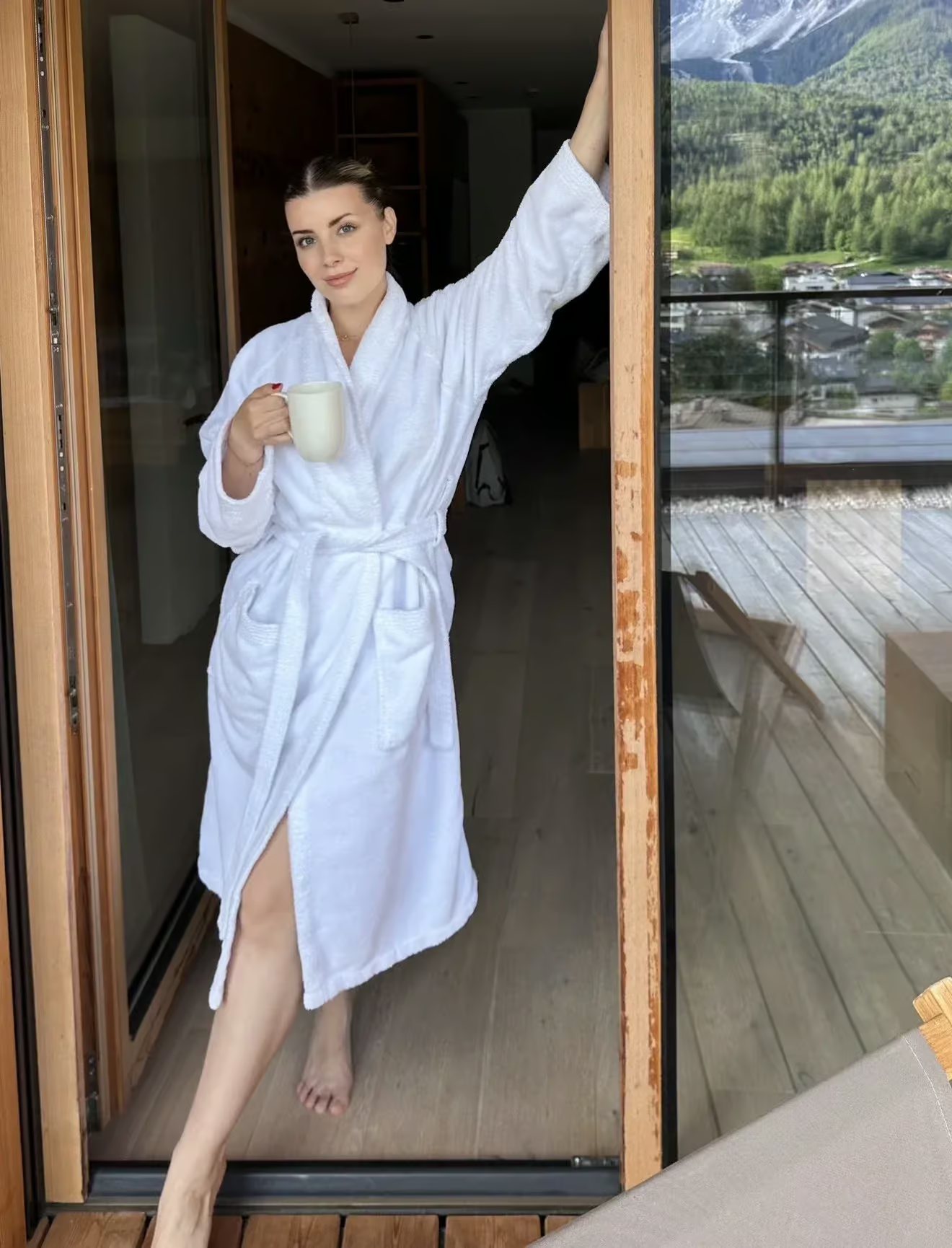 Hospitality content creator, UKThe on location production range, and what a visit actually buys
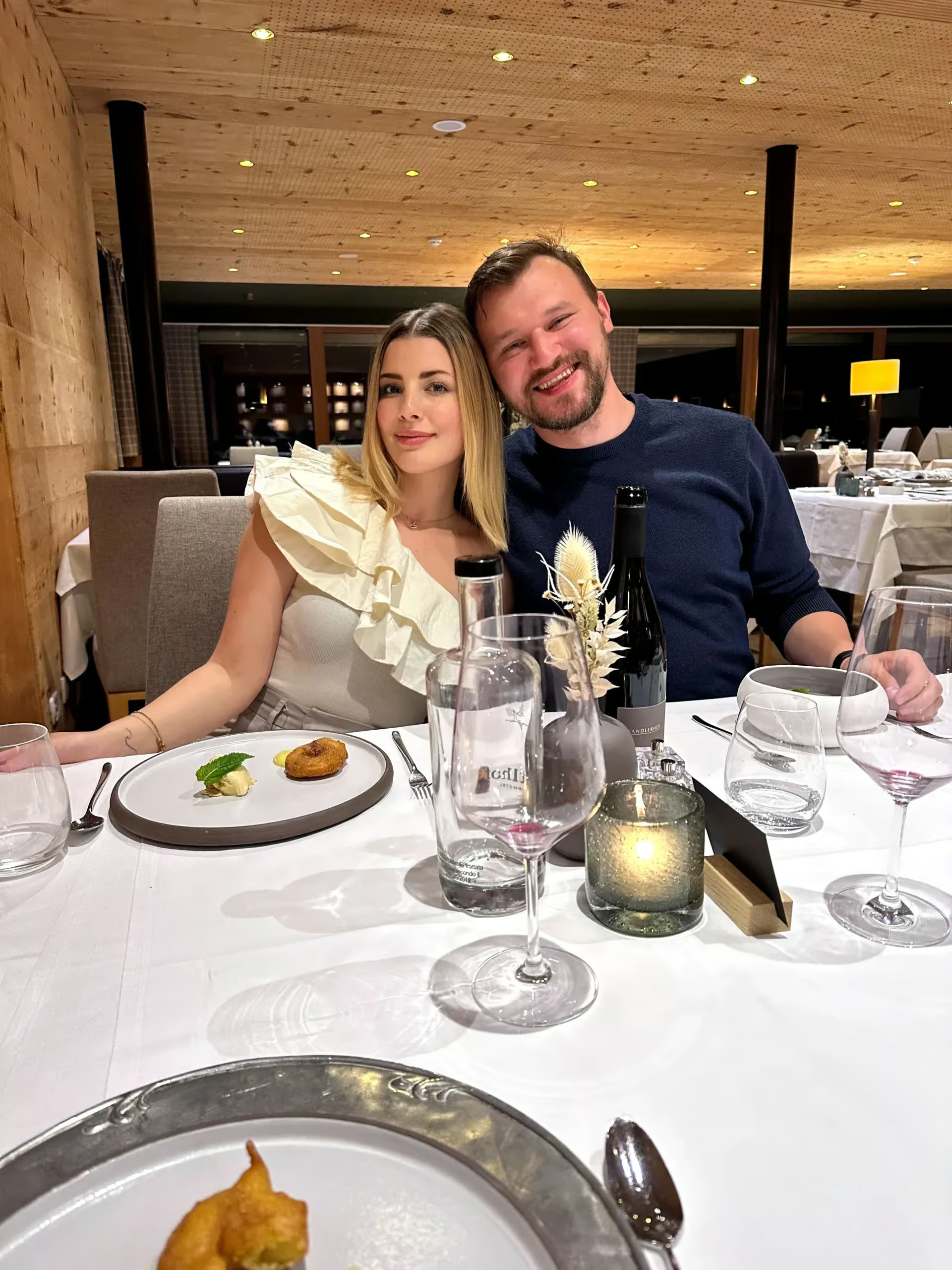 Hospitality social media managementRunning the account month to month rather than a one off visit
 Hotel content packagesFour packages compared, with the full deliverable lists
 Restaurant content packagesThree packages, filmed around service
Client reviews
What hospitality and travel clients say, word for word
“Velena Lifestyle have been a breath of fresh air for our social media accounts. Their professionalism and knowledge have supported us massively.”
Sean Thompson, Head of Marketing, Snaptrip Group. Google review, 5.0.“Fantastic service. Been a client for 3 years now and have seen fantastic results, increased viewers, followers and viral videos. Copywriting was on point and has been used in magazines like Conde Nast, Timeout and more.”
Darrell Johnston, Owner, No Escape London and Purgatory Bar. Google review, 5.0.“If you want a self-starter with the ability to think strategically and minimize the time between ideation and creation, Velena is your go-to. She has done a phenomenal job with managing our UGC portfolio, curating and creating our content.”
Naila Abbasova, Enara Wellness. Google review, 5.0.Every review is reproduced word for word. Read them all on the reviews page.
The authors
The two people who wrote this report, and who film the work
Velena Nikolova
Co-Founder and Creative Director
Velena Nikolova is a lifestyle content creator featured in Women's Health and a guest lecturer at the University of Greenwich. She films and edits every hospitality shoot and appears on camera. More on the about page.
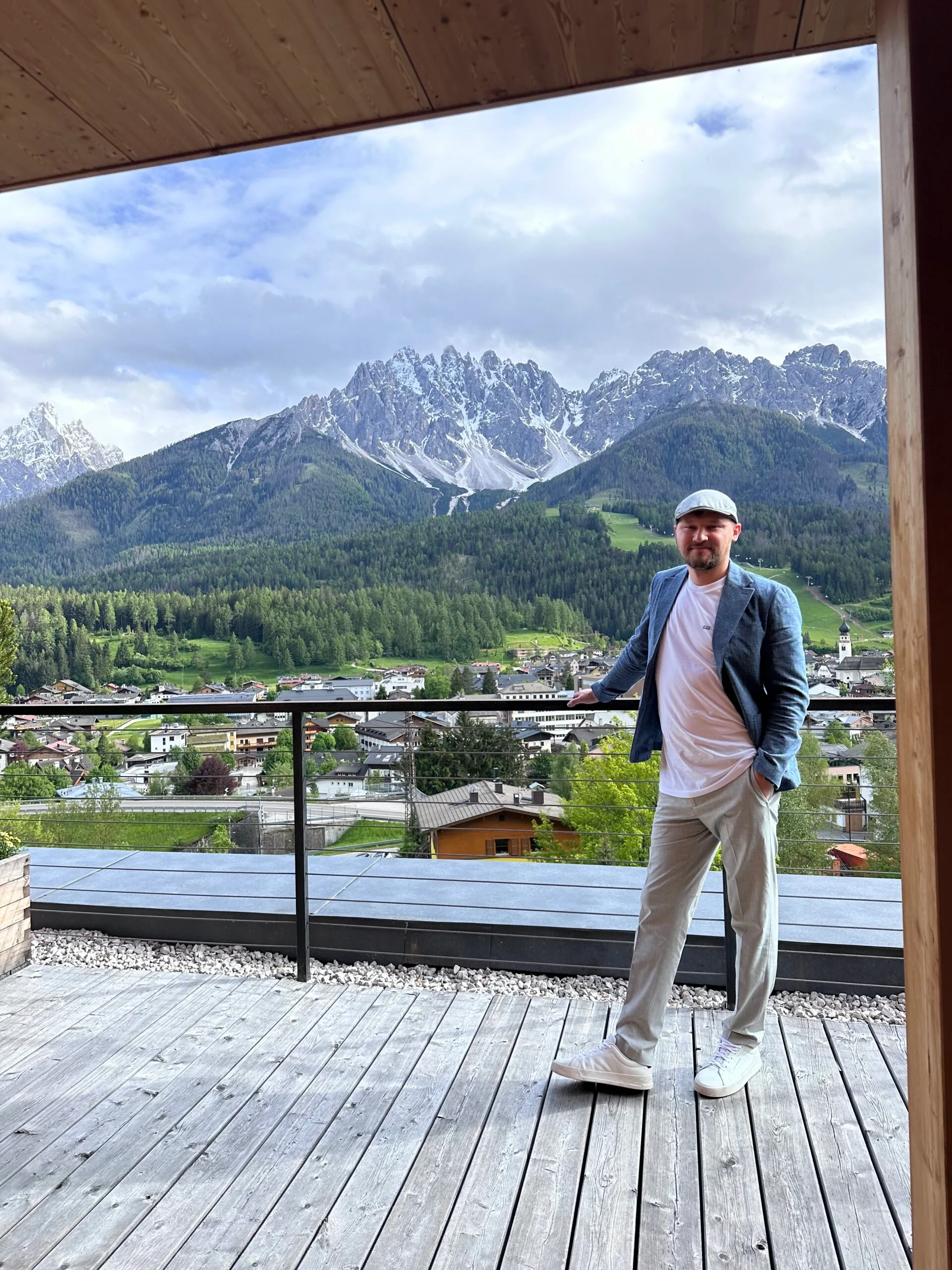
Dragos Nistor
Co-Founder and Business Strategist
Dragos Nistor was named a LinkedIn Top Entrepreneurship Voice in 2024 and is a guest lecturer at the University of Greenwich. He handles briefs, scheduling and the data behind the work. More on the case studies.
If you want your venue to be the one the answer names
That means first hand content, real numbers and a citable presence, which is exactly what a property visit and an ongoing plan produce together. Tell us about the property and we will say which half you need first. We reply within one business day.