
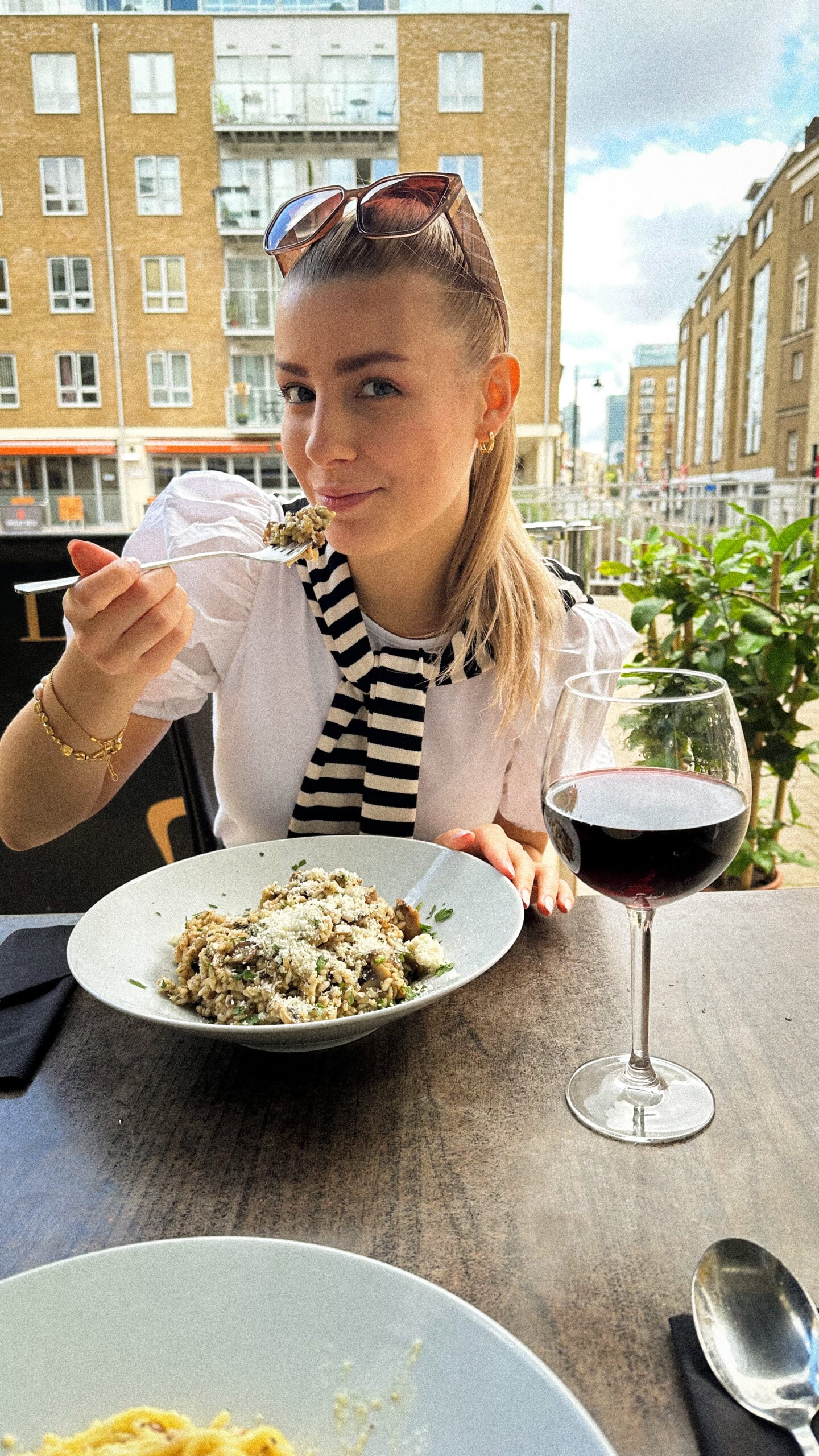
Food and Drink UGC, by Velena Lifestyle
UGC for Food and Drink Brands: What Actually Sells Taste
How food and drink brands use UGC video: the taste substitutes that make strangers hungry, why sound carries the category, filming perishables to a deadline, and what changes for restaurants versus packaged goods.
★★★★★ 5.0 from 10 Google reviewsOrder food and drink UGC, live prices
Full tier detail and everything each package includes on the food and drink packages page.

Written by Dragos NistorCo-Founder and Business Strategist, Velena Lifestyle. Published 13 September 2026. Reviewed against the ASA CAP Code guidance current at publication.
How do food and drink brands use UGC?
UGC for food and drink brands is short vertical video, shot by a real person in a real kitchen, cafe or garden, showing the product being made, poured, opened and eaten. It has become the default discovery format for the category because it does the one thing packaging and photography cannot: it makes a stranger hungry. A photo shows what the product looks like. A well made 20 second video makes the viewer's mouth water on a train, and that physiological response is the most direct path from content to basket that exists anywhere in marketing.
The catch, and the theme of this entire article, is that the format is working around a hard limit. You are selling taste, and taste does not transmit through a screen. Every technique in food video, the sizzle, the steam, the pour, the pull, the first bite, the reaction, is a substitute for the sense the medium cannot carry. Brands that understand this brief their content around the substitutes. Brands that do not end up with pretty footage of stationary food, which is a photograph that happens to be moving.
This guide covers how each substitute works, why sound carries more of the load here than in any other category, what perishability does to the shoot plan, how filming packaged goods differs from filming a restaurant service, and the allergen and health claim wording rules that keep UK food marketing on the right side of the regulator. It applies whether you make hot sauce, run a bakery subscription, brew beer or operate twelve restaurants, though as you will see, the last of those is really a different product with the same camera.
You are selling a sense the format cannot transmit
Hold onto the argument, because it explains every craft decision that follows. Taste is chemically private. The screen can deliver sight and sound only, so food video is an exercise in synaesthesia: using the two senses you have to trigger the memory of the three you do not. The viewer has eaten crusty bread before. The right crackle at the right moment does not describe the bread, it replays the viewer's own memory of bread, and the appetite that arrives feels first-hand because, in a sense, it is.
This is why the classic moves of the genre are what they are. Steam rising says hot and fresh through sight alone. The slow pour says texture: viscosity is legible in motion in a way no adjective matches. The pull-apart, the cheese stretch, the knife through a crisp crust, all translate texture into movement. The first bite and the involuntary pause that follows it say more than any voiceover, because the viewer reads a face faster than a claim. And underneath all of it, sound does the heaviest lifting, which earns it the next section to itself.
The practical consequence for your brief: every food video should be built around one primary substitute, chosen to match the product's actual selling point. A soup sells on steam and the ladle pour. A protein bar sells on the cross-section and the bite. A craft lager sells on the crack, the pour and the head settling. Ask of any draft edit: which sense-substitute is this video running, and does it arrive early enough? If the answer is none, the video is decoration.
Sound: the category where audio does most of the work
Food is the one UGC category where sound is not supporting the picture; the picture is supporting the sound. Sizzle, fizz, crunch, the glug of a pour, the tap of a spoon on crema: these are appetite triggers in their own right, and a substantial share of viewers will watch food content with sound on specifically to hear them. That changes the production brief in concrete ways.
- Record the real sound, close. The crunch has to be the actual product, recorded near the source, not a library effect. Audiences are fluent in this genre and false foley reads instantly.
- Protect the sound moments in the edit. The crack of the can and the first pour deserve to sit almost alone in the mix. A trending track slammed over the top deletes the most persuasive second in the video.
- Kitchen noise is a set problem. Extractor fans, fridges and background chatter blur the exact frequencies appetite listens for. Shoots plan around quiet windows the same way they plan around light.
- Design for both viewing modes. Feeds autoplay muted, so the video must work silent, with captions and visible texture carrying the story, while rewarding the viewer who taps for sound. The best food UGC is bilingual in exactly this way.
When you review a creator's food portfolio, listen before you look. If the eating sounds are vague, distant or missing, the footage was shot by someone thinking with their eyes only, and half the format's power is off the table.
The taste substitutes, shot by shot
Steam and heat
Steam is fragile: it reads against darker backgrounds, side or back light, and cool air. A hot dish filmed against a bright white wall shows nothing. The standard move is to plate hot, kill the overhead light, bring a window or lamp behind the dish at an angle, and film within the first ninety seconds. For drinks the equivalent is condensation, which is why cold serves are filmed straight from the fridge with the bottle unwiped. These are small physics problems, and solving them is the difference between hot food and food.
The pour
Pours communicate texture and generosity at once: honey ribboning, cream clouding into coffee, beer building a head. The craft rules are slow speed, locked camera and a single light source raking across the liquid. One good pour beats five average ones, so shoots allow product for multiple takes, which feeds directly into the sampling maths in the perishability section below.
The pull, the cut and the break
Texture becomes visible at the moment of separation: the cheese pull, the yolk break, the snap of chocolate, the tear of fresh bread. Each is a one-take-per-unit event, so the shot list has to declare how many units the shoot can spend. If your product has a signature separation moment, it is almost certainly your strongest three seconds of content, and it belongs in the first frames, not the last.
The first bite and the reaction
The reaction shot is the closing argument, and it obeys one rule: it must be real. Audiences are merciless about performed delight in food content. The production answer is to film the genuine first taste, once, with the camera already rolling, exactly like an unboxing reveal. A real pause, a real second bite reached for without looking at the camera, converts better than any scripted superlative. Reactions are also where claims sneak in by accident, which matters for the compliance section below: a creator moaning that a supplement drink cured their afternoon slump has just made a health claim on your behalf.
From the live portfolio
Two examples, straight off the current set
Both videos below sit on the live food and drink UGC portfolio with the rest of the current set. Watch them with sound on, then muted, and notice that they work both ways. That is the standard to hold any quote against.
Live food and drink example
From the current portfolio set
Food and DrinkSecond live example
Different product and setting
Food and DrinkThe six food and drink formats that convert
The taste substitutes are the ingredients; these are the dishes. Six formats cover nearly every commercial job in the category, and each answers a different buyer question.
1. The serve
The product prepared and presented at its absolute best, start to finish, in under 30 seconds. This is the workhorse: it shows what the customer is actually buying and sets the standard for how to enjoy it. Every food brand needs a current serve video for every hero SKU, embedded on the product page.
2. The recipe or hack
Your product as an ingredient in something the viewer wants to make. It multiplies use cases, which multiplies consumption, and it earns saves, the strongest algorithmic signal food content produces. A hot sauce brand does not sell bottles with this format; it sells the fourth and fifth use of the bottle already bought.
3. The taste test reaction
The honest first-try video described above. Best deployed at launch and for flavours with a story: the limited edition, the collaboration, the unlikely combination that works. This is also the natural format for a bundle test against the serve, because the two argue for the same product in opposite registers.
4. The making-of
Where the product comes from: the bakery at 5am, the small-batch bottling line, the coffee roasting. It sells provenance and price justification. Premium and craft brands should keep one making-of in rotation permanently, because it is the video that answers why this costs more without saying a word about price.
5. The comparison serve
Your product beside the ordinary version of the same moment: shop custard against yours, instant coffee against the pour-over. Handled honestly and without naming competitor brands, it is the sharpest conversion format for products whose difference is visible or audible on camera.
6. The restock
The repeat purchase arriving: the subscription box opened, the pantry refilled, the second order placed without ceremony. It is the strongest loyalty proof available for consumables, and it doubles as unboxing content for subscription products, where it borrows every rule in our guide to unboxing video production in the UK.
Perishability: why the food shoot window is short
Food is the only UGC category where the product actively fights the schedule. Hot food has minutes of camera life. Baked goods have a day at their photogenic best. Fresh produce wilts, ice cream is a countdown from the freezer door, and even shelf-stable products have a best-looking serve that cannot sit under lights indefinitely. The consequences run through the whole engagement.
- Dispatch is scheduled around the shoot, not the other way round. Perishable parcels ship on next-day services early in the week, with the filming date agreed before anything leaves you. A Friday dispatch that sits in a depot over the weekend arrives as wasted stock and a rescheduled shoot.
- Quantity is a production input. Every separation shot and every pour consumes product. A brief that wants a cheese pull, a pour and a first bite needs enough units to do each more than once. Send double what one serving needs; the spare is the cheapest insurance in the category.
- Do the sampling maths before dispatch. Count the one-take shots in the brief and multiply. A cheese pull, a pour and a first bite is three consumable moments; filming each twice for safety means six units of whatever those moments spend, before anyone eats lunch. The brands that get flawless food content are not luckier, they simply shipped enough product for the shot list to fail once and recover. Put the number in the brief: this shoot consumes eight servings, we are sending twelve.
- Preparation is part of the brief. If the product needs cooking, the brief states exactly how, because the creator's version on camera becomes the product's public face. Include the serve you want: the glass, the garnish, the plating level. Under-specified food briefs produce honest but unflattering serves.
- The edit window is tight for seasonal lines. A pumpkin-spice launch or a Christmas pudding has weeks of relevance, so revision rounds are planned into the calendar rather than left open-ended.
Drinks are their own craft
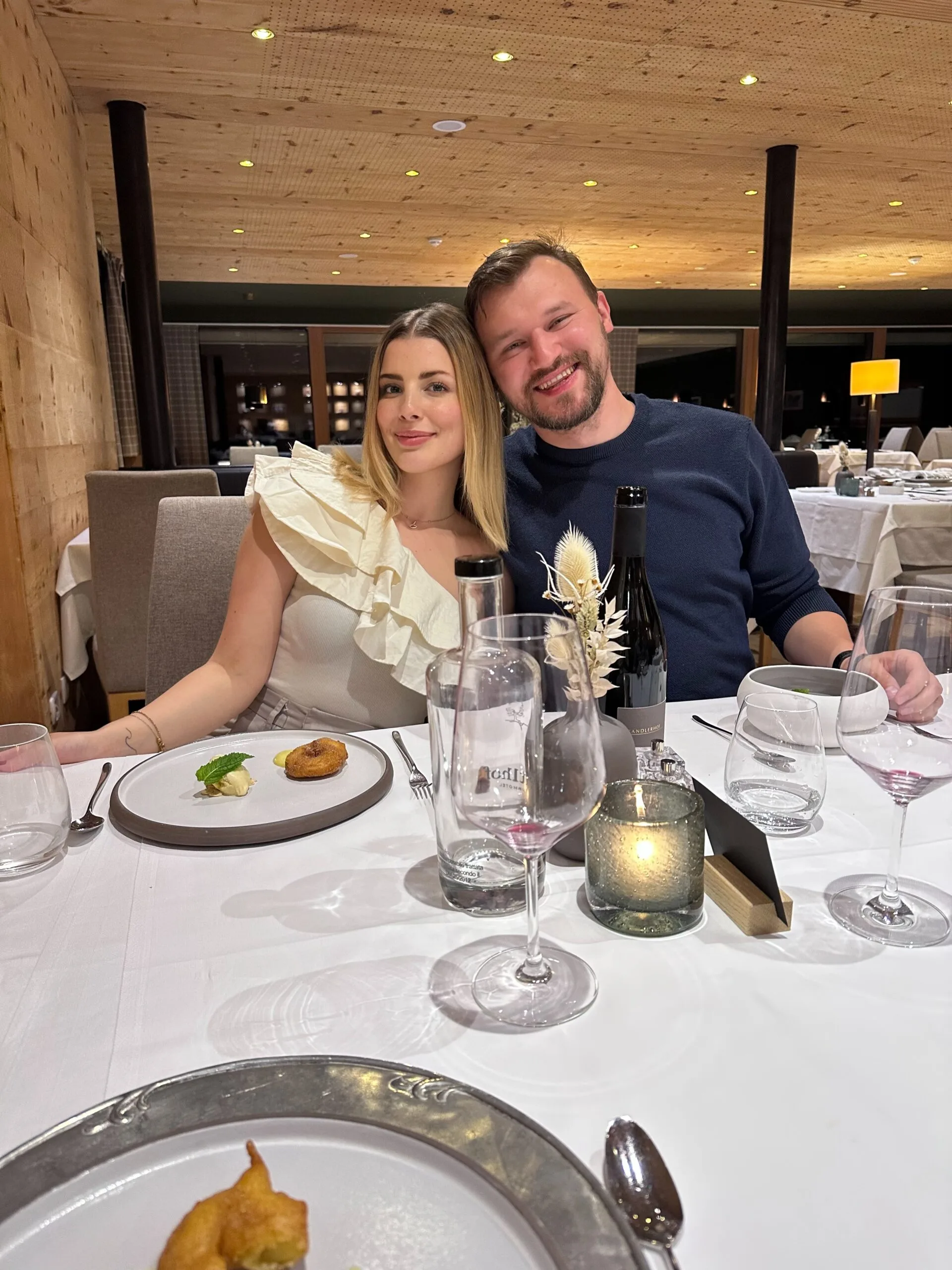
Everything above applies to drinks, but the category has three quirks worth naming before you brief. First, glassware is the wardrobe: the same liquid reads premium in the right glass and forgettable in a mug, so the brief specifies the serve vessel or the creator's cupboard decides your brand presentation. Second, clarity and colour are the product for many drinks, which makes backlight the default: a light source behind the glass turns a pale ale gold and a cold brew mahogany, while front light turns both into brown. Third, the carbonation clock is real. Fizz, foam and head are perishable in seconds rather than minutes, so sparkling serves are the last shot staged and the first shot filmed, with spare bottles chilled for retakes.
Soft drinks, coffee and alcohol also split on the reaction shot. Coffee and soft drinks can lean on the full toolkit. Alcohol cannot show the drink doing emotional work, per the CAP rules covered below, so drinks with ABV sell on craft, serve ritual and taste vocabulary instead, and the reaction stays appreciative rather than transformative. It is a narrower lane, and well briefed creators drive perfectly well inside it.
Packaged goods and restaurants are different products
The phrase food and drink UGC covers two jobs that share a camera and almost nothing else, and buying the wrong one wastes money.
Packaged goods UGC is the model this article has described so far: your product ships to the creator, is filmed in a domestic setting, and the output feeds product pages, organic social and ads. The setting is deliberately ordinary, because the argument is that this product belongs in the viewer's own kitchen. This is the right buy for DTC food brands, drinks brands, snack subscriptions and anyone whose checkout is online.
Restaurant and hospitality content is a location shoot. The product is not a consumable that ships; it is a room, a service, a plate arriving at a table, and none of it can be posted to anyone. The creator comes to you, the shoot covers the space, the people and the dishes in one visit, and the output feeds bookings rather than baskets. The economics differ too: a location day yields a content library, not a single video, which is why it is sold as a day. Our restaurant content day covers exactly this, the monthly version lives in the restaurant social media retainer, and the full picture for hotels and restaurants, including strategy and publishing, is in our hospitality social media management service.
The rule of thumb: if your customer's next step is a basket, buy packaged goods UGC from the food and drink packages. If their next step is a booking, buy a location shoot from the hospitality side. Brands that straddle both, a brewery with a taproom, a bakery with a subscription, should brief them as two separate content streams from the start, because the calls to action never mix well in a single edit.
Allergen wording and health claims: the compliance layer
Food marketing in the UK carries wording rules that apply to your UGC the moment you commission or reuse it, and they are strict in exactly the places creators improvise.
Health and nutrition claims are a controlled vocabulary. In Great Britain, specific health claims about a food or ingredient are only permitted if they appear on the GB nutrition and health claims register, and general claims like boosts your immunity or aids digestion must be backed by an authorised specific claim. The CAP Code applies this to advertising through Section 15, food, food supplements and associated health or nutrition claims, and the ASA's advice on food health claims is the readable summary. The practical translation for UGC: a creator saying this gave me so much energy about your smoothie has made a health claim in your ad. The brief must list what may and may not be said, in plain words, before filming.
Allergen wording is a duty, not a style choice. UGC that shows cooking or serving should never contradict your allergen labelling: a caption calling something nut free when the pack says may contain traces is a liability you created for yourself. The safe pattern is simple: videos stay silent on allergen status and point to the pack and product page, unless your legal owner has signed off specific wording.
Alcohol adds its own layer. Drinks brands with ABV face additional CAP rules on responsibility, on not implying alcohol enhances confidence or social success, and on the age of people featured; creators presenting alcohol must clearly be, and look, over 25. If that is your category, the brief tightens accordingly, and our plain-English guide to the UK ASA CAP Code rules for social media is the companion read, covering disclosure as well: paid or controlled content is an ad and must be labelled as one.
None of this is a reason to avoid the format. It is a reason to buy it from people who build the compliance into the brief, so the footage is usable everywhere you want to run it, including paid, without a lawyer meeting per video.
Measuring whether food UGC worked
Food content generates flattering vanity metrics almost by default, because everyone watches food, so the measurement discipline matters more here than in most categories. Match the metric to the format. Serve videos embedded on product pages are judged on the conversion rate of sessions that played them. Recipe content is judged on saves and profile visits, because its job is to deepen use and pull people into the range, not to convert on the spot. Taste tests and comparison serves are judged as direct response: click-through and cost per acquisition when run as paid. Making-of content is judged over quarters, not days, on branded search and returning visitor rates, because provenance compounds slowly.
Two food-specific warnings. High reach with low saves usually means the video entertained non-buyers, which is fine for a crisp brand with national distribution and a waste of money for a nine-pound single-origin chocolate. And appetite content fatigues fast in paid rotation because the surprise decays on the second viewing, so plan a refreshed cut every few weeks rather than running one hero ad to exhaustion, which is exactly what the bundle structure below is for.
A note on judging appetite honestly: the person least able to assess your own food content is you. You know what the dish tastes like, so the video always works on you, the memory arrives on cue and fills the gaps the footage leaves. The test that matters is a viewer who has never tried the product, watching on a phone, with the sound as they would actually have it. If a colleague's partner scrolls past your serve video without slowing down, no metric dashboard will rescue it. Show drafts to people with no stake and no tasting history, and believe their thumbs over your own hunger.
What food and drink UGC costs
Food and drink UGC at Velena Lifestyle uses the same tier ladder as every category. The current prices look like this.
| Package | What it is | Live price |
|---|---|---|
| Food and Drink Basic | A clean taste-substitute video in one format of your choice, with organic usage rights | from £160 |
| Food and Drink Standard | A script-led video with two hook variations, all three formats, and a 12 month paid media licence | from £235 |
| Food and Drink Premium | Full creative direction, three hook variations, raw footage included, and the same paid licence term | from £360 |
| Food and Drink Bundle, 3 videos | Three videos in a mix of styles, the right way to test recipe against reaction against pour | £610 |
Every tier is priced by length, from 15 to 60 seconds, so the prices above are each tier's genuine starting point.
Rights follow the site-wide rule: Standard, Premium and the bundle each carry a 12 month paid media licence, so the launch video you commission for September is still legally running as an ad next summer. Basic is the organic-only tier, and creator whitelisting is available on request with Premium. Market context for what UK creators charge across categories is in our UGC rates report for 2026.
Delivery runs to the clock your tier states, counted from the day your product arrives: 5 working days on Basic, 7 working days on Standard, 10 working days on Premium and 10 to 14 working days on the bundle, with perishable dispatch scheduled against those clocks before anything ships.
Which tier for which job? Basic covers the serve and the restock, where honesty is the production value. Standard is the default for anything destined for paid, because the licence and the scripted structure arrive together. Premium earns its price on launches and making-of pieces, where full creative direction, three hooks and the raw camera files give an in-house team everything to cut further variants from. And the bundle is the testing instrument: three formats against one product tells you inside a month whether your audience buys the serve, the reaction or the recipe, which is knowledge that outlives every individual video you will ever commission.
Where food and drink UGC fits, and what to do next
The audience side of the equation is settled. DataReportal's Digital 2026 United Kingdom report counts 55.5 million active social media user identities in the UK, and Ofcom's Online Nation 2025 research has UK adults averaging four and a half hours a day online. Food is among the most watched, saved and shared content categories in that time, because everyone eats and everyone scrolls hungry eventually. The demand for the format is not the question; the question is whether your videos trigger appetite or merely document inventory.
The playbook that works: build a monthly rhythm of taste-substitute content around your hero products, keep one seasonal stream for launches and gifting windows, cut the strongest performers into paid with the licence already in hand, and embed the best product-specific videos beside their buy buttons. If UGC is new territory, start with what UGC is; if you want the whole rhythm run for you, publishing, captions, community and reporting included, our founder-led social media management UK plans do it month to month on 2 months notice. And before you commission anything from anyone, watch their food work with the sound on. If it does not make you hungry, keep scrolling.
Food and drink UGC, the questions buyers ask
UGC for food and drink brands is short vertical video of your product being made, poured, opened and eaten by a real person in a real setting. It is the category's default discovery format because it triggers appetite, which photography rarely manages, and it feeds product pages, organic social and paid ads from the same shoot.
The shoot is scheduled around the parcel, not the other way round: perishables ship on next-day services early in the week with the filming date agreed in advance, quantities allow for multiple takes of pours and pull-apart shots, and hot dishes are filmed within their first minutes of camera life.
Only within the rules. In Great Britain, specific health claims must be authorised on the GB nutrition and health claims register, and general claims need an authorised specific claim alongside them. A paid creator's spoken words count as your advertising, so the brief lists what may and may not be said before filming.
Packaged goods UGC ships your product to the creator and feeds baskets. Restaurant and hospitality content is a location shoot that films your space, service and dishes in one visit and feeds bookings. They are different products with different economics, which is why restaurants buy content days and retainers rather than per-video packages.
Our channels
Watch the work
Velena and Dragos
Travel, food and influencer content from the two of us, and the channel where the long form work lives.
Open the channelVelena Lifestyle
The agency channel. UGC examples, client work and finished campaign videos.
Open the channel

Monthly plans
Social media management, done for you

Small Business Social Pack
£149 per month
12 static posts, 1 platform, content creation done for you
View Small Business Social Pack- Most chosen


Rolling monthly, 2 months notice, no setup fees. All plans on the social media management page.
Client reviews
What clients say, word for word
“Velena Lifestyle have been a breath of fresh air for our social media accounts. Their professionalism and knowledge have supported us massively.”
Sean Thompson, Head of Marketing, Snaptrip Group. Google review, 5.0.“Velena was a pleasure to work with, she worked solely with the brief provided and was even ahead of her deadline. The content produced was clean, professional and on brand. We would love to work with Velena again in the very near future.”
Lauryn Middleton, Social Media Manager, Smirk. Client testimonial, October 2023.“I've known Velena for many years and she is a great content creator and reliable. I highly recommend her. Looking forward to hiring her again.”
Alex, Newmiuz. Google review, 5.0.Every review is reproduced word for word. Read them all on the reviews page.
Who you work with
One team, from the first brief to the last hand off
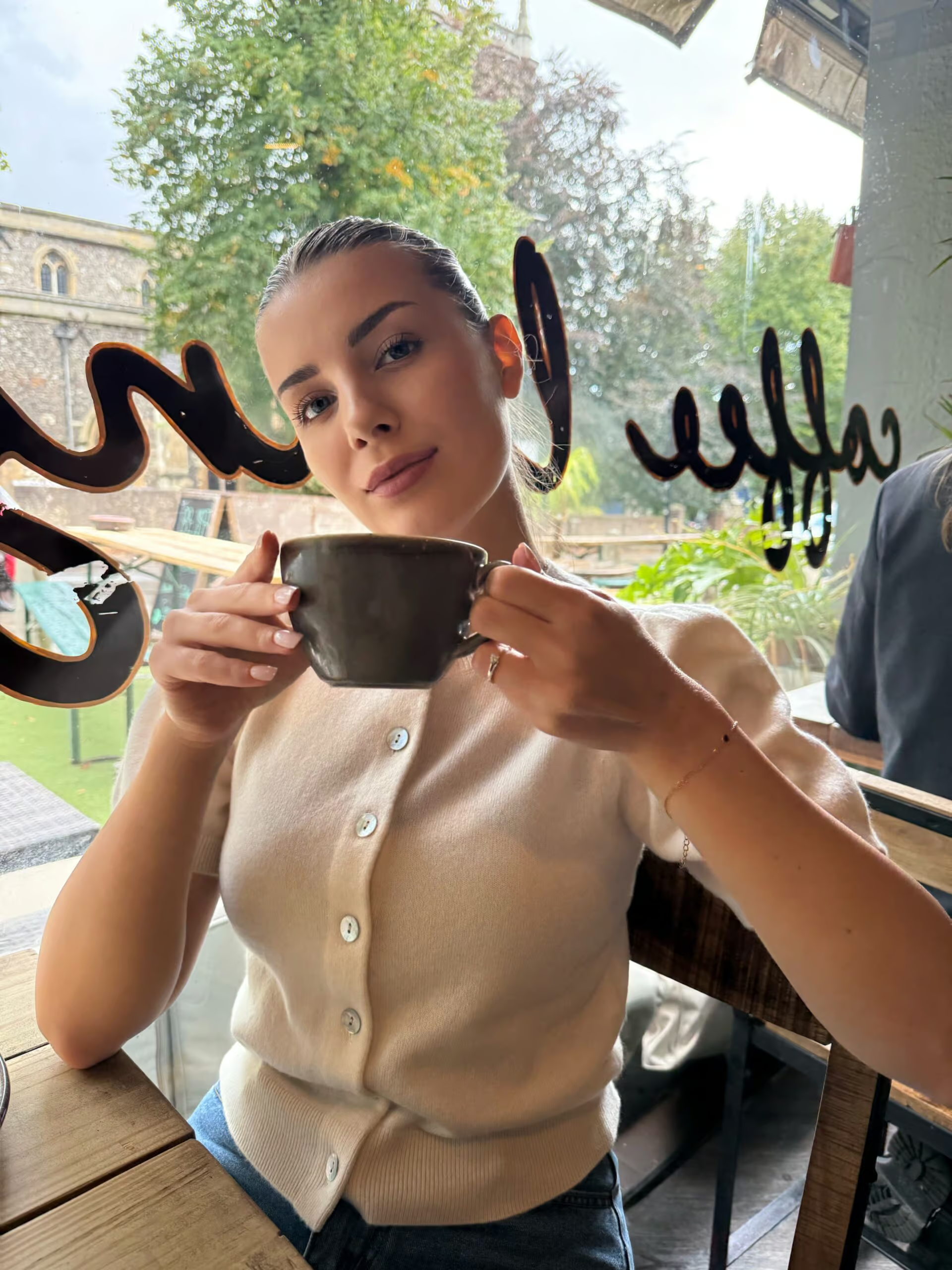
Velena Nikolova
Co-Founder and Creative Director
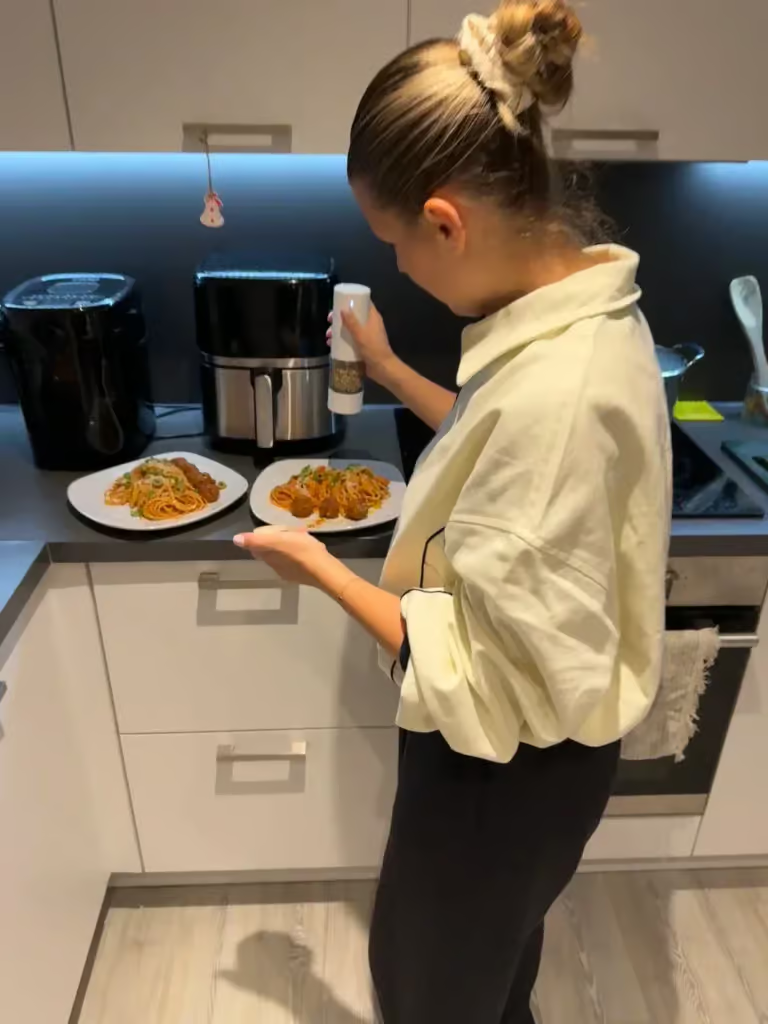
Velena leads the filming and the edit, so the idea and the execution never pass between strangers. A lifestyle creator with 13,000 Instagram followers, featured in Women's Health. More on the about page.
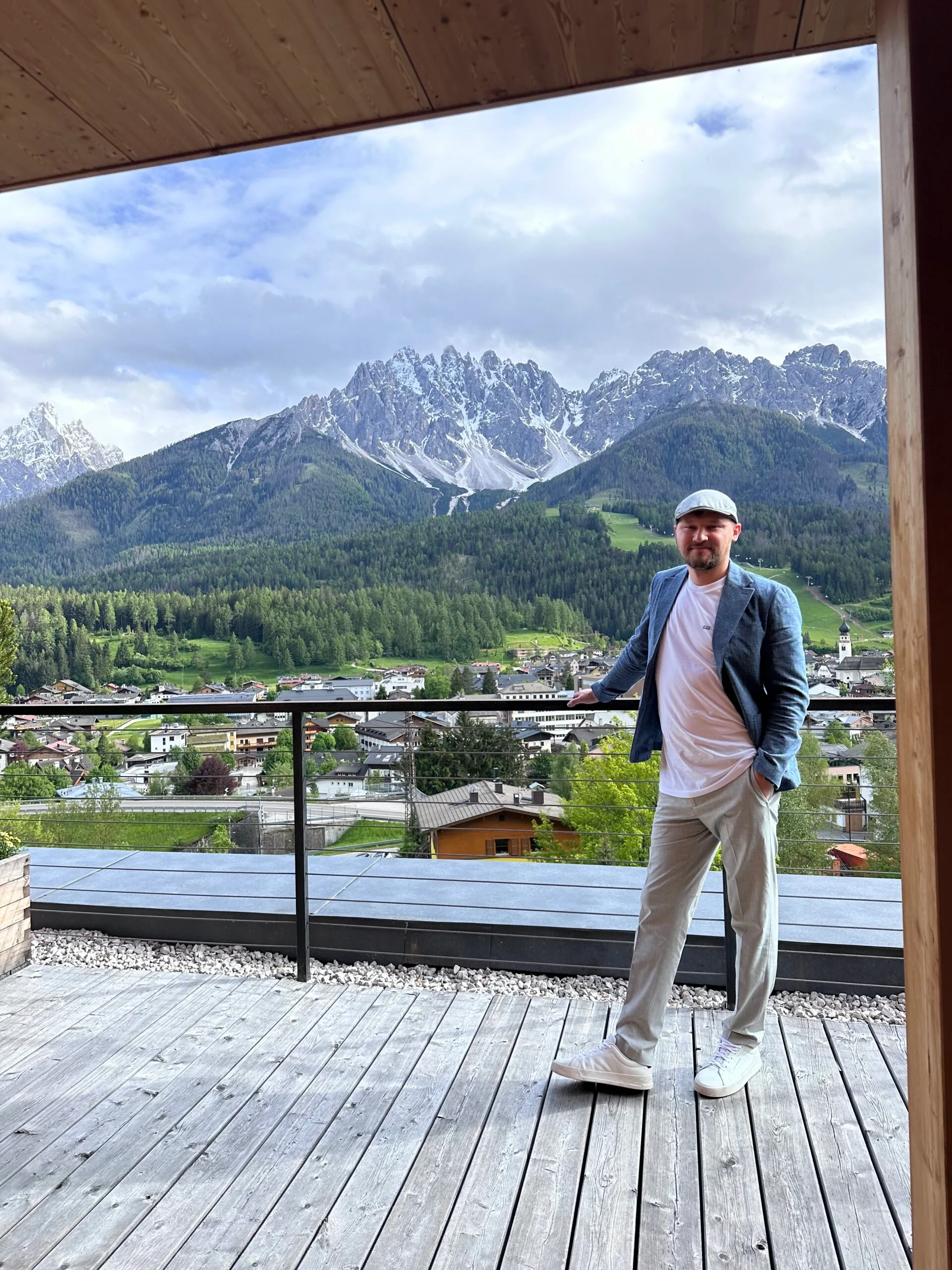
Dragos Nistor
Co-Founder and Business Strategist
Dragos runs the brief, the schedule and the delivery, and is on camera for couple and male led work. Named a LinkedIn Top Entrepreneurship Voice in 2024. More on the case studies.
Work with Velena Lifestyle
Ready to make strangers hungry?
Tell us the product, the serve and the platform, and we will send you the shoot brief and the dispatch plan the same week. Sound recorded close, perishables scheduled properly, and a first bite that is genuinely the first.
Start your project